

The $500,000 Flower Bowl Stakes (G2T) is set to anchor the September 26 race card at Belmont Park, marking a significant homecoming for the historic event. After a five-year hiatus from its traditional venue, the Grade 2 contest returns to the inner turf course at Belmont, shifting from the 1 3/8-mile configuration utilized at Saratoga Race Course back to its classic 1 1/4-mile distance. This move is more than a mere scheduling adjustment; it represents a strategic realignment for trainers and owners aiming to secure a guaranteed spot in the upcoming Breeders’ Cup Filly and Mare Turf (G1T).
As a centerpiece of the Breeders’ Cup Challenge Series: Win and You’re In, the Flower Bowl provides the winner with an automatic, fees-paid entry into the World Championships, scheduled this year at Keeneland. The return to the Belmont inner turf provides a specific set of challenges and tactical requirements that trainers must navigate as the industry pivots toward the autumn racing calendar.
A Historical Context of the Flower Bowl
The Flower Bowl has long served as a bellwether for elite fillies and mares. Established as a test of stamina and tactical speed, the race has historically acted as a bridge between summer campaigning and the year-end championships. During its tenure at Saratoga from 2021 through 2025, the race was contested at 1 3/8 miles, a distance designed to test the endurance of international turf specialists.
The transition back to the 1 1/4-mile distance at Belmont Park brings the race closer to the conditions often seen in the Filly and Mare Turf. Throughout its history, the race has been a launching pad for champions. Perhaps most notable is the trajectory of Stephanie’s Kitten, whose 2015 campaign serves as the gold standard for success in this series. After securing a victory in the Flower Bowl, she went on to conquer the Breeders’ Cup at Keeneland, demonstrating the efficacy of the "Belmont-to-Breeders’ Cup" pipeline.
Chronology of the Flower Bowl and Breeders’ Cup Connection
The relationship between the Flower Bowl and the Breeders’ Cup is rooted in decades of high-level competition. Since the inception of the Filly and Mare Turf in 1999, the Flower Bowl has been a primary indicator of form.
- 1999: Soaring Softly achieved the rare double, winning the Flower Bowl before capturing the inaugural Breeders’ Cup Filly and Mare Turf at Gulfstream Park.
- 2007: Lahudood repeated the feat, showcasing the ability of top-tier turf mares to maintain peak condition throughout the autumn months.
- 2014-2015: Stephanie’s Kitten dominated the event, using the Flower Bowl as a platform to prepare for two separate Breeders’ Cup outings, ultimately finding glory at Keeneland in 2015.
- 2021-2025: The race shifted to Saratoga due to renovations at Belmont and broader scheduling adjustments. During this period, the race saw varied success in producing Breeders’ Cup winners, with international shippers increasingly dominating the Filly and Mare Turf, often bypassing domestic prep races entirely.
The data suggests a shift in the landscape of American turf racing. While domestic winners like War Like Goddess have utilized the Flower Bowl as a springboard, the influx of European-trained runners in the Filly and Mare Turf has made the "Win and You’re In" status of the Flower Bowl even more vital for domestic owners attempting to maintain relevance against an increasingly globalized field.
Tactical Analysis: The Chad Brown Influence
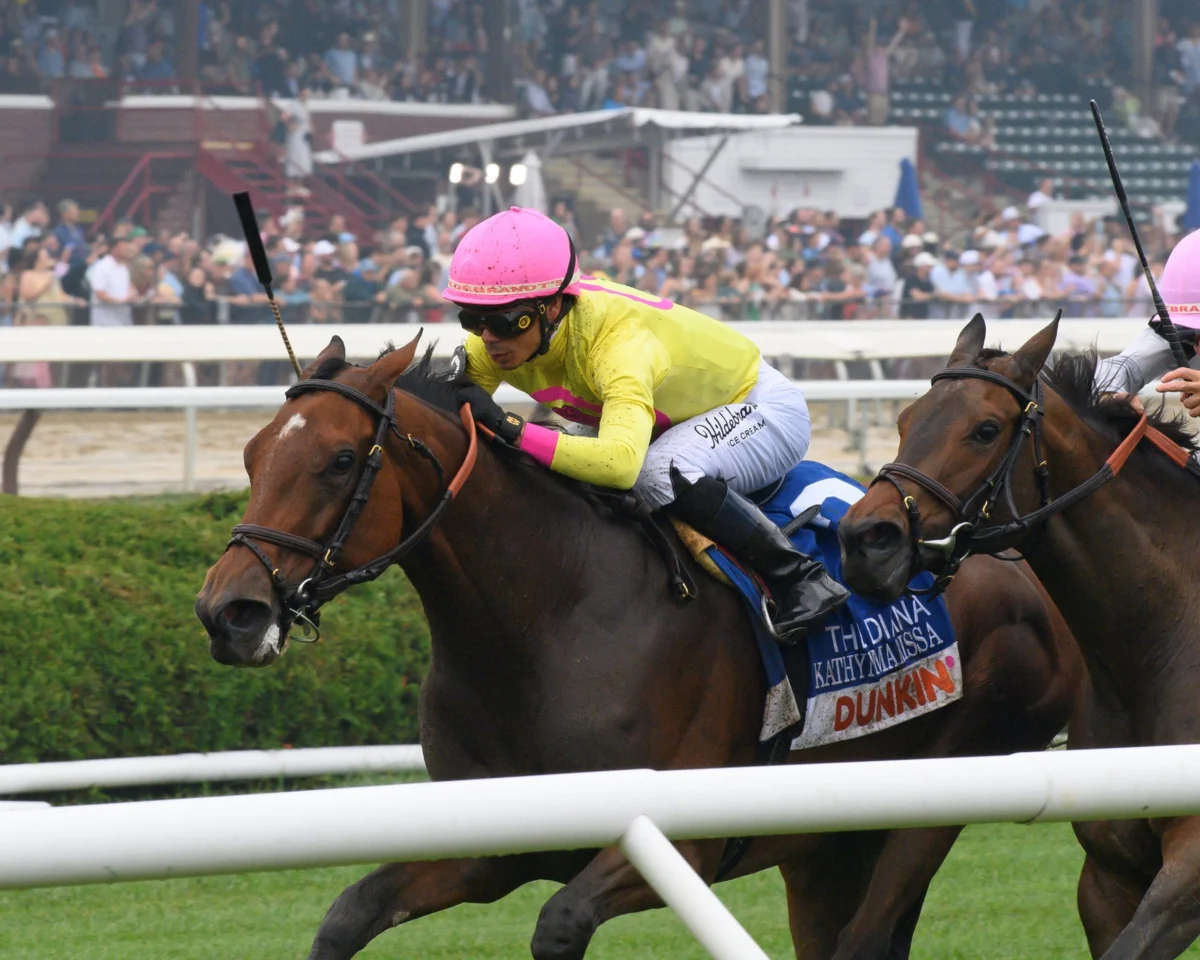
Trainer Chad Brown continues to be the dominant force in the division, and his entries for this year’s edition of the Flower Bowl highlight the depth of his stable. Kathynmarissa, the 8-5 morning-line favorite, enters the race with significant momentum following her triumph in the Diana Stakes (G1T) at Saratoga.
Brown’s success is often attributed to his meticulous planning and the ability to peak his horses at the correct moment. His strategy regarding Kathynmarissa—keeping her on a path of graded stakes competition—mirrors the approach he took with past champions. The competition remains fierce, however, as Bill Mott enters Gezora, a mare with a high ceiling looking to find her rhythm after a mid-season transition between trainers.
"The goal is always to provide the horse with the best possible environment to showcase their talent," a representative from the Brown barn noted, emphasizing the importance of the return to Belmont’s turf. "The inner turf at Belmont requires a specific style of running; it is a test of both speed and tactical positioning, which is exactly what you need to see before heading to the Breeders’ Cup."
The Implications of the 1 1/4-Mile Distance
The reduction in distance from the 1 3/8-mile Saratoga configuration to the 1 1/4-mile Belmont course is a critical factor for handicappers and trainers alike. A quarter-mile difference in a distance race significantly alters the energy distribution required for a horse to finish strong.
Modern turf racing at the championship level often comes down to a "kick"—the ability to accelerate in the final furlong. By returning to the 1 1/4-mile distance, the Flower Bowl aligns more closely with the typical requirements of the Filly and Mare Turf, which will be contested at 1 3/16 miles at Keeneland. This shorter, punchier distance emphasizes tactical speed, rewarding horses that can sit mid-pack and make a decisive move at the three-sixteenths pole.
Field Dynamics and Broader Industry Impact
With an expected field of 11, the Flower Bowl presents a complex puzzle. Cathedral, also trained by Brown, adds depth to the field. Having finished fourth in last year’s Filly and Mare Turf, she is a battle-tested campaigner who knows what is required to compete at the highest level.
The presence of owners like Michael Caruso, Michael Dubb, and Peter Brant highlights the high stakes associated with this race. For these connections, the Flower Bowl is not merely a Grade 2 event; it is a financial and strategic necessity. The $500,000 purse is significant, but the prestige and the guaranteed entry into the Breeders’ Cup are the true drivers of participation.
As the racing industry watches this year’s Flower Bowl, the focus will be on whether a domestic runner can reassert dominance in the Filly and Mare Turf. With the international contingent expected to arrive in force for the Breeders’ Cup, the Flower Bowl winner must prove that they possess the versatility to handle different track surfaces, varying distances, and a high-pressure championship environment.
Conclusion: A Pivotal Moment for Turf Fillies
The return of the Flower Bowl Stakes to Belmont Park represents a return to a proven formula. By offering a familiar surface and a distance that serves as a bridge to the Breeders’ Cup, the New York Racing Association has restored a key pillar of the autumn season.
For the connections involved, Saturday’s race is the culmination of months of work. Whether it is the seasoned consistency of a horse like Cathedral or the burgeoning talent of a rising star like Kathynmarissa, the field is prepared to face the rigors of the Belmont turf. As the starting gate opens, the stakes will be clear: a path to the World Championships is on the line, and the legacy of the Flower Bowl as a definitive test for turf fillies and mares will once again be on full display in the heart of New York racing. The implications for the Breeders’ Cup are substantial, as the winner will not only earn their way into the championship field but will also gain the psychological edge of having performed under the bright lights of one of the sport’s most demanding circuits.
