

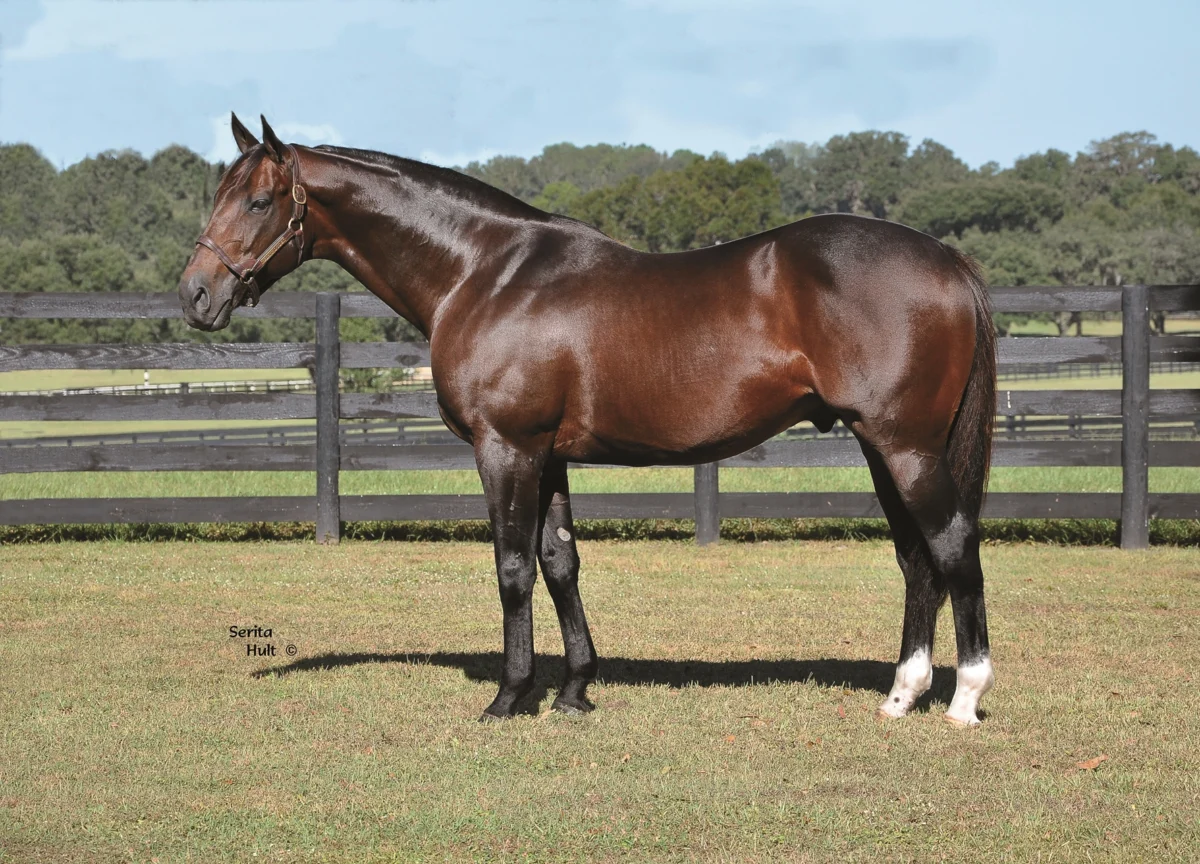
The passing of First Dude on September 23 marks the end of a significant chapter for the Ocala thoroughbred community. A homebred for Donald and Irene Dizney, the son of Stephen Got Even rose from a formidable racehorse to a foundational sire who helped define the Sunshine State’s breeding landscape for over a decade. His death at the farm where he spent the entirety of his retirement leaves a void for the staff and breeders who stewarded his career from the racetrack to the breeding shed.
A Legacy Forged on the Racetrack
First Dude’s journey to becoming a sire began with a grueling and highly respected campaign on the national stage. Born out of the Smart Strike mare Run Sarah Run, First Dude was never a horse that relied on luck; he relied on grit. Under the guidance of trainer Dale Romans during his pivotal three-year-old season in 2010, the colt established a reputation as one of the most consistent—and often snake-bitten—performers in his class.
His sophomore year was defined by a series of near-misses in the sport’s most prestigious events. He famously finished second in the 2010 Preakness Stakes (G1), a result that underscored his stamina and class. Throughout that year, he consistently hit the board in major grade 1 tests, including thirds in the Blue Grass Stakes, the Belmont Stakes, the Haskell Invitational, and the Travers Stakes. While he was often the bridesmaid in these marquee events, these performances solidified his pedigree and proved that he possessed the durability required for a long-term stallion career.
In 2011, after transferring to the barn of Hall of Fame trainer Bob Baffert, First Dude finally reached the summit. He achieved his defining victory in the Hollywood Gold Cup Handicap (G1) at Hollywood Park, where he memorably defeated Game On Dude, a future multiple-grade 1 winner and a titan of the handicap division. His victory in the Alysheba Stakes (G3) at Churchill Downs further showcased his versatility. He retired with a career record of 4-5-4 from 17 starts, banking $1,442,140 in earnings.
Transition to the Breeding Shed
Retiring to stud in 2012 at Double Diamond Farm, First Dude was met with the typical skepticism that often greets regional sires. However, he defied the odds early. By 2015, he was firmly established as a top-five freshman sire in North America and held the title of the leading freshman sire in Florida.
His success was not a flash in the pan. As a second-crop sire, he continued to climb, ranking fourth in the North American standings by progeny earnings and consistently outperforming expectations. His ability to produce runners who could compete at the black-type level—eventually siring 16 black-type stakes winners—proved that his pedigree was well-suited for both dirt and turf, a versatility that became a hallmark of his offspring.
The Peak of Florida Breeding
First Dude reached his zenith in 2018, a year in which he dominated the Florida sire standings. With more than $4.9 million in progeny earnings, he led the state in every meaningful category: number of stakes winners (eight), number of black-type performers (10), and number of graded stakes winners (three).
His crowning achievement as a sire came in 2018 when his daughter, Shamrock Rose, captured the Breeders’ Cup Filly and Mare Sprint (G1). The victory earned her the Eclipse Award for champion female sprinter, cementing First Dude’s legacy as a producer of top-tier talent. Shamrock Rose’s success brought national attention back to the Florida breeding program, proving that a regional stallion could produce a horse capable of beating the best in the world on the biggest stage.
Throughout the 2019–2021 period, and again in 2023, he remained a top-three sire in Florida, maintaining his relevance well into his later years. With 302 winners from 14 crops and cumulative progeny earnings approaching $30 million, his impact on the Florida thoroughbred economy is difficult to overstate.
A Member of the Family
For Donald Dizney, the loss of First Dude was personal. In a statement released following the horse’s death, Dizney highlighted that the stallion was more than just a business asset; he was a focal point of daily life at Double Diamond Farm.
"He was an integral part of not only our own family but all of our Double Diamond Farm family; from Jesse Rodriguez, his groom and stallion manager, to our office staff and the many friends who visited him with peppermints," Dizney said. "We all have so many sweet memories of not only his 3-year-old campaign, but of his stallion career as well. We feel today we have lost more than a stallion."
The mention of his groom, Jesse Rodriguez, underscores the deep bonds that often form between caretakers and stallions—a side of the industry rarely seen by the public. For those at the farm, First Dude was a constant presence, a horse whose temperament and personality endeared him to everyone from the management team to the visitors who made him a regular stop on their farm tours.
Broader Implications and Statistical Analysis
The death of a sire like First Dude prompts a reflection on the sustainability of the Florida breeding industry. Stallions who can consistently produce winners with an average earnings-per-starter figure of $68,753 serve as the backbone of the state’s racing program.
First Dude’s ability to thrive despite the competitive pressure of the Kentucky-based breeding market is a testament to his genetic quality. He provided Florida breeders with a viable, high-quality alternative, reducing the necessity of sending mares out of state and keeping capital within the Florida economy. His progeny, which include notable grade 2 winners such as Maryquitecontrary and Skye Diamonds, as well as grade 3 winners Mom’s On Strike and Sticksstatelydude, have left a mark on the sport that will be felt for years to come.
As the industry moves forward, the influence of First Dude will persist through his daughters in the breeding shed and his sons who may enter the stallion ranks. His career trajectory serves as a blueprint for success for regional sires: high-level racetrack performance followed by a consistent, performance-driven output in the breeding shed.
Conclusion: A Lasting Legacy
The Ocala thoroughbred industry has lost one of its most reliable and accomplished ambassadors. While First Dude’s racing career was characterized by his tenacity against the toughest competition in the country, his legacy will be defined by his transformative impact on the Florida breeding program.
He was a horse who exceeded expectations at every turn—from a hard-knocking sophomore on the Triple Crown trail to the sire of a Breeders’ Cup champion. As Double Diamond Farm processes the loss, the racing world remembers a horse who did exactly what he was bred to do: bring excellence to the track and build a future for those who followed in his hoofprints. His contributions to the sport, both in terms of his racing statistics and his influence on the Florida sire lists, ensure that his name will remain synonymous with quality in the years ahead.
