


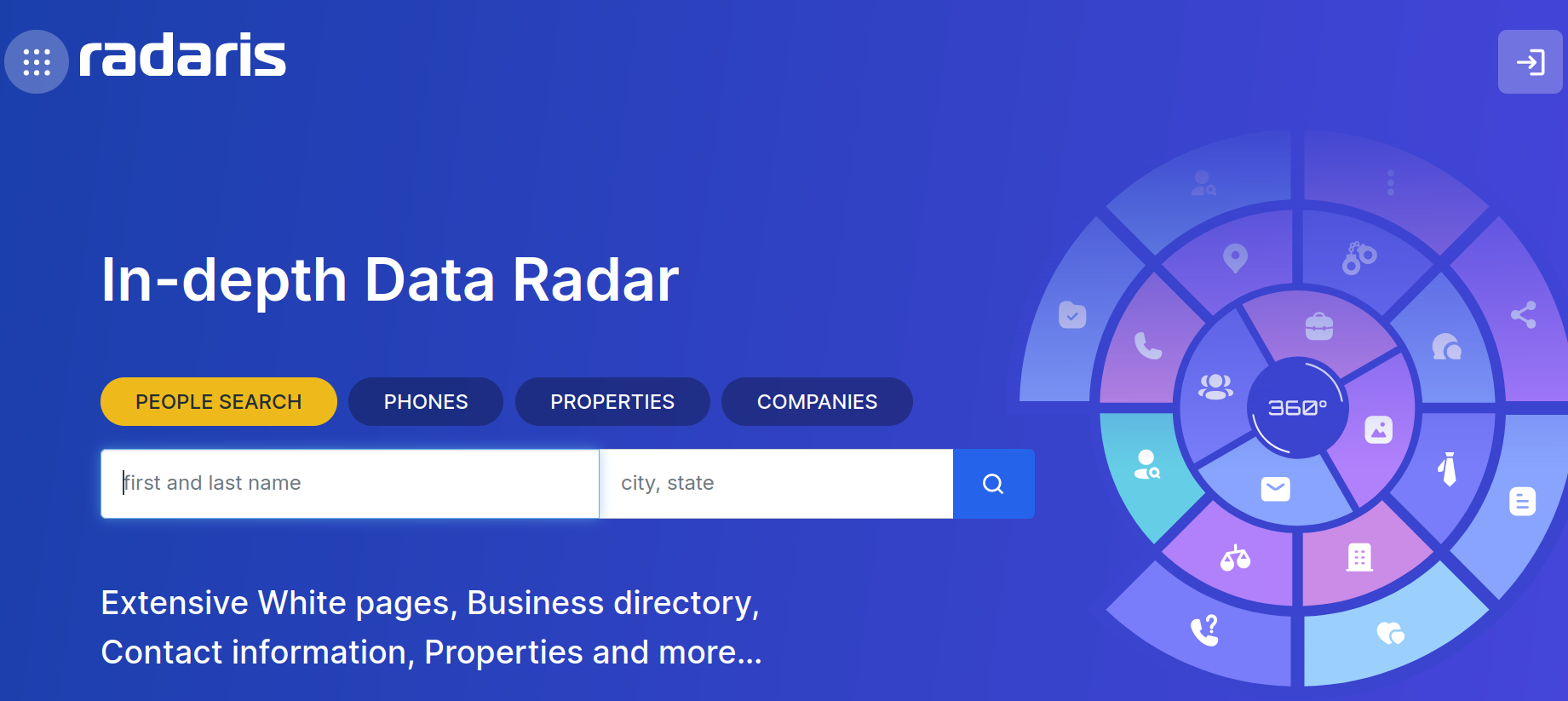
The persistent refusal of the consumer data broker Radaris.com to honor requests for the removal of sensitive personal information has culminated in a landmark legal defeat, as a New Jersey court ordered the transfer of the company’s primary domain and over a dozen associated sites to the plaintiffs. This judicial action, rooted in a series of violations of the state’s Daniel’s Law, serves as a watershed moment in the ongoing conflict between aggressive people-search aggregators and the privacy rights of law enforcement personnel, government officials, and their families.
Daniel’s Law, enacted to protect the safety of public servants, provides a robust framework for shielding sensitive data from public view. The statute explicitly mandates that data brokers must scrub information upon request or face significant financial penalties—specifically $1,000 per violation. For years, Radaris maintained a reputation for ignoring these mandates, employing a strategy of procedural delays and corporate obfuscation that the plaintiffs, Atlas Data Privacy Corp, have now successfully challenged in a court of law.
A Chronology of Evasion and Litigation
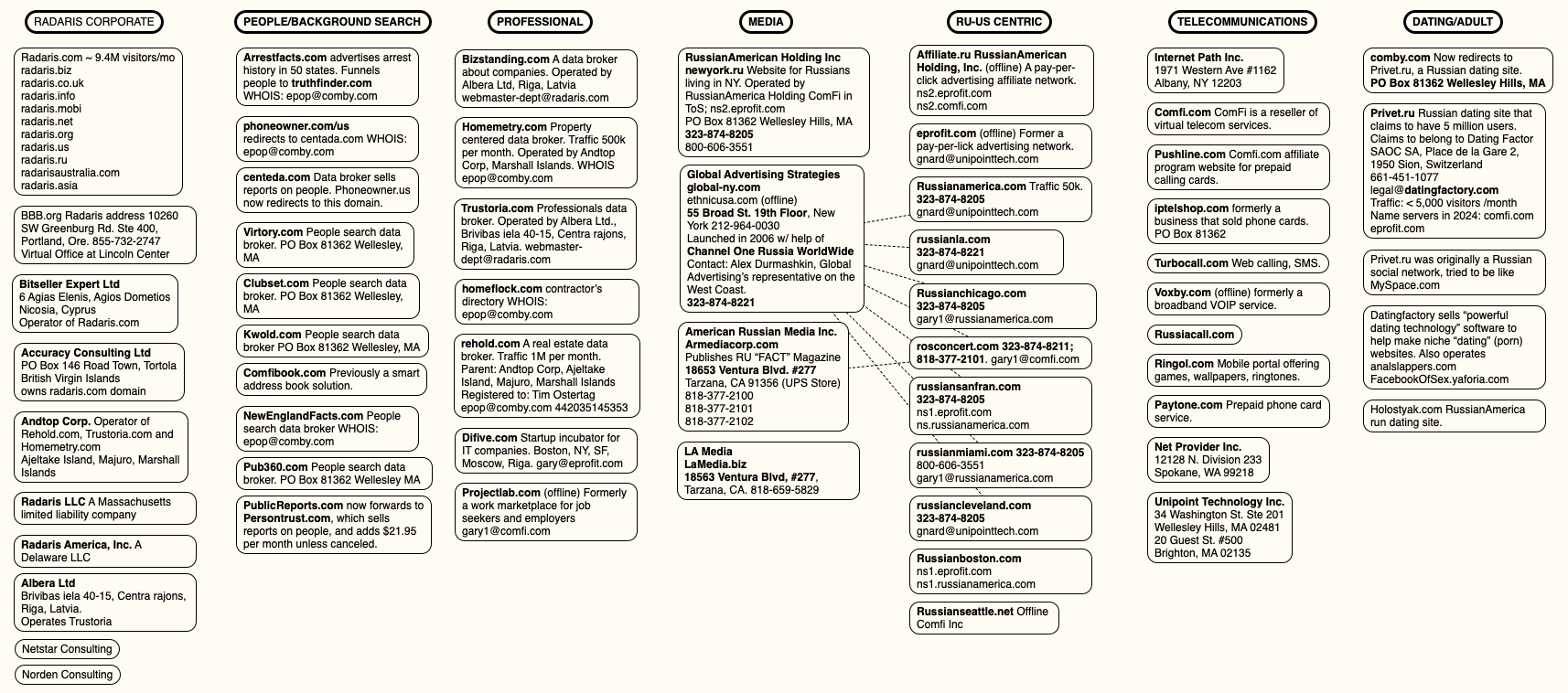
The legal friction began in earnest in February 2024, when Atlas Data Privacy Corp filed suit against Radaris, alleging systematic non-compliance with the New Jersey privacy statute. What followed was a protracted game of cat-and-mouse. As Atlas pressed its case, it uncovered a complex, multi-layered corporate architecture designed to insulate the actual operators from legal accountability.
Internal investigations and subsequent court filings revealed that the individuals behind the operation—Massachusetts-based brothers Igor and Dmitry Lubarsky—had utilized a revolving door of shell companies to manage their assets. This "island-hopping" strategy involved shifting control of Radaris between entities registered in jurisdictions such as the Marshall Islands, the British Virgin Islands, and the Seychelles.
The defense’s primary tactic was to challenge the service of process and the standing of the plaintiffs, claiming that the entities being sued were merely operational shells. In 2017, this strategy proved effective; Radaris successfully avoided a $7.5 million default judgment by exploiting the complexities of international corporate ownership. However, the 2025 iteration of the litigation proved more difficult to evade. Atlas, backed by an extensive cache of over 10,000 internal emails and financial documents, was able to demonstrate to the court that despite the shifting corporate names—from Bitseller Expert Limited to Andtop Company—the underlying financial and administrative operations remained unified under the control of the same small group of Boston-area individuals.
The Anatomy of a Data Empire
The evidence presented by Atlas provides a rare, transparent view into the economics of the people-search industry. According to the court records, the Radaris network is not a fragmented collection of independent sites but a centralized operation sharing common payment processors, hosting infrastructure, and administrative domains.
Financial disclosures extracted during discovery reveal that Radaris.com generates an estimated $42,000 in monthly revenue, while its sister site, Veripages.com, earns approximately $45,000. These figures underscore the profitability of selling personal dossiers, a business model that often relies on scraping "public" records that individuals have little power to keep private.
Furthermore, the documents reveal a symbiotic and often contradictory relationship between data brokers and so-called "privacy" services. The investigation identified that the Radaris family of sites received approximately $25,000 per month through partnerships with Onerep, a company that ostensibly assists users in removing their information from data broker sites. This "sell the cure" business model has drawn significant scrutiny, as it highlights the circular nature of the privacy-scrubbing industry, where the entities profiting from the display of data are also the beneficiaries of payments intended to remove it.
Official Responses and Legal Maneuvers
The courtroom tension reached its apex in August 2025, when the presiding judge ruled that the defendants had been afforded sufficient opportunity to defend themselves and had failed to do so. The subsequent order to transfer the Radaris.com domain to Atlas represents a rare and aggressive enforcement of the law against a digital entity.

Legal counsel for Radaris, represented by Victor Worms, has continued to push back against the judgment. Worms has argued that the transfer is void because the lawsuit named "Radaris.com" as a defendant, which he contends is a domain name rather than a legal person or entity. "We have made a motion to vacate that default judgment on the grounds that it is void since a non-entity has no legal capacity to sue or be sued," Worms stated, adding that the firm intends to appeal the transfer on constitutional grounds, citing potential violations of due process.
Conversely, the plaintiffs view the transfer as a necessary corrective to a decade of legal attrition. Raj Parikh, a partner at PEM Law, noted that the defense had relied on the hope that plaintiffs would eventually tire of the procedural games. "That strategy worked for a decade," Parikh observed. "But we were acutely aware of the threat this website posed to law enforcement officers… and decided early on to commit whatever time and resources were necessary to remove that threat."
Broader Implications for Privacy Legislation
The case against Radaris is occurring against the backdrop of a larger, systemic struggle over the future of data privacy in the United States. While 14 states have followed New Jersey’s lead in passing versions of Daniel’s Law, the industry has mounted a significant counter-offensive. Many brokers are currently challenging the constitutionality of these laws in federal court, arguing that they infringe upon First Amendment rights by restricting the dissemination of truthful, publicly available information.
Privacy expert Justin Sherman, author of the upcoming book The Middlemen, suggests that the reliance on state-level legislation is a stopgap for a much larger failure at the federal level. "The lack of comprehensive federal privacy law is not for a lack of knowledge," Sherman argues. "The average person can look at Daniel’s Law and have a perfectly normal reaction, which is that everyone should be covered, not just police and judges."
The current legal landscape is fragmented. While some courts have upheld the right of states to protect their citizens, others—such as in West Virginia—have ruled similar privacy laws facially unconstitutional. This creates a state-by-state patchwork that benefits large data brokers capable of navigating complex legal hurdles while leaving the average consumer vulnerable.
The Future of Data Regulation
The Radaris seizure serves as a cautionary tale for the data brokerage industry, but it also underscores the limitations of relying on individual lawsuits to solve structural privacy issues. As the case heads toward potential review by the U.S. Supreme Court, the outcome will likely dictate the boundaries of the First Amendment as applied to the digital scraping of public records.
As of now, Radaris.com remains under the control of Atlas, displaying a notice of the transfer rather than the search functionality that once fueled its growth. However, experts warn that until Congress enacts federal legislation that addresses the scope of "public" records—which currently exempts everything from voter registries to property filings—the fundamental business model of the data broker industry will remain intact.
For now, the legal battle continues, with both sides bracing for an appeal process that could define the digital rights of Americans for years to come. Whether this case marks the beginning of a broader crackdown or remains an isolated victory depends largely on how the judiciary balances the competing interests of commercial speech, public access to records, and the growing demand for individual digital safety.
