


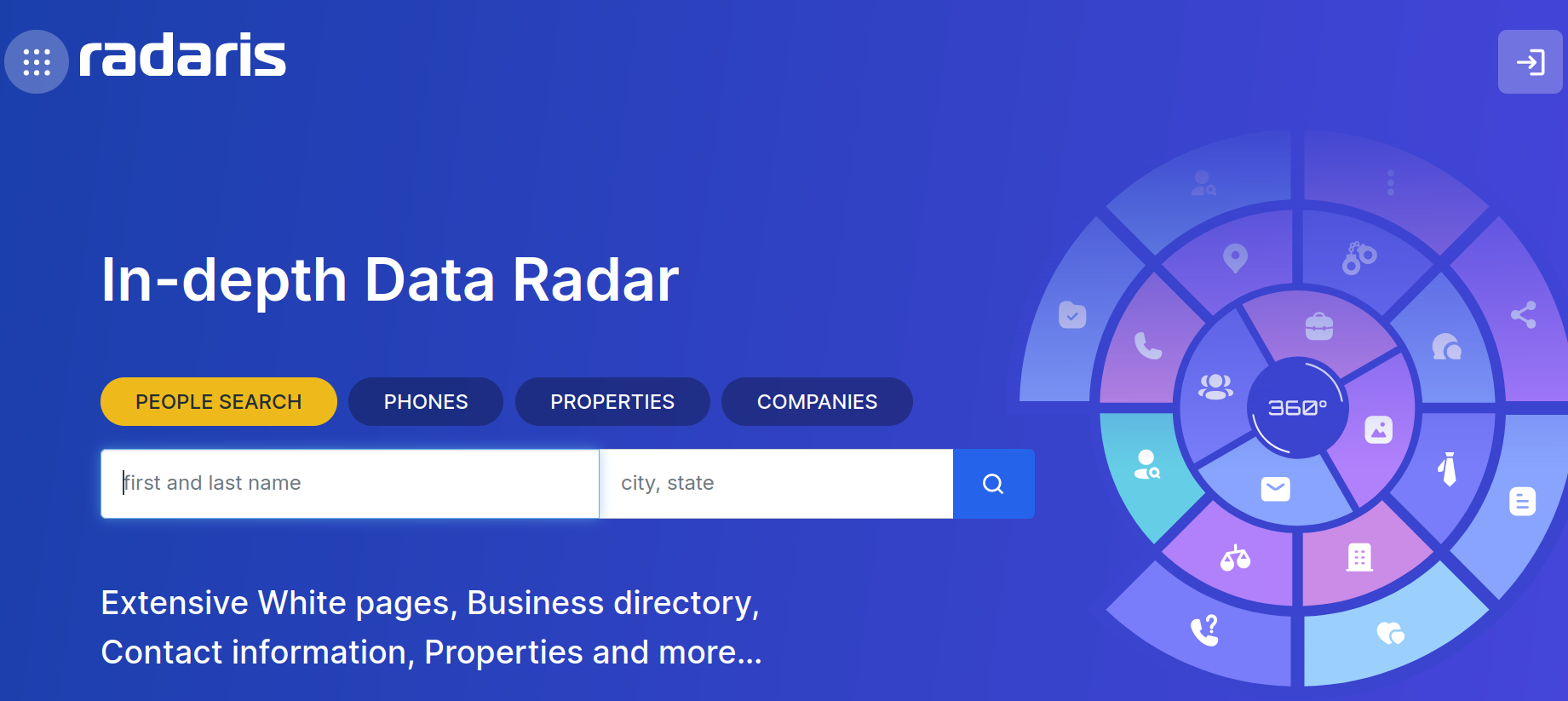
The consumer data broker Radaris.com has long maintained a reputation for systematically ignoring requests to remove personal information from its expansive network of people-search services. This strategy of obstruction recently collapsed under the weight of a New Jersey lawsuit, resulting in a landmark judicial order that transferred ownership of Radaris.com and over a dozen affiliated domains to the plaintiffs. The legal victory, secured by Atlas Data Privacy Corp, represents a significant escalation in the ongoing effort to hold commercial data brokers accountable for violating state privacy protections, specifically those designed to safeguard law enforcement officials and their families under the statute known as Daniel’s Law.
The Genesis of the Conflict
Daniel’s Law, named in honor of Daniel Anderl—the son of U.S. District Judge Esther Salas, who was murdered at their home in 2020—was enacted to provide a critical layer of security for those in public service. The statute grants judges, state law enforcement officials, and government personnel the right to demand the removal of their personal information from commercial databases. It further establishes a penalty of $1,000 per violation for companies that fail to comply with such requests.
In February 2024, Atlas Data Privacy Corp initiated legal proceedings against Radaris, alleging a pattern of non-compliance that directly endangered the protected class of individuals the law was intended to shield. The litigation quickly revealed a complex web of corporate obfuscation. While Radaris presented itself as a legitimate enterprise, investigations into its operations—led by industry experts and bolstered by court-ordered discovery—uncovered a structure defined by shell companies, fictitious executive leadership, and persistent jurisdictional hopping.
Chronology of Corporate Obfuscation
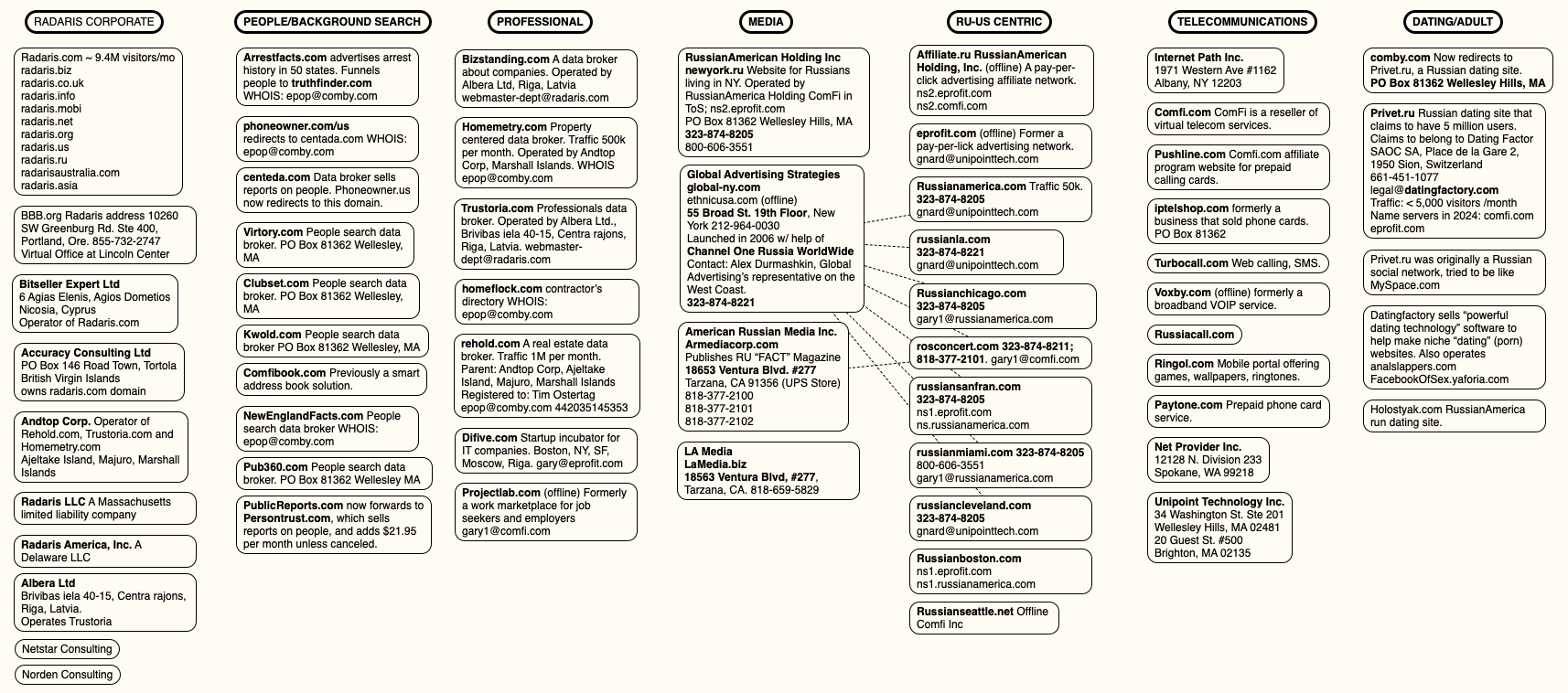
The history of Radaris’s legal defense is characterized by a "shell game" approach to corporate identity. For years, the entity operated behind a facade of various shell corporations, including Bitseller Expert Limited and later, Marshall Islands-based Andtop Company.
The strategy of the company’s legal representatives involved a consistent pattern of delaying court appearances until the final moment, then shifting the burden of liability to entities that were either non-responsive or functionally non-existent. In 2017, Radaris successfully avoided a $7.5 million default judgment by exploiting procedural technicalities regarding the ownership of its domain. However, the legal environment has hardened since then. By June 2025, Atlas had filed an expanded complaint, cataloging the interconnected nature of the "Radaris family" of websites.
Evidence obtained during the discovery phase, consisting of over 10,000 emails and internal documents, proved that numerous distinct-looking websites—such as Veripages and others—were, in fact, managed by the same small group of individuals, sharing common financial systems, payment processors, and virtual office addresses. This evidence effectively dismantled the defense’s argument that these websites operated independently of one another.
The Anatomy of the Data Brokerage Business
The data uncovered by the litigation provides a rare, granular look into the economics of the people-search industry. According to internal financial records, Radaris.com generated approximately $42,000 in monthly revenue, while affiliated sites like Veripages.com brought in roughly $45,000 monthly. These figures are bolstered by strategic partnerships with large-scale marketing firms and other privacy-adjacent services.

Perhaps most critically, the documents confirmed an ironic symbiosis: companies that offer to "remove" consumer data from the internet—such as Onerep—were found to be financially linked to the very data brokers they claim to protect users against. This ecosystem of "selling the disease and the cure" has long been a subject of criticism from privacy advocates, who argue that the business model relies on the permanent vulnerability of the average citizen.
Official Responses and Legal Maneuvering
The transfer of the Radaris.com domain to Atlas serves as a potent reminder of the judiciary’s increasing willingness to utilize domain control as an enforcement mechanism. Following the court’s decision, the Radaris homepage was updated to feature a notice regarding the transfer, effectively halting the sale of personal dossiers on millions of Americans through that specific portal.
Attorneys for the defense have maintained a combative stance. Victor Worms, representing the defendants, has moved to vacate the default judgment, arguing that the court acted outside its jurisdiction by transferring a domain owned by a corporate entity that was not properly served, and asserting that "Radaris.com" itself is not a legal person capable of being sued. Despite these protests, the legal momentum remains with the plaintiffs, as courts increasingly view the intentional evasion of privacy laws as an act of bad faith that warrants severe judicial intervention.
The Broader Implications for Privacy Law
The legal battle over Daniel’s Law is far from over. The statute is currently facing a coordinated constitutional challenge from over 150 data broker firms. These companies argue that the law is overly broad and infringes upon their First Amendment rights to disseminate information that is considered "public record." This defense is being tested across the country; while 14 states have implemented similar laws, the federal district court in West Virginia recently ruled their version of the law facially unconstitutional, citing similar First Amendment concerns.
Privacy expert Justin Sherman notes that the struggle over Daniel’s Law highlights the systemic failure to pass comprehensive federal privacy legislation. "The lack of a federal standard has created a patchwork of state laws that are constantly under fire," Sherman explains. "These brokers argue that because information like voting registries and property filings are ‘public,’ they have a protected right to aggregate and monetize them. Without a fundamental update to how we define privacy in the digital age, we will continue to see these same circular legal arguments."
The case of Radaris is not merely a dispute over a domain name; it is a manifestation of the tension between the modern data-driven economy and the individual’s right to digital safety. The ease with which sensitive information—including home addresses of judges and police officers—can be turned into a commercial product has outpaced the legal safeguards meant to protect them.
Looking Toward the Future
The outcome of the current appellate process, which is widely expected to reach the U.S. Supreme Court, will likely define the parameters of data brokerage for the next decade. Should the courts uphold the validity of state-level privacy statutes like Daniel’s Law, it could trigger a significant contraction in the data broker market. Conversely, a ruling that favors the industry’s First Amendment claims could essentially render such protections toothless, leaving citizens to navigate an increasingly surveilled landscape without legal recourse.
In the meantime, the Radaris domain transfer stands as a significant deterrent. It signals to the industry that the "shell game" tactics of the past are no longer an impenetrable shield. As public awareness of data harvesting grows, and as state legislatures continue to prioritize the safety of public officials, the legal threshold for operating a "people-search" business is rising. The era of unchecked data aggregation, built on the exploitation of public records and hidden corporate structures, is facing an unprecedented level of scrutiny that may ultimately force a fundamental change in the way American consumer data is handled, stored, and sold. Whether this leads to a robust, national privacy framework or a continued state-by-state struggle remains the most pressing question for the future of digital civil liberties.
