

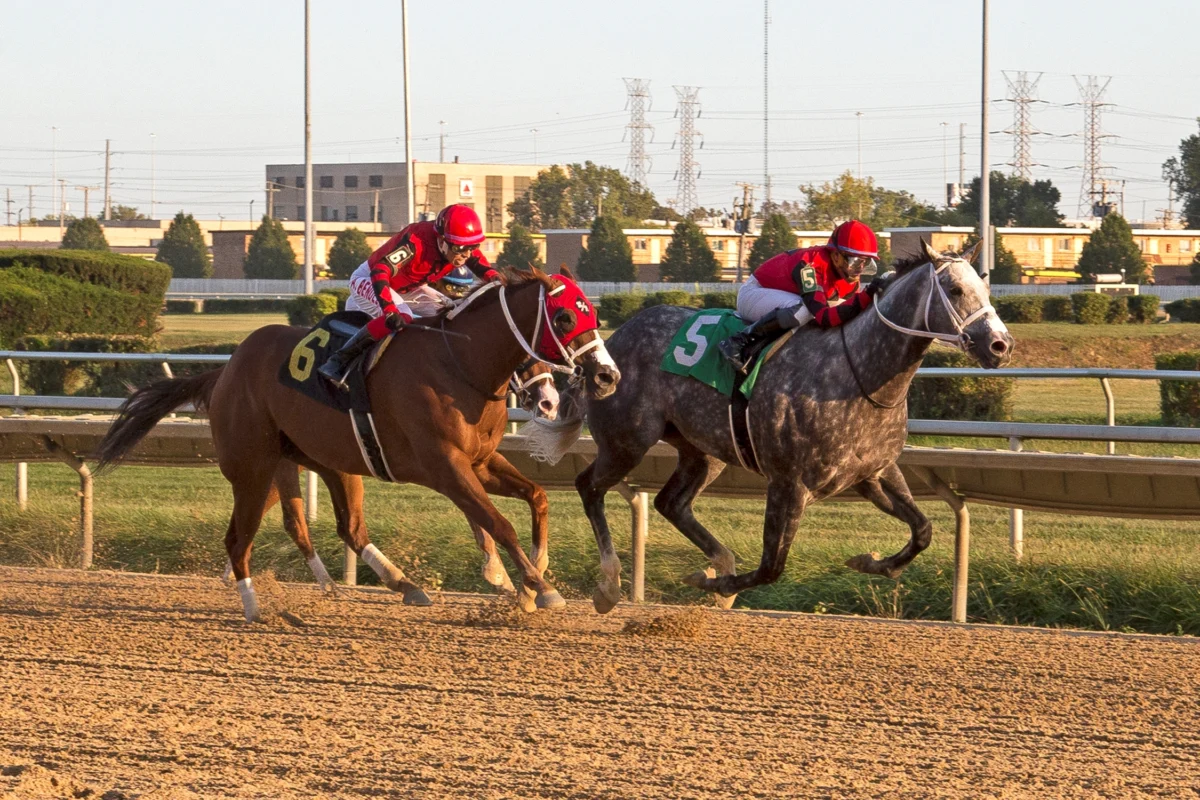
The storied history of horse racing in the Chicago suburbs reached a somber and likely final chapter on July 20, as the horsemen of Hawthorne Race Course were informed that the races run just one day prior would almost certainly be the last in the track’s long tenure. Following a contentious and emotionally charged bankruptcy hearing, the community of trainers, backstretch workers, and owners learned not only of the track’s permanent cessation of racing operations but also of a dire financial reality: there is currently no money to pay nearly $1 million in earned purses from the month of July. Furthermore, the court has mandated that the approximately 500 humans and 500 horses residing on the property must vacate the backstretch by August 31, a deadline that many in the industry describe as a logistical and humanitarian impossibility.
The proceedings, presided over by Judge Timothy Barnes, underscored the total collapse of one of the last remaining pillars of Illinois thoroughbred racing. Hawthorne, which filed for Chapter 11 bankruptcy protection on February 27, has spent months searching for a savior or a buyer who would maintain the site as a racing venue. Those efforts proved unsuccessful. The only viable bidder for the property is a Delaware-registered entity with no intentions of continuing the sport; instead, the firm plans to redevelop the expansive suburban Chicago acreage, effectively ending a tradition that has spanned more than a century.
The Immediate Crisis: Unpaid Purses and Forced Relocation
The July 20 hearing served as a wake-up call for the Illinois Thoroughbred Horsemen’s Association (ITHA), whose members had continued to compete through the month of July under the impression that the track would fulfill its financial obligations. Kevin Morse, the attorney representing the ITHA, argued passionately for a more lenient transition period, highlighting the fact that the horsemen are being asked to leave while being denied the very funds they need to facilitate a move.
According to Morse, the track held race cards on July 5, July 12, and July 19. "We have not been paid once for those dates," Morse stated during the hearing. The total amount of unpaid purse money is estimated to be just under $1 million. For many small-scale trainers and owners, these purses represent the entirety of their operating capital, used to pay for feed, veterinary care, and the wages of backstretch employees. Without this influx of cash, the prospect of transporting hundreds of horses to other jurisdictions is financially daunting.
The situation is compounded by the sheer number of residents living on the Hawthorne backstretch. Approximately 500 workers and their families, including children, call the track home. The August 31 eviction date leaves these families with little more than a month to find new housing and employment in an industry that is rapidly shrinking within the state of Illinois.
The Financial Gridlock of Bankruptcy
The path to this closure began in late February when Hawthorne Race Course filed for bankruptcy, citing a "mountain of debt," frozen bank accounts, and a series of bounced checks that had already signaled deep systemic instability. The track’s financial woes were further exacerbated by the high cost of maintaining the aging facility. During the hearing, Barry Chatz, the attorney representing Hawthorne, countered the horsemen’s pleas by noting that the basic operation of the backstretch facilities costs the estate more than $500,000 per month.
Chatz argued that the track simply does not have the liquidity to extend the stay of the horsemen or to prioritize the payment of purses over other administrative and secured debts. He accused some horsemen of attempting to use Hawthorne as a "storage facility," training their horses on-site while shipping them to out-of-state tracks to compete for purses elsewhere. "We have no money," Chatz told the court. "They are not paying us… We need a clear statement that they can’t train and they need to go."
The tension in the courtroom reflected the desperate nature of the bankruptcy. The $90 million sale price offered by the redevelopment firm, while substantial, is insufficient to cover the totality of Hawthorne’s liabilities. This has led to "technical wrangling" among various creditors, each fighting for priority in the distribution of the sale proceeds. Amidst this legal maneuvering, the horsemen—often considered the lifeblood of the track—find themselves at the bottom of the financial priority list.
A Timeline of Decline
To understand the gravity of Hawthorne’s collapse, one must look at the broader timeline of the Illinois racing industry’s struggles:
- February 27: Hawthorne Race Course officially files for Chapter 11 bankruptcy protection. The filing reveals a history of financial mismanagement and the inability to meet immediate payroll and purse obligations.
- March – June: The bankruptcy court oversees a search for a "stalking horse" bidder or a buyer interested in maintaining racing operations. Several parties express interest, but no firm offers materialize that include the continuation of the sport.
- Early July: Racing continues at Hawthorne, though rumors of an impending sale for redevelopment begin to circulate. Purses for the July 5 and July 12 meets go unpaid.
- July 19: What is now recognized as the final race day at Hawthorne is held.
- July 20: A day-long, heated hearing confirms the sale to a redevelopment firm. The judge sets an August 31 deadline for the evacuation of the backstretch.
The irony of the situation was not lost on the court. Earlier in the bankruptcy proceedings, Hawthorne and its creditors had actually accused Fairmount Park—a track located in the southern part of the state—of attempting to block horsemen from shipping their animals to Hawthorne to race. Now, those same horsemen are being told they have no home and no funds to leave.
The Judicial Dilemma: Economics vs. Welfare
Judge Timothy Barnes expressed a palpable sense of conflict during the proceedings. While he acknowledged the "health and public welfare" implications of displacing 500 people and 500 horses on short notice, he noted that his hands were largely tied by the financial realities of the estate.
The horsemen had requested a compromise to remain on-site until September 15, which would have provided an additional two weeks to secure stalls at other tracks and organize the relocation of families. Two of the creditors and the prospective buyer even volunteered to provide some funding to facilitate a longer transition. However, Hawthorne’s management insisted that the available funds would only stretch until the end of August.
"I would be very hesitant to use the power of this court to dispossess these people," Judge Barnes said, acknowledging the presence of young children in the courtroom who live on the backstretch. "There’s more than economic issues here." Ultimately, however, the judge concluded that he could not mandate an extension if the funds to maintain the facility did not exist. "I can’t find the funds if you can’t find the funds. If you can’t find the funds, I can’t approve Sept. 15."
Broader Implications for Illinois Horse Racing
The closure of Hawthorne Race Course marks a devastating blow to the Illinois agricultural and sporting economy. For decades, the Chicago area was a premier destination for horse racing, anchored by the prestigious Arlington Park and the historic Hawthorne Race Course. With Arlington Park sold to the Chicago Bears for a potential stadium redevelopment and now Hawthorne slated for a similar fate, the Chicago metropolitan area—once a hub for the sport—is left without a single active racetrack.
The implications are far-reaching:
- The Survival of the Circuit: Horse racing relies on a "circuit" of tracks that allow trainers to move their stables seasonally. Without a Chicago-area track, many Illinois-based trainers will be forced to relocate permanently to Kentucky, Indiana, or Ohio, draining the state of tax revenue and agricultural jobs.
- The Fate of Fairmount Park: Following Hawthorne’s closure, Fairmount Park (now branded as FanDuel Sportsbook and Horse Racing) in Collinsville remains the only operational track in Illinois. However, Fairmount alone cannot sustain the state’s breeding industry or the thousands of jobs associated with thoroughbred racing.
- Licensure and Future Development: During the hearing, Barry Chatz mentioned that Hawthorne would do its "best to be sure our license is maintained." This suggests a potential attempt to transfer the racing license to a new, as-yet-unbuilt facility, possibly a harness racing track in the south Chicago suburbs. However, the timeline for such a project is years away, offering no immediate relief to the horsemen being evicted today.
- Redevelopment Trends: The sale of Hawthorne follows a national trend where the land value of historic racetracks in suburban areas far exceeds the revenue generated by the races themselves. As gambling habits shift toward online platforms and sports betting, the physical real estate of tracks has become a prime target for logistics hubs and commercial developers.
The Human and Equine Toll
As the August 31 deadline looms, the immediate concern remains the welfare of the animals and the people who care for them. Relocating 500 horses is a massive undertaking. Nearby tracks in Indiana and Kentucky often have limited stall space, especially mid-season when their own backstretches are at capacity. Furthermore, the specialized nature of backstretch work means that many of the 500 workers may struggle to find comparable employment and housing in a short timeframe.
The "dignified exit" requested by Kevin Morse appears increasingly unlikely. Instead, the racing community at Hawthorne is facing a frantic scramble for survival. The loss of $1 million in purse money acts as a final insult to those who have dedicated their lives to the track, leaving them to navigate a transition that is as much a humanitarian crisis as it is a legal one.
As the hearing concluded, the reality of the situation settled over the courtroom. The era of racing at Hawthorne, which survived the Great Depression, two World Wars, and countless economic shifts, has ended not with a photo finish, but with a gavel in a bankruptcy court. The property, once filled with the thunder of hooves and the cheers of thousands, will soon be silenced, cleared "free and clear" for a future that has no room for the horse.
