

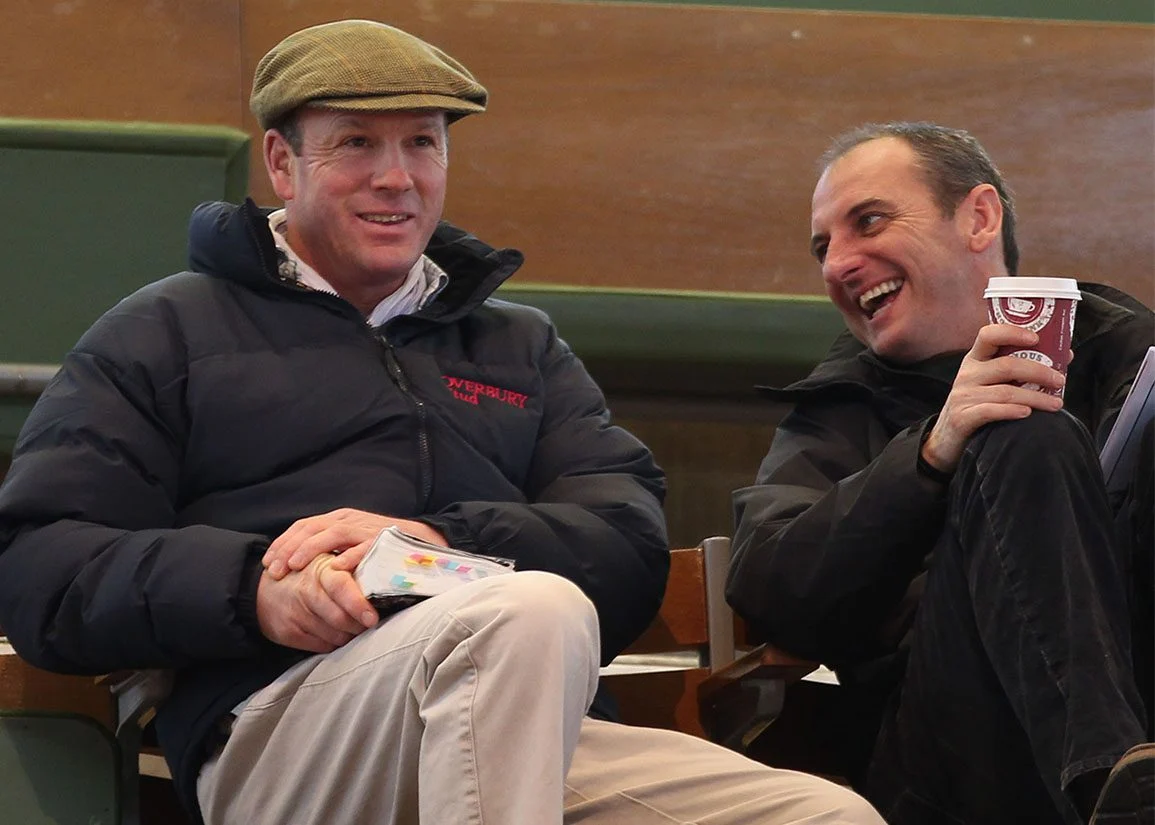
The centerpiece of the evening was the presentation of the Queen Mother’s Silver Salver, the highest honor awarded by the TBA’s National Hunt Committee for special achievement within the industry. This year’s recipient, Simon Sweeting of Overbury Stud, was recognized for his decades of dedication, his visionary management of some of the most influential stallions in British history, and his personal success as a breeder of elite talent on both the Flat and over jumps.
A Career Defined by Excellence and Mentorship
Simon Sweeting’s journey to the pinnacle of the British breeding industry is a testament to a lifelong immersion in horsemanship. Before establishing himself as a leader at Overbury Stud, Sweeting cultivated a deep well of knowledge by working alongside some of the most legendary figures in global horse racing. His resume includes formative years spent with Colin Hayes in Australia, Timmy Hyde in Ireland, and the incomparable Sir Henry Cecil and Luca Cumani in Newmarket. Furthermore, his international experience was bolstered by a stint with the Hall of Fame trainer Bobby Frankel in the United States.
This diverse background provided Sweeting with a holistic understanding of the Thoroughbred, from the intricacies of pedigree analysis to the physical demands of elite competition. In 2000, Sweeting took over the lease of Overbury Stud in Gloucestershire, a move that would ultimately alter the trajectory of British National Hunt breeding.
The Kayf Tara Legacy and the Rise of Overbury Stud
The year 2000 proved to be a watershed moment for Overbury Stud. Shortly after Sweeting took the helm, it was announced that Kayf Tara, the dual Gold Cup winner and son of Sadler’s Wells, would retire to the stud. Under Sweeting’s management, Kayf Tara became the dominant force in British jumps breeding for nearly two decades. He was crowned champion British National Hunt sire multiple times, producing legendary performers such as Thistlecrack, Carruthers, and Special Tiara.
The success of Kayf Tara established Overbury Stud as a premier destination for National Hunt stallions in the United Kingdom, challenging the traditional dominance of Irish operations. Sweeting’s ability to manage a stallion of such magnitude while maintaining a commercial appeal for domestic breeders was a primary factor in his recognition by the TBA.
In recent years, Sweeting has continued this tradition of excellence with the acquisition of Golden Horn. The 2015 Derby and Prix de l’Arc de Triomphe winner has transitioned seamlessly into a dual-purpose role at Overbury. The 2025-26 season highlighted the stallion’s versatility and quality, evidenced by the performances of Golden Ace, the Champion Hurdle heroine, and Trawlerman, a standout Gold Cup winner. These successes underscore Sweeting’s knack for identifying and nurturing talent that can excel at the highest levels of the sport.
Breeding Success and Industry Leadership
While his role as a stallion manager is widely acclaimed, the 11th National Hunt Breeders’ Awards also shone a light on Sweeting’s prowess as an independent breeder. His achievements in 2025 were particularly notable, as he was co-breeder of the European champion two-year-old, Gewan. Co-bred with the Wyatt family’s Dukes Stud, Gewan’s success on the Flat demonstrated Sweeting’s ability to produce top-tier speed and precocity, a rare feat for a figure so deeply embedded in the National Hunt world.
Over jumps, Sweeting’s influence is equally profound. He is the breeder of Thyme Hill, a multiple Grade 1 winner whose consistency and class made him a favorite among racing fans for several seasons. This ability to produce winners across different disciplines speaks to a profound understanding of the Thoroughbred’s genetic potential.
Beyond the stud farm, Sweeting has been a tireless advocate for the broader industry. His leadership roles have included serving as the chairman of the British European Breeders’ Fund (EBF) and a director at Warwick Racecourse. His contributions to these organizations have focused on improving prize money, enhancing breeder incentives, and ensuring the long-term sustainability of British racing.
Official Recognition and Industry Reaction
During the ceremony, Simon Cox, the chairman of the TBA National Hunt Committee, offered a glowing tribute to Sweeting’s impact on the sport. "Simon Sweeting is a most deserving recipient of the Queen Mother’s Silver Salver," Cox stated. "A friend to all and highly respected, Simon is duly recognized by the NH Committee for his achievements as a breeder and stallion manager, along with his many contributions to the wider industry. He is a great asset to National Hunt breeding and racing."
The sentiment was echoed by attendees at Poulton Hill Vineyard, who noted Sweeting’s humility and his willingness to mentor younger members of the breeding community. The award of the Silver Salver is seen not just as a recognition of past success, but as an acknowledgment of a career that continues to shape the future of the British Thoroughbred.
Contextualizing the 2025-26 National Hunt Season
The 11th edition of the awards comes at a time of transition and cautious optimism for the British National Hunt breeding industry. The 2025-26 season was characterized by a concerted effort to increase the quality of the domestic foal crop and to provide better incentives for owners to keep British-bred horses in training at home.
Data from the 2025-26 season suggests a stabilizing trend in the National Hunt market. While the number of active stallions in Britain has faced pressure from international competition, the success of "dual-purpose" sires like Golden Horn and the continued influence of the Great British Bonus (GBB) have provided much-needed support for breeders. The GBB scheme, which offers significant financial rewards for British-bred fillies and mares, has been instrumental in ensuring that quality bloodlines remain within the domestic system.
The celebration at Poulton Hill Vineyard served as a reminder of the economic and cultural importance of the breeding sector. The National Hunt industry supports thousands of jobs across rural Britain and contributes significantly to the agricultural economy. By honoring figures like Simon Sweeting, the TBA highlights the expertise required to maintain Britain’s status as a world leader in bloodstock.
Broader Implications for the Breeding Industry
The recognition of Simon Sweeting also brings into focus the evolving nature of stallion management. In an era where the Flat and National Hunt markets are increasingly distinct, Sweeting’s success with Golden Horn provides a blueprint for how high-class Flat performers can be repositioned to revitalize the jumps stallion ranks. This "crossover" appeal is vital for maintaining genetic diversity and ensuring that the stamina and durability required for National Hunt racing are preserved.
Furthermore, the decision to hold the awards as part of a "Summer Party" reflects a strategic shift by the TBA to make the breeding industry more accessible and celebratory. By moving away from more formal, indoor settings to the open environment of a vineyard, the association aims to build a stronger sense of community among breeders, trainers, and owners.
Conclusion and Future Outlook
As the 2025-26 awards concluded, the focus of the National Hunt community shifted toward the upcoming sales season and the preparations for the 2026-27 racing campaign. For Simon Sweeting and Overbury Stud, the future remains bright, with a roster of stallions that continue to attract high-quality mares and a breeding program that consistently produces elite athletes.
The Queen Mother’s Silver Salver is a prestigious addition to Sweeting’s already distinguished career, but its true value lies in what it represents: a lifetime of excellence, a commitment to the welfare of the horse, and an unwavering belief in the quality of British National Hunt breeding. As the industry navigates the challenges of a globalized market, the leadership and vision of figures like Sweeting will remain essential to its continued prosperity.
The TBA National Hunt Breeders’ Awards continue to serve as a vital platform for recognizing the unsung heroes of the sport—the breeders whose patience and investment provide the foundation for the spectacle of jump racing. With the 11th edition now in the books, the industry looks forward to a new season of competition, innovation, and the pursuit of the next generation of champions.
