

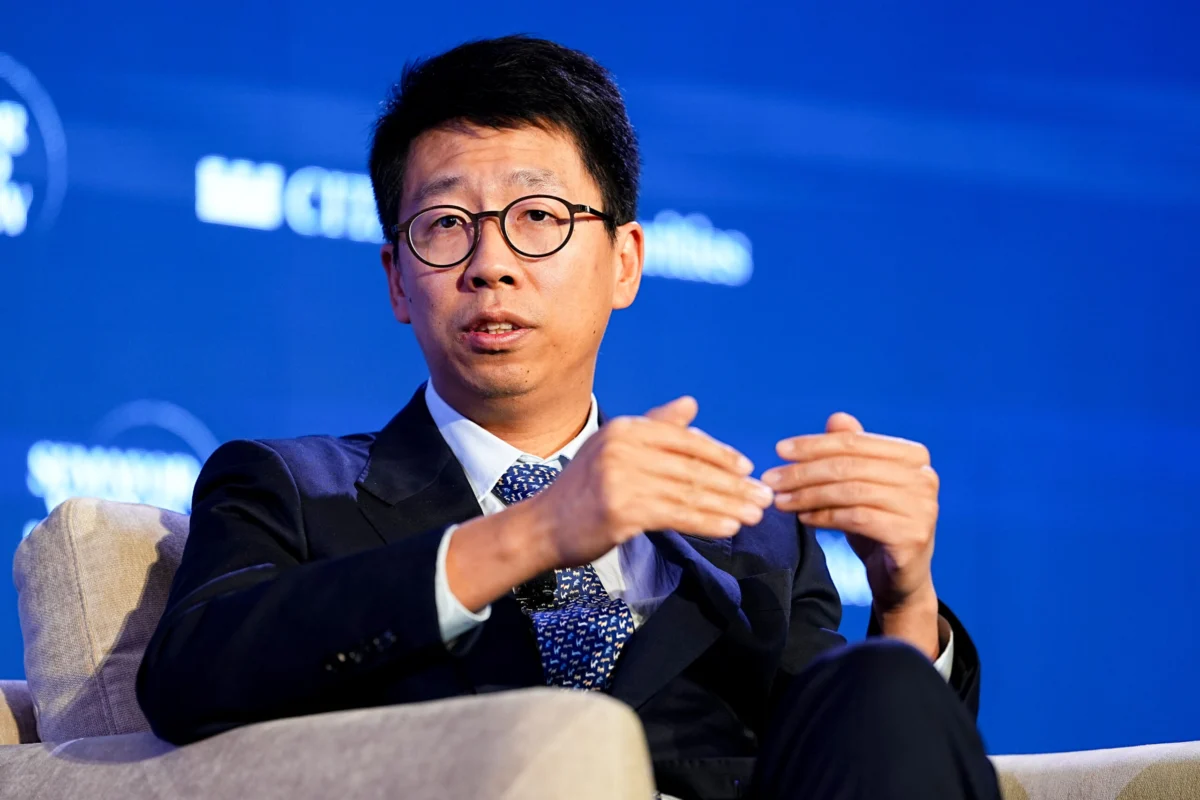
In 2018, Jack Zhang, the 34-year-old co-founder of the Melbourne-based fintech startup Airwallex, found himself at a pivotal crossroads that would define the future of international digital finance. Sitting in the San Francisco home of Michael Moritz, the legendary Sequoia Capital investor, Zhang was presented with an offer that most entrepreneurs would consider the culmination of a lifelong dream. Stripe, the Silicon Valley titan led by Patrick Collison, wanted to acquire Airwallex for $1.2 billion. At the time, Airwallex was generating a mere $2 million in annualized revenue. The offer represented a staggering 600x revenue multiple, a figure nearly unheard of even during the height of the tech valuation boom.
Moritz, an early backer of Google and PayPal, argued that joining forces with Stripe would allow Zhang’s vision to "compound" into something extraordinary under the leadership of a "generational founder" like Collison. For two weeks, Zhang walked the streets of San Francisco, grappling with the weight of the decision. He initially agreed to the deal, but the silence of the long flight back to Australia provided the clarity he needed. Upon returning to his Melbourne office and looking at a whiteboard filled with unfinished goals, Zhang realized that the mission to build a global financial infrastructure was only in its infancy. With the support of two co-founders who also favored independence, Zhang walked away from the billion-dollar exit. Today, that decision stands as one of the most significant "what-if" moments in the history of the fintech industry.
The Architect of Resilience: Jack Zhang’s Formative Years
The conviction required to turn down $1.2 billion was not forged in a boardroom, but rather through a lifetime of labor and migration. Born in Qingdao, a bustling port city in northeastern China, Zhang moved to Melbourne at the age of 15. Arriving without his parents and with limited English proficiency, he lived with a host family while navigating a foreign education system. When his family encountered a financial crisis, Zhang was forced to balance his computer science studies at the University of Melbourne with an exhausting array of manual labor.
His resume from that era reads like a masterclass in grit: he worked as a bartender, washed dishes, manned gas stations during graveyard shifts, and spent school holidays picking lemons on a farm—a job he frequently cites as the most physically demanding experience of his life. These experiences instilled a belief in the "path of maximum resistance," a philosophy that would later become the foundational strategy of Airwallex. After graduating, Zhang spent years as a software engineer in the front office of an Australian investment bank, building high-frequency trading systems. While the work was lucrative, it lacked the creative fulfillment he craved, leading him to experiment with over ten different business ventures, ranging from a digital magazine to a burger chain and an import-export business handling wine and textiles.
Solving the Correspondent Banking Crisis
The catalyst for Airwallex arrived while Zhang was running a small coffee shop in Melbourne. He and his co-founder, Max Li, struggled with the logistical nightmare of paying suppliers in Brazil, Indonesia, and Guatemala. They observed that payments frequently vanished into the "black box" of the correspondent banking system. Funds were often frozen by American intermediary banks enforcing Office of Foreign Assets Control (OFAC) sanctions, or they would bounce back weeks later with exorbitant fees deducted.
This friction led Zhang to investigate the underlying mechanics of the Society for Worldwide Interbank Financial Telecommunication (SWIFT) and the inefficiencies of traditional cross-border money movement. The goal became clear: to build a proprietary global network that would allow businesses to operate in any market as if they were local entities. Unlike many fintechs that simply built "wrappers" around existing bank infrastructure, Zhang committed to the grueling process of obtaining primary financial licenses and building direct integrations with central banks.
The Path of Maximum Resistance: Strategic Infrastructure Ownership
Airwallex’s competitive advantage lies in its commitment to owning the "rails" of its financial network. As of 2024, the company holds nearly 90 financial licenses across 50 global markets. This regulatory footprint is significantly larger than many of its competitors, including Stripe. The process of securing these licenses is notoriously slow and capital-intensive; in Japan, the approval process took seven years. In other emerging markets, Airwallex has had to acquire shell companies with legacy licenses and completely overhaul their underlying technology to meet modern standards.
Zhang’s insistence on this "hard way" serves two primary purposes:
- Regulatory Autonomy: In markets like Japan, competitors like Stripe or Square often operate under restricted licenses that require them to immediately transfer merchant funds out to external bank accounts. Airwallex, holding a fund transfer operator license, can retain those funds within its ecosystem. This allows customers to issue bank accounts and cards, effectively operating a global treasury without leaving the platform.
- Economic Efficiency: By avoiding intermediary banks, Airwallex eliminates the standard 2% to 3% currency conversion fees that traditional processors charge. A U.S.-based merchant can settle transactions in Australian dollars, hold that balance, and use it to pay local Australian vendors or payroll at interbank rates, bypassing the "FX tax" entirely.
Zhang argues that building on top of third-party infrastructure is ultimately unscalable. Without controlling the end-to-end workflow, a company cannot access the granular data required to troubleshoot failed transactions or build seamless new products.
A Financial Comparison: Airwallex vs. Stripe
While Stripe remains the dominant force in the Western developer ecosystem, Airwallex has quietly narrowed the gap in terms of growth velocity and transaction volume.
| Metric | Airwallex (Current) | Stripe (Reported 2025) |
|---|---|---|
| Annualized Revenue | $1.3 Billion+ | Not Publicly Disclosed |
| Revenue Growth | 85% Year-over-Year | ~20-30% (Estimated) |
| Annual Transaction Volume | $300 Billion | $1.9 Trillion |
| Valuation | $8 Billion (Dec 2024) | $159 Billion (Feb 2026 Tender) |
| Global Licenses | ~90 | ~45-50 |
The data suggests a valuation disconnect that Zhang is keen to highlight. While Stripe is valued at approximately 20 times the value of Airwallex, its transaction volume is only about six times larger. With Airwallex projecting $2 billion in revenue within the next twelve months, the company is positioning itself as a high-growth alternative to the established Silicon Valley incumbent.
Shifting Competitive Landscapes
For much of the last decade, Airwallex and Stripe operated in different spheres. Stripe focused on the "API-first" developer market in the U.S. and Europe, while Airwallex focused on the CFO’s office and treasury departments in Australia and Southeast Asia. However, these circles are now overlapping. As Stripe expands its international footprint, Airwallex is making an aggressive push into the United States, establishing a dual global headquarters in San Francisco.
The sales motions remain distinct. Stripe’s growth is driven by developers integrating payment buttons into new apps. Airwallex’s growth is driven by finance directors seeking to optimize global cash flow. Over 90% of Airwallex customers begin their journey with a business account product, subsequently adding payment processing and spend management. However, Zhang acknowledges a significant "brand gap." In the eyes of Silicon Valley engineers, Stripe is the default choice. Airwallex must now win the battle for mindshare among developers to sustain its upward trajectory.
The Road Ahead: AI, IPO, and 2030 Targets
Looking toward the future, Zhang has set ambitious targets for the end of the decade. By 2030, the company aims to serve one million customers and generate $20 billion in annual revenue. To achieve this, Airwallex is pivoting toward "autonomous finance"—a suite of AI-powered agents designed to execute complex financial tasks without human intervention.
Zhang believes that Airwallex’s decade of proprietary financial data provides a unique training set for these AI models. Because the company owns the entire stack—from revenue collection to treasury management—its AI agents can theoretically perform actions that competitors’ agents cannot, such as automatically rebalancing currency holdings across global entities to minimize risk or executing cross-border vendor payments at the optimal moment.
Regarding a potential public debut, Zhang remains patient. He estimates that an Initial Public Offering (IPO) is still three to five years away. This timeline suggests that Airwallex intends to continue its private expansion, further solidifying its infrastructure before facing the quarterly scrutiny of public markets.
Implications for the Global Fintech Ecosystem
The rise of Airwallex signals a shift in the fintech narrative from "software eating the world" to "infrastructure owning the world." The era of simple "wrappers" around legacy banks is ending, replaced by companies that are willing to navigate the labyrinthine world of global regulation.
Zhang’s rejection of the Stripe offer in 2018 serves as a testament to the long-term value of independence in a sector prone to consolidation. By choosing the "path of maximum resistance," Airwallex has built a moat that is difficult for even the most well-funded competitors to breach. As the two giants—one from Silicon Valley and one from Melbourne—prepare for a more direct confrontation in the U.S. market, the outcome will likely depend on whether the agility of a developer-focused brand can overcome the structural depth of a license-heavy infrastructure provider. For now, Jack Zhang’s $1.2 billion gamble appears to be paying off, proving that sometimes, the best deal is the one you don’t sign.
