

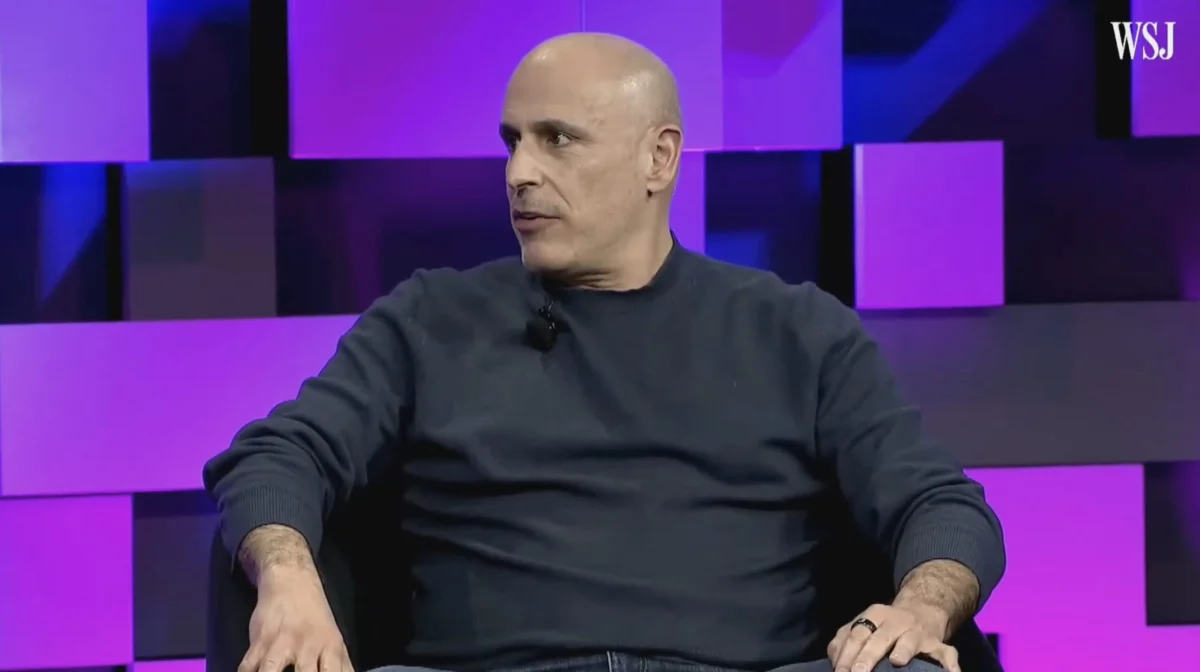
The landscape of the American dining industry is on the verge of a radical transformation as Marc Lore, the serial entrepreneur behind Jet.com and former CEO of Walmart U.S. eCommerce, accelerates his latest venture, Wonder. Speaking at The Wall Street Journal’s “Future of Everything” conference, Lore detailed a high-tech roadmap that positions Wonder not merely as a delivery service or a restaurant chain, but as a "programmable cooking platform" powered by artificial intelligence and advanced robotics. The centerpiece of this strategy is Wonder Create, an initiative designed to democratize restaurant ownership by allowing anyone—from social media influencers to local entrepreneurs—to design, brand, and launch a virtual restaurant in less than 60 seconds using generative AI.
The Vision of Wonder Create: From Prompt to Plate
Wonder Create represents a significant departure from traditional food service models. Lore describes the interface as a "Shopify front-end with an AI prompt." By entering specific parameters regarding cuisine type, target audience, and flavor profiles, users can trigger an AI engine that instantly generates a comprehensive brand identity. This includes the restaurant’s name, logo, menu descriptions, high-resolution food photography, pricing structures, nutritional information, and, most importantly, the specific recipes required to produce the meals.
Once a brand is generated and refined by the user, it can be deployed across Wonder’s physical infrastructure. Unlike traditional ghost kitchens that often struggle with quality control and brand consistency, Wonder’s model relies on a vertically integrated system where the company owns the technology, the kitchens, and the delivery logistics. This allows a new brand to go live across hundreds of locations simultaneously, providing instant scale that was previously impossible for independent operators.
Lore envisions a wide array of use cases for this technology. Social media influencers with millions of followers could monetize their personal brands through custom food lines without the overhead of physical real estate. Personal trainers could design specific meal bowls tailored to their clients’ dietary needs, and major corporations like Disney could launch temporary, themed restaurant brands to promote new cinematic releases. This flexibility aims to turn food into a form of "software" that can be updated, scaled, or retired with minimal friction.
The Evolution of the Programmable Cooking Platform
The current iteration of Wonder is the result of a significant strategic pivot. Initially launched as a fleet of high-end food trucks that prepared meals curbside, the company transitioned to a fixed-location model to improve efficiency and density. Today, Wonder operates "fast-casual" locations that feature limited seating but function primarily as high-tech fulfillment hubs.
These facilities are described by Lore as "programmable cooking platforms." Each kitchen is equipped with a library of approximately 700 ingredients and is designed to operate up to 25 different restaurant brands simultaneously. The kitchens are increasingly moving toward full automation, utilizing a mix of human staff and specialized robotics to maintain high throughput and precision.
A critical component of this automation strategy is the recent acquisition of Spice Robotics, a company known for developing automated bowl-assembling machines. Additionally, Wonder plans to debut an "infinite sauce machine" next year, a robotic system capable of replicating approximately 80% of the sauce recipes currently found on the internet. By automating the most repetitive and labor-intensive aspects of food preparation, Wonder aims to solve the consistency issues that have historically plagued the ghost kitchen industry.
Strategic Acquisitions and Vertical Integration
Marc Lore’s vision for Wonder is supported by a string of high-profile acquisitions designed to control every aspect of the value chain. This vertical integration is intended to create an "arbitrage" opportunity where the company can acquire established but localized brands and scale them nationally overnight.
- Blue Apron (September 2023): The acquisition of the meal-kit pioneer provided Wonder with a robust supply chain, direct-to-consumer data, and expertise in portioned ingredient logistics.
- Spice Robotics (January 2024): This move signaled Wonder’s commitment to hardware-level automation, focusing on the mechanical assembly of meals to reduce human error.
- Blue Ribbon Fried Chicken (February 2024): Purchased for $6.5 million, this acquisition demonstrated Lore’s strategy of buying "hero brands" with existing loyal followings and porting them into the Wonder ecosystem.
- Grubhub (November 2024): In a deal valued at approximately $650 million, Wonder acquired Grubhub from Just Eat Takeaway. This provides Wonder with a massive delivery network and a user base responsible for 250 million deliveries annually, effectively solving the "last mile" logistics challenge.
By combining these assets, Wonder controls the brand (Blue Ribbon), the preparation technology (Spice Robotics), the supply chain (Blue Apron), and the distribution (Grubhub). Lore notes that taking a brand with 10 or 50 locations and placing it in 1,000 automated kitchens creates an unprecedented economic advantage in the hospitality sector.
Scaling Throughput and the 2035 Roadmap
The operational goals for Wonder are ambitious. Currently, the company operates 120 kitchen locations, a number expected to more than triple to 400 by the end of next year. The long-term objective is to have 1,000 unique restaurant brands operating out of a single 2,500-square-foot facility by 2035.
A key metric for Lore is "throughput capacity." Currently, a standard Wonder kitchen managed by a staff of 12 can produce enough food to support a throughput equivalent to $7 million in annual sales. However, with the integration of more advanced robotics and AI-driven workflow optimization, Lore sees a path to increasing that capacity to $20 million per location without increasing the headcount.
"We won’t necessarily reduce headcount," Lore explained during the WSJ event. "Instead, we will increase the number of meals a kitchen can produce in a given period." This focus on labor productivity rather than labor replacement is a strategic choice aimed at maintaining the flexibility needed for complex food preparation while letting machines handle the high-volume, repetitive tasks.
Learning from the Failures of the Ghost Kitchen Era
The concept of virtual restaurants is not new, and the industry is littered with the remains of companies that failed to execute the model. The early 2020s saw a boom in "ghost kitchens"—facilities that housed multiple delivery-only brands. However, many of these operations, such as those run by CloudKitchens or Reef Technology, faced significant backlash due to inconsistent food quality and poor customer service.
The most prominent example of these pitfalls was MrBeast Burger, a virtual brand launched by YouTube star Jimmy Donaldson. Because the brand relied on a patchwork of existing restaurant kitchens with varying equipment and training, the quality of the burgers varied wildly from one location to the next. This led to a high-profile legal dispute and served as a cautionary tale for the industry.
Wonder’s approach is designed to circumvent these issues through standardization. By using "programmable" kitchens where the equipment is identical across all 120 (and eventually 1,000) locations, Wonder ensures that a recipe programmed in a lab in New York will be executed with 100% fidelity in a kitchen in New Jersey or Pennsylvania. The "programmable" nature of the kitchen means the robotic arms and automated dispensers follow exact digital instructions, removing the variability of human execution.
Technical Constraints and Future Challenges
Despite the optimism, Lore is candid about the current limitations of the technology. While AI can generate recipes and robots can assemble bowls or fry chicken, certain culinary tasks remain beyond the reach of current automation. Lore admitted that Wonder’s systems cannot yet perform delicate tasks such as tossing and stretching pizza dough or the intricate slicing and rolling required for high-quality sushi.
Consequently, Wonder is focusing its initial efforts on "simpler basics" that are conducive to robotic assembly, such as burgers, chicken wings, fried chicken, and grain bowls. The challenge for the company will be whether it can expand its culinary repertoire to include more complex cuisines without sacrificing the speed and efficiency that define its business model.
Furthermore, the consumer appetite for AI-generated food remains an open question. While the "Shopify for food" model lowers the barrier to entry for creators, it could also lead to a saturated market filled with "generic" brands that lack the soul and story of traditional restaurants. Wonder’s success will likely depend on its ability to balance the efficiency of AI with the creative input of human chefs and influencers.
Broader Economic and Industrial Impact
If Lore’s vision comes to fruition, it could fundamentally alter the economics of the restaurant industry. The traditional model, characterized by high real estate costs, labor shortages, and razor-thin margins, is increasingly under pressure. Wonder’s model offers a solution by maximizing the utility of every square foot of kitchen space and every hour of labor.
For the broader workforce, the rise of "programmable kitchens" suggests a shift in the nature of culinary jobs. Instead of traditional cooking roles, kitchen staff may evolve into "system operators" who oversee robotic fleets and manage the complex logistics of multi-brand fulfillment.
As Wonder continues its aggressive expansion, the industry will be watching closely to see if Lore can repeat the success he found with Diapers.com and Jet.com. By merging the worlds of e-commerce, artificial intelligence, and physical automation, Wonder is attempting to build the "operating system" for the future of dining—a future where the distance between a digital idea and a delivered meal is measured in minutes.
