

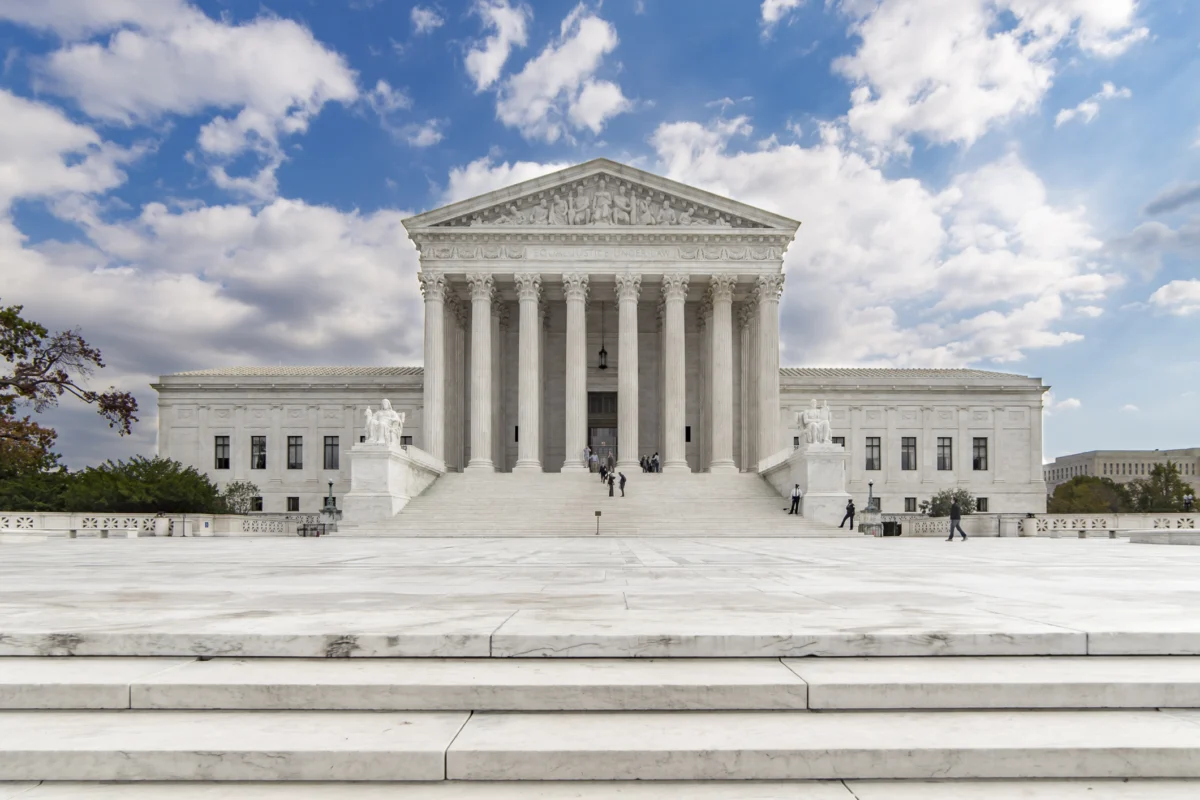
In a case that has highlighted significant vulnerabilities within the digital infrastructure of the United States federal government, Nicholas Moore was sentenced on Friday to one year of probation following a series of sophisticated cyber intrusions. Moore, a Tennessee resident, had previously entered a guilty plea regarding the unauthorized access of the U.S. Supreme Court’s electronic document filing system, along with the networks of two other major federal entities. The sentencing marks the conclusion of a legal process that began when federal investigators traced a series of high-profile data breaches back to Moore’s social media activities, where he had openly boasted about his ability to bypass government security protocols.
The proceedings in federal court revealed that Moore’s activities were not isolated incidents but rather a sustained campaign of digital trespassing that spanned several months. By exploiting stolen credentials, Moore was able to gain entry into sensitive systems, including those belonging to AmeriCorps and the Department of Veterans Affairs (VA). Despite the gravity of the breaches and the sensitive nature of the institutions involved, the court’s decision to grant probation followed a recommendation from federal prosecutors, who cited Moore’s cooperation and expressed remorse as mitigating factors in the final judgment.
The Scope of the Breaches and the Methodology of Intrusion
The core of the criminal case against Nicholas Moore centered on his repeated unauthorized access to the U.S. Supreme Court’s Electronic Document Filing System (EDFS). This system is a critical component of the judicial process, serving as the primary portal through which attorneys and litigants submit briefs, motions, and other legal documents for the nation’s highest court. Between late 2023 and early 2024, Moore successfully breached this system dozens of times.
According to court documents and investigative reports, Moore did not rely on complex coding exploits or "zero-day" vulnerabilities to gain access. Instead, he utilized a technique often referred to in cybersecurity as "credential harvesting" or the use of illicitly obtained login information. Specifically, Moore gained access to the credentials of a legitimate user who had authorized access to multiple federal systems. Once in possession of these "keys to the kingdom," Moore was able to bypass standard security hurdles that were intended to protect the integrity of the judicial and executive branch networks.
The breach extended beyond the Supreme Court. Moore also targeted AmeriCorps, a federal agency responsible for managing national service and volunteer programs. AmeriCorps handles significant amounts of personal data related to its participants, including financial information and background check records. Additionally, Moore accessed the systems of the Department of Veterans Affairs, an agency that maintains one of the largest healthcare and welfare databases in the world, containing the private medical and benefit information of millions of military veterans.
Public Notoriety and the Social Media Trail
What distinguished Moore’s case from many other federal hacking investigations was the brazen nature of his public disclosures. Rather than operating in the shadows of the "dark web" or attempting to sell the stolen data for financial gain, Moore sought social notoriety. He operated an Instagram account under the handle @ihackedthegovernment, where he documented his exploits in real-time.
On this platform, Moore posted screenshots of the internal interfaces of the federal systems he had compromised. More egregiously, he shared the personal identifiable information (PII) of individuals whose accounts or data he had accessed. This public display of digital dominance served as a direct challenge to federal law enforcement and ultimately provided the digital breadcrumbs necessary for the Federal Bureau of Investigation (FBI) to identify and apprehend him.
Cybersecurity analysts note that this "clout-chasing" behavior is an increasing trend among younger hackers. While traditional cybercriminals are motivated by state-sponsored espionage or monetary theft, a subset of the hacking community is driven by the desire for peer recognition and the perceived prestige of successfully infiltrating high-security targets. In Moore’s case, this desire for recognition led to his eventual downfall, as the metadata and patterns of his social media activity allowed investigators to pinpoint his location and identity.
A Chronology of the Case
The timeline of Moore’s activities and the subsequent legal response highlights the window of vulnerability that existed within federal systems during the period of the breaches.
- Late 2023: Moore obtains the credentials of a government contractor or authorized user through unknown means, potentially via a phishing attack or a secondary data leak.
- November 2023 – January 2024: Moore begins a series of unauthorized logins into the U.S. Supreme Court’s EDFS. During this period, he also accesses the internal networks of AmeriCorps and the Department of Veterans Affairs.
- December 2023: The @ihackedthegovernment Instagram account becomes active, posting evidence of the breaches and sensitive personal information of victims.
- February 2024: Federal authorities initiate a formal investigation after detecting anomalies in the Supreme Court’s filing system and observing the public posts on social media.
- Mid-2024: Moore is identified and taken into custody. Investigators seize digital devices that contain evidence of the stolen credentials and logs of the unauthorized access.
- January 13, 2026: Moore officially pleads guilty to charges related to the unauthorized access of protected government computers.
- June 2026: The sentencing hearing is held. Despite facing a potential year in prison and $100,000 in fines and damages, prosecutors move for a more lenient sentence.
- June 2026: Nicholas Moore is sentenced to one year of probation.
Legal Arguments and Judicial Discretion
During the sentencing hearing on Friday, the court weighed the severity of the security breaches against Moore’s personal circumstances and his behavior following his arrest. Moore addressed the court directly, expressing profound regret for his actions. "I made a mistake," Moore stated during the hearing. "I am truly sorry. I respect laws, and I want to be a good citizen."
The prosecution’s decision to ask for probation rather than incarceration was a point of discussion among legal observers. Typically, breaches of high-level federal systems carry significant prison time as a deterrent to others. However, in this instance, several factors likely influenced the recommendation. Moore’s lack of a prior criminal record, his full cooperation with the FBI during the forensic analysis of his devices, and the fact that he did not appear to have a motive involving domestic or foreign terrorism or large-scale financial fraud contributed to the lighter sentence.
The judge overseeing the case emphasized that while the actions were a serious violation of federal law and a threat to the public trust, the goal of the sentence was to ensure rehabilitation and prevent recidivism. The terms of Moore’s probation are expected to include strict monitoring of his internet usage and a prohibition on contacting any of the victims whose data he exposed.
Supporting Data: The Rising Threat to Federal Infrastructure
Moore’s case is a symptom of a broader trend regarding the vulnerability of U.S. government systems. According to the 2024 Federal Cybersecurity Risk Report, unauthorized access attempts against government agencies have increased by nearly 25% over the last three years. While many of these are blocked by automated firewalls, the use of legitimate credentials—as seen in the Moore case—remains one of the most difficult threats to mitigate.
Data from the Cybersecurity and Infrastructure Security Agency (CISA) indicates that "identity-based attacks" now account for over 60% of successful breaches in the public sector. When an attacker possesses valid usernames and passwords, traditional perimeter defenses are rendered ineffective. This has prompted a government-wide push toward "Zero Trust Architecture," a security model that requires continuous verification of every user and device, regardless of whether they are inside or outside the network.
The Department of Veterans Affairs, one of Moore’s targets, has been particularly susceptible to data challenges. In recent years, the VA has reported multiple instances of data exposure affecting thousands of veterans. The inclusion of the Supreme Court in this breach is even more concerning to legal experts, as it raises questions about the confidentiality of non-public filings and the potential for tampering with the judicial record.
Official Responses and Implications for Policy
Following the sentencing, representatives from the affected agencies have reiterated their commitment to strengthening digital defenses. While the Supreme Court rarely comments on internal security matters, the breach has reportedly led to a review of the EDFS’s authentication protocols, with a move toward mandatory multi-factor authentication (MFA) for all users.
Cybersecurity experts have used the Moore case to argue for more robust legislative frameworks regarding "clout-based" hacking. Some argue that the current sentencing guidelines do not sufficiently account for the damage caused by the public exposure of PII on social media, even if the hacker’s primary motive is not financial. The psychological toll on the victims whose information was posted to Moore’s Instagram account remains a significant part of the case’s impact.
The leniency of the sentence has also sparked debate. Critics argue that a year of probation for hacking the Supreme Court sends a weak message to other potential bad actors. Conversely, proponents of the sentence suggest that it reflects a nuanced understanding of a young defendant who made a high-profile mistake but demonstrated a genuine path toward reform.
Broader Impact on Public Trust and Cybersecurity Culture
The breach of the U.S. Supreme Court and federal agencies by an individual motivated by social media attention serves as a wake-up call for the "human element" of cybersecurity. It underscores that the greatest threat to national security is often not a foreign military power, but a single individual with stolen credentials and a desire for digital fame.
As the federal government continues to modernize its legacy systems, the Moore case will likely be cited as a primary example of why technical security must be paired with aggressive monitoring of social media and the dark web. The case also highlights the necessity of protecting the individuals who serve as "authorized users," as their credentials are the most valuable assets in a hacker’s toolkit.
For Nicholas Moore, the next year will be defined by the constraints of federal supervision. For the U.S. government, the incident serves as a reminder that the walls protecting the nation’s most vital legal and social institutions are only as strong as the security of the accounts that access them. The transition to a more secure, identity-centric defense model is no longer an option but a necessity in an era where the prestige of "hacking the government" can be sought with a few stolen passwords and an Instagram account.
