

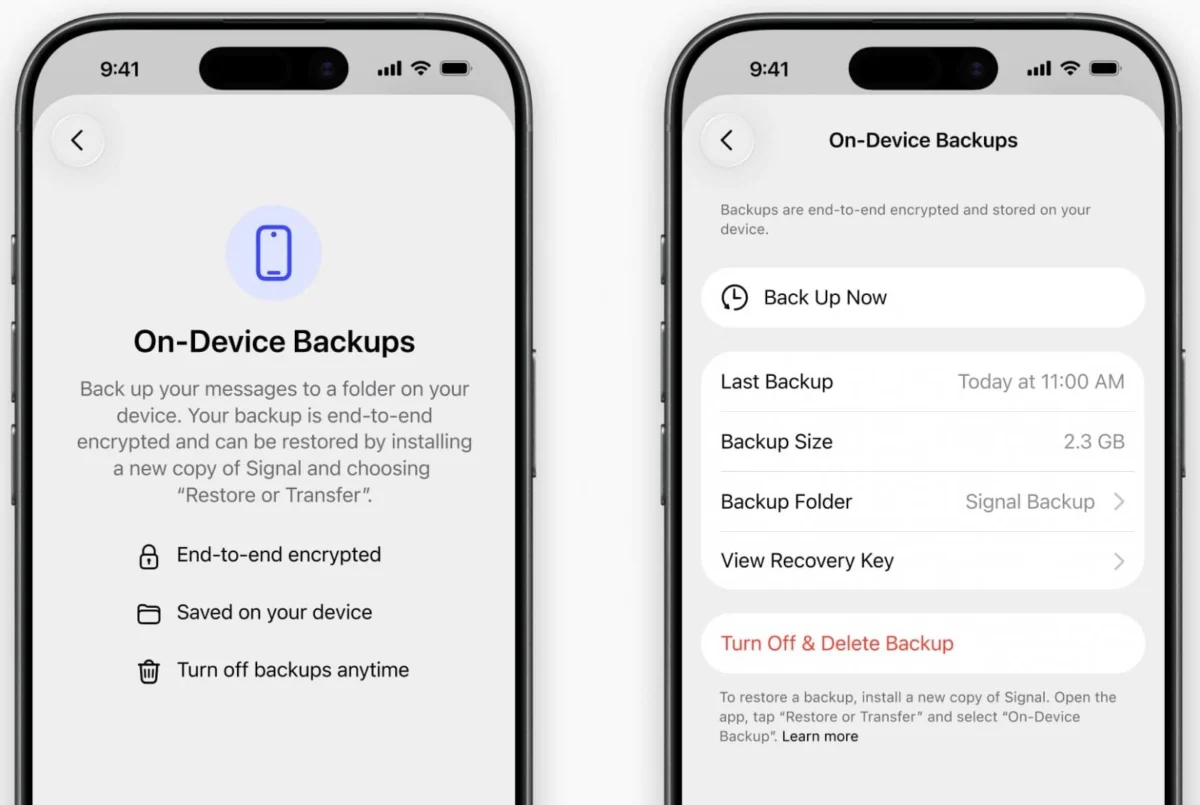
The landscape of digital privacy and encrypted communications has reached a significant milestone as the privacy-focused messaging application Signal officially releases version 8.30. This latest software update marks the culmination of a long-term engineering effort to standardize and universalize secure data backups across every major operating system supported by the platform, including Android, iOS, Linux, macOS, and Windows. By completing this rollout, the organization addresses one of the most historically complex challenges in end-to-end encrypted messaging: allowing users to effortlessly preserve and migrate their chat histories without compromising the cryptographic integrity that prevents third parties, service providers, and malicious actors from intercepting private conversations.
The deployment of version 8.30 bridges the final gaps in Signal’s cross-platform backup architecture. Nearly a year prior, the platform initiated the first phase of this journey by introducing secure cloud-based backups to Android devices. That initial release proved immensely popular yet exposed the technical intricacies of scaling zero-knowledge encryption models to millions of users worldwide. With the arrival of the 8.30 client update, these capabilities are now fully extended to Apple’s iOS ecosystem and desktop environments, accompanied by a comprehensive overhaul of the underlying Android backup framework to ensure a unified format across all devices.
Understanding the Mechanics of Signal’s Dual Backup Architecture
At the heart of Signal’s newly finalized backup ecosystem lies a sophisticated dual-option system designed to accommodate varying user preferences regarding cloud storage versus localized data retention. The architecture splits choices between Signal-hosted cloud backups and completely independent, on-device local storage. Each methodology is engineered with strict adherence to the application’s foundational privacy principles, ensuring that plaintext message data never touches external servers in an accessible format.
The Signal-hosted backup tier is designed for convenience, allowing users to seamlessly sync their communication histories across cloud infrastructure. However, to manage storage overhead and maintain performance, this option is subject to specific constraints. Free users are limited to retaining 45 days of media content, with individual messages restricted to a maximum size of 128 kilobytes. Conversely, subscribers utilizing paid plans are granted significantly expanded storage parameters, scaling up to 100 gigabytes.
To secure these cloud archives, the system relies on a dual-key mechanism. Both hosted and local backups are encrypted and fundamentally dependent upon a unique recovery key that must be supplied by the user to decrypt the files. In the case of hosted backups, however, an additional supplemental security layer is implemented: a cryptographic key that rotates dynamically on a daily basis within a specialized Trusted Execution Environment (TEE). This design decision provides enhanced protection and forward secrecy, ensuring that even if a specific snapshot of data were somehow compromised at rest, past and future communications remain mathematically isolated from unauthorized decryption.
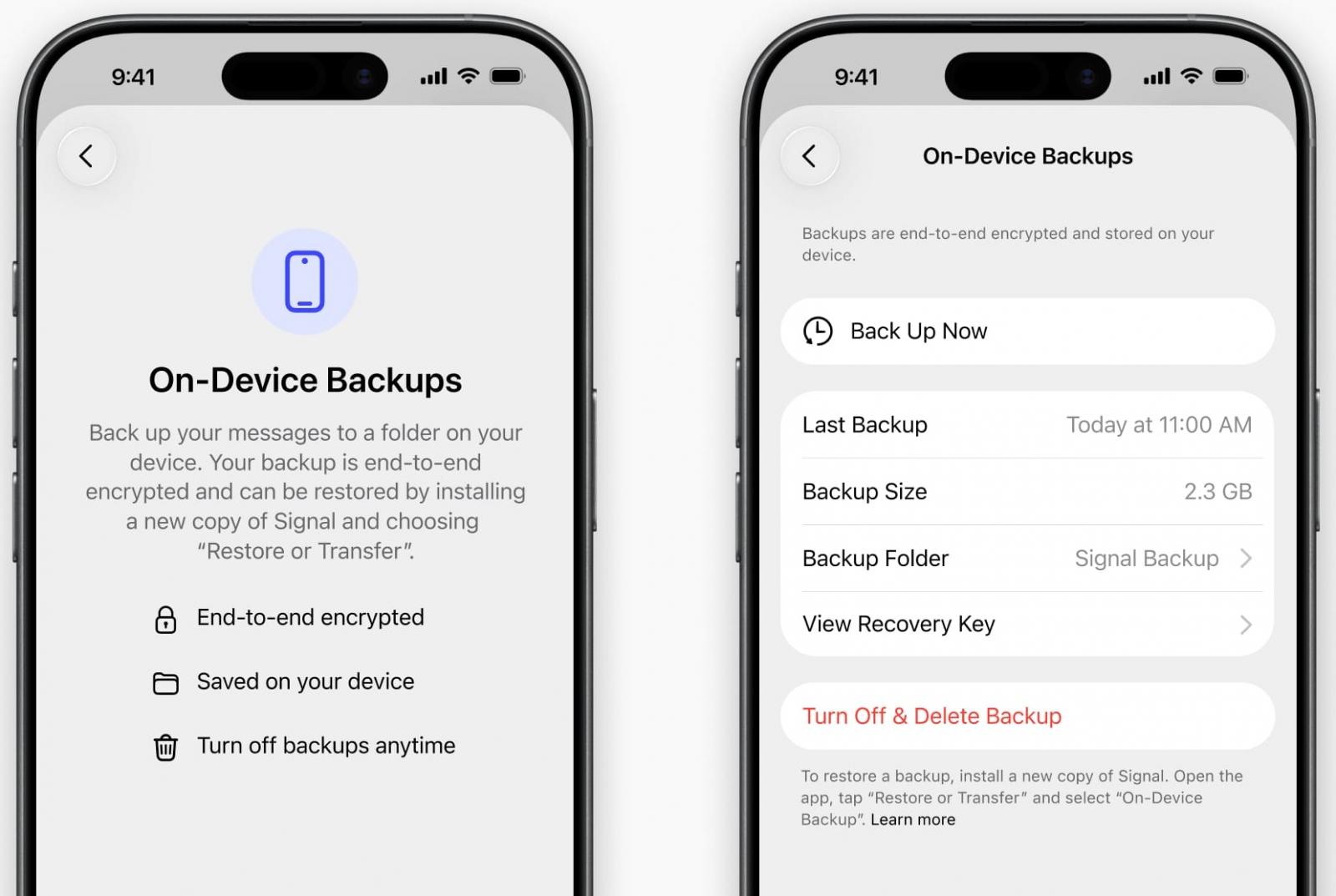
In contrast, the on-device local backup option imposes no artificial size restrictions, catering to power users who wish to maintain vast archives of historical chats, high-resolution media, and extensive documentation directly on their physical hardware. According to technical documentation released by Signal, a single on-device backup recovery key possesses the cryptographic capability to decrypt all past backup files it originally encrypted, regardless of the physical medium or folder structure where those files are eventually stored.
The Evolution and Chronology of Signal’s Backup Strategy
The journey toward a universal backup solution has been a measured and deliberate process for Signal’s engineering teams. For years, the application prioritized device-specific isolation, meaning that migrating chat histories between different operating systems—such as moving from an Android smartphone to an iPhone—was notoriously difficult or impossible without resorting to third-party file transfer hacks that bypassed native encryption safeguards.
The architectural shift began in earnest with the introduction of secure cloud backups on Android devices in late 2024. That initial deployment served as a live-fire test for the underlying cryptographic protocols. As developers monitored how the system performed under real-world conditions, they identified opportunities to optimize storage efficiency. Prior iterations often resulted in redundant data synchronization, where identical media files attached to multiple chats were backed up repeatedly, consuming unnecessary bandwidth and storage space.
Addressing these inefficiencies, the version 8.30 update decouples media storage entirely from the primary backup archive. Under the new protocol, duplicate media files are stored only once within the system, effectively eliminating excessive backing up and syncing overhead. Furthermore, for users on paid tiers, a new optimization setting allows individuals to automatically purge old media from local storage while retaining only lightweight image thumbnails. If a user needs to review an older file, the application seamlessly retrieves the full-resolution media on demand from the secure hosted cloud backup.
Another critical refinement involves the handling of ephemeral data. Signal’s signature disappearing messages feature—which allows users to set messages to automatically vanish after a specified duration, such as 24 hours—has been integrated into the backup logic. The system is now explicitly programmed to ignore disappearing messages set to vanish within 24 hours across both backup methodologies, ensuring that fleeting conversations are never inadvertently preserved within permanent long-term archives. For users who maintain both cloud-hosted and local backups simultaneously, the system ensures that the presence of one does not inadvertently wipe out the other, though any expired disappearing messages encountered during a local restoration process are systematically skipped.
Cross-Platform Enhancements and Direct Device-to-Device Transfers
Beyond traditional cloud and local storage archives, the 8.30 update introduces practical improvements to how devices interact during initial setup and device migration. When a user links a new secondary device from their primary phone, the newly connected client is now capable of intelligently retrieving older attachments that may have previously been missing from the active chat view. This ensures a consistent and complete historical record across laptops, tablets, and mobile devices alike.
For iOS users specifically, the 8.30 client release introduces a long-awaited capability: direct iPhone-to-iPhone transfers. Utilizing a local, end-to-end encrypted Wi-Fi Aware link, this feature allows users to migrate their entire application state directly from an old handset to a new one without relying on intermediate cloud uploads. According to engineering notes from Signal, this direct local transfer method dramatically improves both migration speed and operational reliability, bypassing the potential bottlenecks of cellular or wide-area network connections.
Adversarial Attention and Security Implications
The introduction of robust backup recovery keys has not gone unnoticed by the global cybersecurity and intelligence communities. Because these cryptographic keys are the ultimate gateway to unlocking vast repositories of private communications, they have immediately become high-value targets for threat actors, advanced persistent threat (APT) groups, and law enforcement agencies alike.
Shortly after Signal first rolled out its recovery key framework, security analysts and intelligence reports revealed that sophisticated state-sponsored entities—including actors linked to Russian hacking operations, as well as domestic agencies like the Federal Bureau of Investigation (FBI)—began actively incorporating Signal backup recovery keys into their targeting scopes. This adversarial interest underscores a fundamental reality of modern digital security: as applications implement stronger encryption at rest, the metadata, endpoint devices, and key management systems surrounding those applications inevitably become the primary vectors for exploitation.
From a defensive perspective, the implications of Signal’s latest architecture are profound. By distributing the responsibility of key management to the user while employing advanced hardware-isolated enclaves for hosted keys, the platform attempts to balance usability with resistance to mass surveillance. However, security researchers emphasize that the strength of an end-to-end encrypted backup is ultimately tied to the entropy and security hygiene of the user’s recovery key. If a user stores their recovery key insecurely in a cloud notes application or falls victim to a targeted phishing campaign designed to exfiltrate the key material, the underlying encryption can be entirely bypassed by an attacker.
Industry Impact and Future Outlook
The completion of this first phase of the backups project represents a maturation of privacy-preserving consumer technology. For years, mainstream messaging platforms operated by major technology conglomerates have offered seamless backup and synchronization by default, but frequently at the cost of retaining server-side decryption keys or failing to encrypt cloud archives end-to-end. By providing a decentralized, cryptographically secure alternative that scales across mobile and desktop operating systems, Signal continues to set the benchmark for what users should expect from confidential communication tools.
With the 8.30 update now fully deployed across the ecosystem, Signal’s engineering division has signaled a shift in its immediate developmental priorities. Having resolved the complex architectural challenges associated with cross-platform backups and media synchronization, the team will now redirect its focus toward enhancing non-backup core systems, performance optimization, and protocol resilience against emerging cryptographic threats.
As regulatory pressures surrounding encryption continue to mount globally, and as adversaries evolve their methodologies to target endpoints rather than transit channels, updates like version 8.30 illustrate the ongoing arms race between absolute digital privacy and institutional data access demands. For millions of journalists, activists, enterprise professionals, and privacy-conscious individuals worldwide, the new update provides a vital tool: the ability to preserve their digital lives without sacrificing the foundational security guarantees that defined Signal’s existence from its inception.
