

The arrest of 24-year-old Pepijn van der Stap in the Netherlands has sent shockwaves through the global cybersecurity community, marking a significant escalation in the ongoing battle against the prolific hacker collective known as ShinyHunters. Van der Stap, a Dutch national residing in Almere and Lelystad, was taken into custody by local authorities on or around September 16, 2026. While his arrest was initially framed within the context of his history as a convicted cybercriminal, recent developments suggest the investigation is tied to a far more dangerous web of international criminal activity, including allegations of orchestrated violence and large-scale data breaches targeting high-profile institutions, including the United States Federal Bureau of Investigation (FBI).
The suspect, who previously operated under the alias "Umbreon," has a well-documented history of dual-identity living. His 2023 conviction for data theft and extortion, which netted him an estimated €1.5 million to €2.7 million, revealed a man who worked by day as a software engineer at the Amsterdam-based cybersecurity startup Hadrian and volunteered for the Dutch Institute for Vulnerability Disclosure (DIVD), while simultaneously leaking stolen corporate databases on dark-web forums such as RaidForums and Breached.
A Chronology of Escalation
The timeline leading up to Van der Stap’s arrest highlights the volatile nature of the modern cyber-underground. In February 2026, a ShinyHunters operative successfully compromised Odido, the Netherlands’ largest telecommunications provider, through a sophisticated social engineering attack. The breach exposed the personal data of 6.2 million Dutch citizens. Audio recordings of the perpetrator, who spoke with a native Dutch accent, were released by authorities in an attempt to solicit public assistance in identifying the suspect.

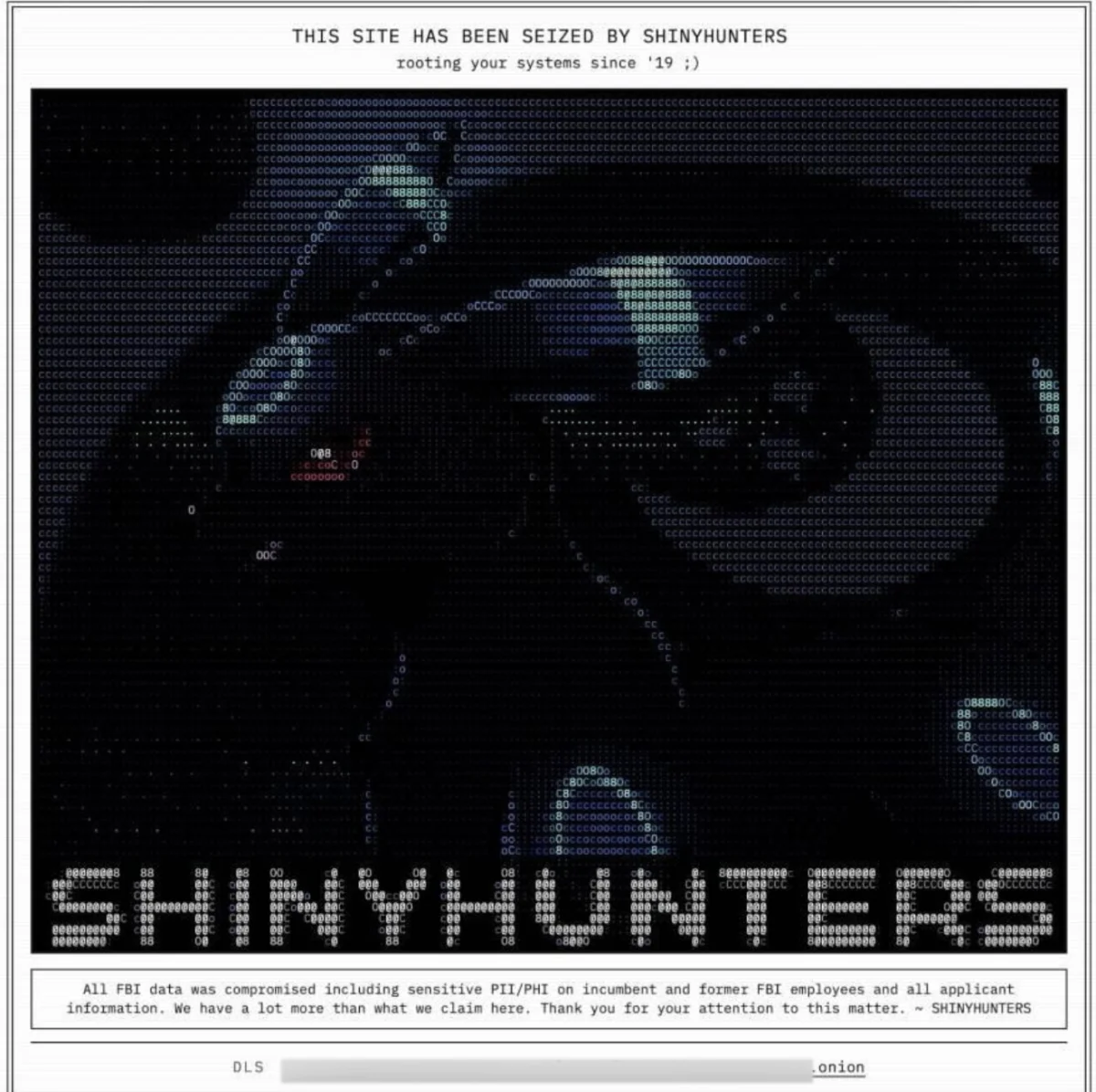
Following Van der Stap’s September detention, the remaining members of ShinyHunters retaliated with a series of aggressive maneuvers. Within days, the group claimed responsibility for breaching the FBI’s job application portal, apply.fbijobs.gov. The attack was not merely a data exfiltration exercise; it was a psychological operation. The hackers defaced the site with ASCII art of the Pokémon character "Umbreon"—the very handle associated with Van der Stap—and taunted law enforcement.
Security analysts suggest this was a calculated move by the current leadership of the group to frame the detained Dutchman. The group’s current trajectory is now attributed to a teenager based in Amman, Jordan, known by the alias "Rey." Rey, a prominent figure in the "ScatteredLapsussHunters" (SLSH) coalition, has reportedly been engaged in a power struggle with Van der Stap over the control of the ShinyHunters brand and the proceeds of their illicit activities.
The Rise of the SLSH Coalition and Operational Shifts
The shift in ShinyHunters’ tactics from mere data theft to high-stakes extortion against both the FBI and the Russian ransomware syndicate Cl0p marks a departure from their previous operational model. According to intelligence provided by Mandiant and the Google Threat Intelligence Group (GTIG), the group has been mass-exploiting a critical vulnerability in Oracle’s PeopleSoft software (CVE-2026-35273). Despite security patches being released by Oracle, the hackers successfully bypassed defensive web application firewalls using sophisticated URL-encoding techniques.
This technical proficiency is characteristic of the SLSH collective, an amalgamation of remnants from the Scattered Spider, LAPSUS$, and original ShinyHunters crews. The partnership, which once included the supply-chain-focused group TeamPCP, dissolved into infighting following the arrests of TeamPCP leaders in Australia in August 2026. The subsequent failure to monetize stolen credentials led to a breakdown in cooperation, with groups accusing one another of "burning" access by alerting cloud service providers like Microsoft and Amazon.

Official Responses and Legal Complications
The Dutch authorities have remained largely tight-lipped regarding the specifics of the evidence against Van der Stap, though the situation has intensified significantly since his arrest. On September 29, 2026, reports surfaced via the Dutch news outlet RTL suggesting that investigators are probing allegations that Van der Stap may have attempted to commission at least two murders to be carried out abroad. This represents a staggering evolution from digital theft to physical threats, fundamentally altering the severity of his legal standing.
The FBI has taken a public stance, with Brett Leatherman, assistant director of the FBI’s cyber division, issuing a stern warning to the remaining members of ShinyHunters. "Arrests have a way of changing who is willing to talk, and seized infrastructure has a way of showing us who’s left," Leatherman stated in a video message. The FBI’s involvement underscores the transnational nature of the threat, as the stolen data from the jobs portal included sensitive psychiatric and medical files of FBI personnel, as well as details on agents assigned to investigate foreign state-backed actors.
Broader Implications for Cybersecurity
The Van der Stap case serves as a microcosm of the challenges facing the global cybersecurity infrastructure. The ease with which an individual can oscillate between the role of a "white-hat" security researcher and a malicious actor underscores a profound talent-retention and ethics crisis within the industry. Van der Stap’s own narrative—that he was merely a "collector" of data rather than a criminal motivated by profit—clashes violently with the reality of the destruction left in his wake.
Furthermore, the involvement of Artificial Intelligence in the recent internal security incident at the DIVD, while currently not linked to ShinyHunters by official channels, highlights the increasing difficulty for nonprofit and research organizations to defend against sophisticated actors. As hacking syndicates become more centralized and aggressive, the reliance on traditional firewalls and patching cycles is proving insufficient.

The economic impact of these breaches is equally concerning. With estimates suggesting that ShinyHunters is on track to extract nearly $100 million in extortion payments in 2026 alone, the financial incentives for such groups are currently outpacing the deterrent power of law enforcement. The fragmentation of these groups into smaller, more violent, and ego-driven entities like the one led by Rey makes the landscape even more unpredictable.
Conclusion: A Turning Point?
As the Rotterdam District Court prepares to hear the case against Van der Stap, the international security community is watching closely. The outcome of this trial, and the continued pursuit of the remaining members of the ShinyHunters collective, will likely set a precedent for how governments address the nexus of cybercrime and physical threats.
The case of the Dutch engineer who played Pokémon-themed games with the private data of millions has transitioned into a grim reality of modern warfare. With the FBI, international threat intelligence firms, and national police units now fully engaged, the era of the "untraceable" data thief may be reaching its limit. However, as the group’s own defiant statements suggest, they do not intend to disappear quietly. The arrest of one individual, while a tactical victory, remains only a minor disruption to a global infrastructure of cyber-extortion that is increasingly willing to gamble with human lives.
