

The landscape of cyber extortion has undergone a seismic shift following revelations that federal investigators are probing deep-seated, illicit relationships between the notorious ShinyHunters hacking collective and executives within the legitimate ransomware negotiation industry. This investigation, which has sent shockwaves through the cybersecurity sector, centers on allegations that those tasked with protecting victim organizations may have been operating as clandestine facilitators for the very criminals they were hired to thwart.
Federal authorities are currently examining evidence suggesting that at least two high-ranking executives at prominent ransomware negotiation firms maintained an unusually close rapport with the leadership of ShinyHunters. According to sources close to the investigation, one U.S.-based executive allegedly provided technical and operational support for "shinywire[.]com," a now-defunct website that served as a digital pressure cooker, forcing victims to pay ransoms under the threat of public data leaks.
The Evolution of ShinyHunters and the Rise of Rey
ShinyHunters emerged as a significant threat actor in 2019, initially rooted in France. Over the years, as law enforcement agencies dismantled its original leadership, the brand evolved, eventually falling under the control of a figure known as "Rey." Identified last year as a teenage hacker operating out of Amman, Jordan, Rey proved to be an exceptionally prolific administrator. The FBI estimates that under his guidance, ShinyHunters has successfully extorted more than $70 million from corporate and government victims throughout 2026 alone.

The group’s boldness reached a crescendo in late September 2026, when they successfully infiltrated the FBI recruitment portal, fbijobs.gov. The breach was not merely a theft of data; it was a targeted act of psychological warfare. The stolen cache reportedly included sensitive medical and psychological evaluations, Social Security numbers, residential addresses, and specific internal personnel information. This brazen attack served as a catalyst, forcing the FBI to accelerate its investigations, leading to the reported detention of Rey by Jordanian authorities in early October, where he is currently cooperating with American investigators.
A Domino Effect: The Arrest of Pepijn van der Stap
The unraveling of the ShinyHunters operation began in earnest on September 15, 2026, when Dutch authorities conducted a high-stakes raid on the residence of Pepijn van der Stap. Utilizing tactical flash-bang grenades to ensure his immediate apprehension, police successfully captured the convicted hacker while he was actively logged into his encrypted messaging accounts.
Crucially, the seizure of Van der Stap’s Signal account provided law enforcement with a digital roadmap of the group’s inner workings. Investigators discovered that Van der Stap had been maintaining constant communication with various ransomware negotiators in both Canada and the United States. Perhaps most chillingly, the decrypted logs revealed a potential murder-for-hire plot. Dutch media outlet RTL reported that the communications contained orders for two targeted attacks abroad, though there is no evidence that these plans were ever brought to fruition.
The Arrest of Edward Dubrovsky
The investigation took a significant turn on October 9, 2026, when the FBI arrested 54-year-old Canadian cybersecurity executive Edward Dubrovsky. Dubrovsky, who had recently published a professional guide on handling cyber extortion, was charged with interfering with interstate commerce and threatening to disclose stolen data. Court records indicate that prosecutors have moved to keep the proceedings under seal, reflecting the sensitivity of the evidence against him.

Insiders report that the messages retrieved from Van der Stap’s device indicate that Dubrovsky was privy to the details of ShinyHunters’ victims long before the organizations themselves were even aware they had been compromised. Most alarmingly, evidence suggests Dubrovsky was aware that ShinyHunters had exfiltrated highly classified data from FBI servers but failed to notify the bureau, essentially allowing the extortionists to proceed with their public taunts on social media.
Anatomy of the Shinywire Extortion Machine
The "shinywire[.]com" platform, which remained active from May to October 2026, represented a sophisticated departure from traditional extortion. It functioned as an automated clearinghouse for stolen data, listing nearly 100 organizations that had fallen victim to ShinyHunters. Each entry provided a timeline for payment, accompanied by samples of stolen files to prove the hackers’ capabilities.
For victims like Intuitive Surgical, an American medical technology firm, the site served as a final warning. The protocol was rigid: if a company failed to initiate negotiations or pay the ransom within seven days, their private data was scheduled for release on a secondary, Tor-based shaming site. Federal investigators now believe this site was not managed by the hackers alone, but was maintained with the active participation of at least one executive at a prestigious U.S. consulting firm with over 1,000 employees.
Internal Industry Conflict and Allegations
The legal and professional fallout from these events has been compounded by pre-existing disputes within the industry. Reports from The Globe and Mail reveal that Dubrovsky had filed a lawsuit against his former business partner, Daniel Tobok, the former CEO of the cybersecurity firm Cypfer. The lawsuit, filed earlier this year, suggests a bitter power struggle, with Dubrovsky alleging that Tobok sought to "destroy" him.

Adding to the complexity is the historical association of Tobok with the moniker "Ghostbyte." Investigations reveal that as far back as 2018, a Dharma ransomware representative advised a victim to reach out to an email address linked to the handle "ghostbyte" to secure payment guarantees. While there is no definitive proof that Tobok utilized this specific alias, digital intelligence services have linked his personal email addresses to accounts using the same handle, creating a web of circumstantial connections that law enforcement is currently scrutinizing.
Broader Implications for the Ransomware Ecosystem
The current situation highlights a profound conflict of interest within the cybersecurity response sector. While paying a ransom to recover data is not explicitly illegal—provided the group is not sanctioned by the U.S. Treasury—it creates a perverse incentive structure. Firms that operate on a commission-based model, where fees are tied to the total amount paid to the hackers, may be tempted to inflate ransom demands or discourage victims from seeking alternative solutions.
Industry leaders, such as Mark Camillo of CyberAcuView, have called for greater transparency. "It makes no sense if they are also the negotiator," Camillo noted, referring to firms that profit from the size of the ransom transaction. "There needs to be more transparency in the process, as no one in the ecosystem should be profiting purely on the size of the ransomware transaction."
The U.S. Department of Justice has responded with increased vigor, recently charging Zohar Pinhasi, CEO of MonsterCloud, with fraud for allegedly paying hackers behind his clients’ backs while charging them inflated fees for "remediation." Similarly, Angelo Martino, a former ransomware negotiator, was sentenced to nearly six years in prison for colluding with the BlackCat ransomware group to maximize victim payouts.

The Human Cost of Data Extortion
The case of PowerSchool, an education technology company, illustrates the failure of the current payment-driven model. After paying a $2.85 million ransom to resolve an incident involving 62 million student and teacher records, the company found that the payment did not prevent the subsequent sale and re-extortion of the stolen data. The reality, as noted by firms like Coveware and Unit 221B, is that there is no mechanism to guarantee the deletion of stolen data once it has been exfiltrated.
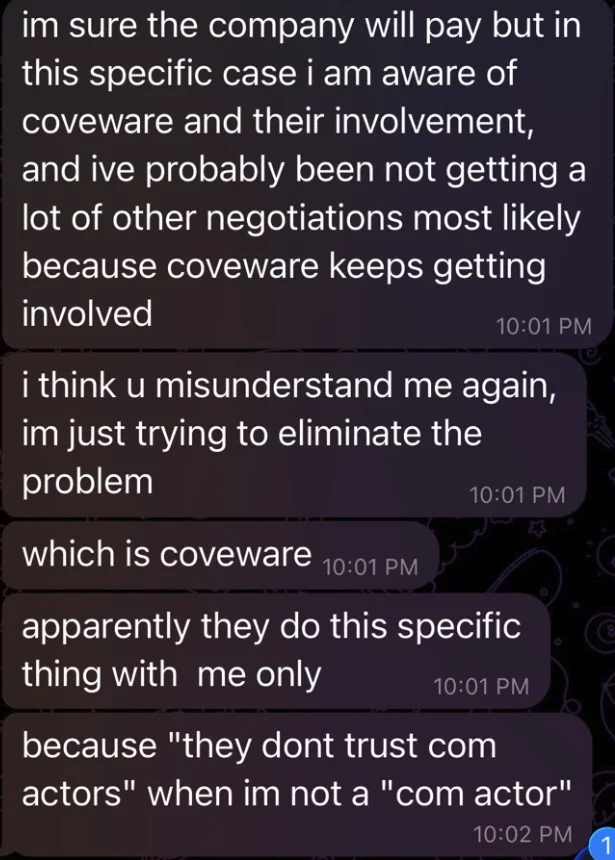
ShinyHunters themselves expressed frustration in internal communications when confronted with the efforts of these firms to dissuade victims from paying. "Majority of those companies would’ve paid if it weren’t for Coveware giving them misinformation," the group’s administrator noted in a private Telegram chat. The hackers’ attempts to "eliminate the problem" of ethical negotiators underscores the high-stakes battle currently being waged beneath the surface of the internet.
As the FBI continues its probe, the events surrounding ShinyHunters serve as a grim reminder of the volatility of the digital age. The line between defender and perpetrator, once thought to be clear, is increasingly blurred, suggesting that the most significant threat to corporate security may not always be the hackers themselves, but the intermediaries who profit from their existence.
