

The 2026 Breeders’ Cup Classic, scheduled for October 31 at Keeneland, stands as arguably the most formidable gathering of elite thoroughbred talent in the history of the sport. The $7 million Grade 1 contest has attracted a field defined by its historical significance, featuring a convergence of international icons, reigning Kentucky Derby winners, and Grade 1 victors from three separate continents. By utilizing advanced biometric and sectional data provided by Total Performance Data (TPD), analysts have identified this year’s renewal as a tactical chess match that prioritizes efficiency and stamina over raw speed alone.
A Chronology of the 2026 Classic Path
The road to this year’s Breeders’ Cup has been marked by a series of high-stakes duels that have shaped the current field. The narrative began in early 2026 with the Saudi Cup, where Forever Young, the Japanese sensation and defending Breeders’ Cup Classic champion, demonstrated his resilience by overcoming a mid-race challenge to defeat Nysos. This victory solidified his status as the global standard-bearer for Japanese racing.
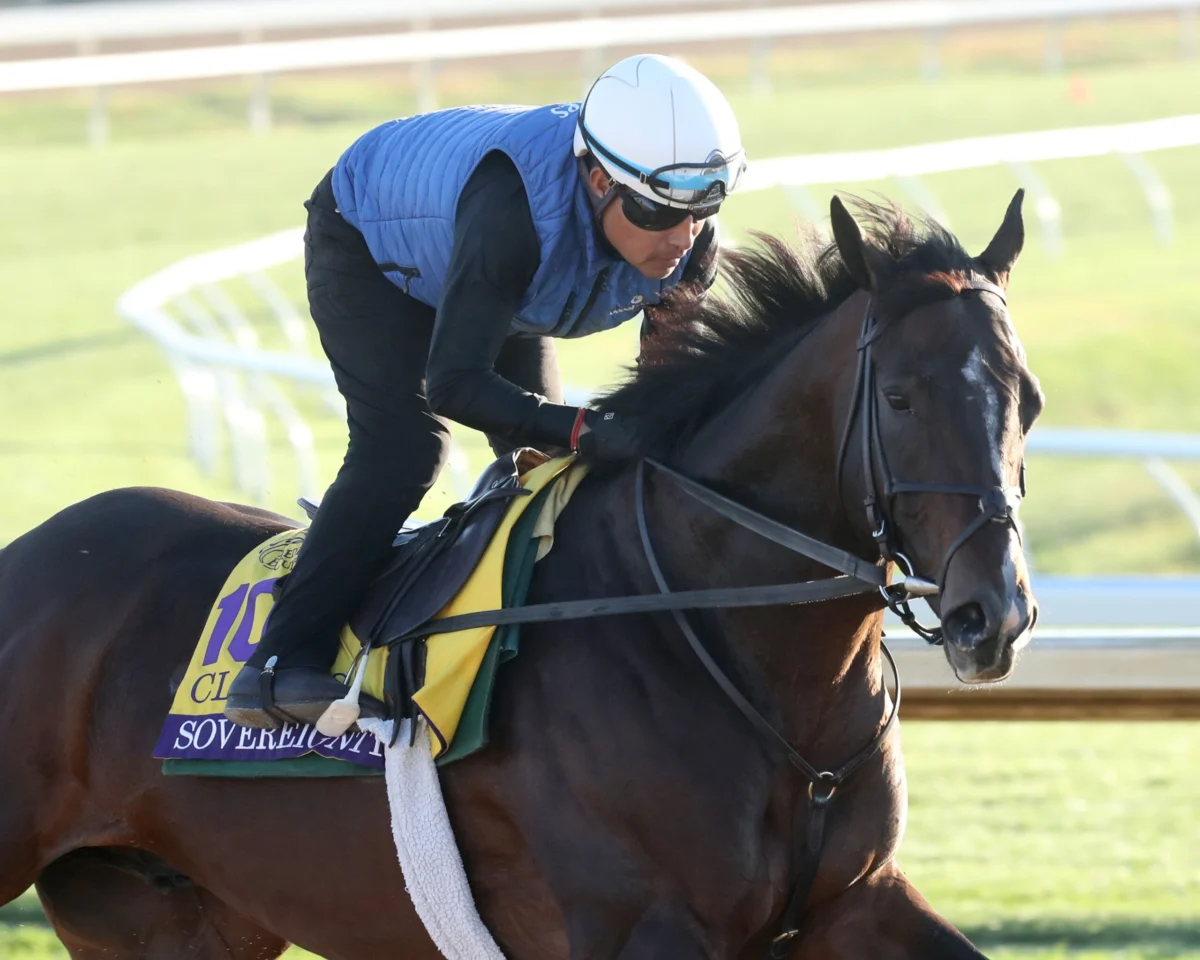
By mid-spring, the focus shifted to the Triple Crown trail. Golden Tempo emerged as the definitive 3-year-old, securing dominant victories in both the Kentucky Derby and the Belmont Stakes. Meanwhile, Sovereignty, the 2025 Travers Stakes winner who was cruelly denied a start in last year’s Classic due to illness, spent the summer of 2026 recalibrating. After a rocky start to his four-year-old campaign, he roared back to form in August, decisively winning the Whitney Stakes at Saratoga.
The late summer and early autumn period saw the rise of tactical speed horses. Magnitude proved his class in the Stephen Foster Stakes at Churchill Downs, while Knightsbridge, representing the powerhouse stable of trainer Bill Mott, secured a gritty victory in the Pacific Classic at Del Mar. These events have set the stage for a showdown at Keeneland, where the track’s unique configuration will force these diverse running styles into an immediate collision.
Analytical Deep Dive: The Data Behind the Contenders
Total Performance Data (TPD) offers a granular look at the biomechanics of the field. Forever Young remains the horse to beat, not necessarily for his top-end speed, but for his uncanny ability to record race-best figures during the final furlong. Data indicates that in his 2025 Saudi Cup victory, he rallied with a final-furlong burst that defied the physical toll of the race. However, his stride length, which has consistently stayed below the 25-foot mark, suggests he is a horse that relies on frequency and heart rather than a sprawling, massive stride.

Sovereignty, by contrast, presents a different profile. His peak average stride length of 25.5 feet—a metric he reached during his Triple Crown campaign—suggests a more efficient, long-reaching gait that is ideally suited for the classic distance of 1 ¼ miles. His Whitney Stakes performance was a masterclass in efficiency; he clocked 35.72 mph in the final three furlongs, effectively pulling away from high-class competition with ease.
The pace of the race is expected to be dictated by Magnitude and Knightsbridge. Magnitude’s data from the Stephen Foster shows a horse capable of blistering early speed—covering the first two furlongs in under 24 seconds—before settling into a controlled rhythm. If these two engage in a duel early on, the overall pace will likely exceed the :46 half-mile split seen in the 2025 edition, a factor that could exhaust early leaders and open the door for closers like Golden Tempo or the tactical Sovereignty.
Official Perspectives and Strategic Implications
While trainers rarely disclose specific race-day tactics, the entries suggest a clear strategic split. Bill Mott, who saddles both Sovereignty and Knightsbridge, has effectively covered two bases: one horse designed to handle the pace and another built to strike from a stalking position. The presence of two Grade 1 winners from the same stable creates a complex puzzle for competitors.

From the Japanese camp, trainer Yoshito Yahagi has expressed confidence in Forever Young’s ability to handle the pressure of the Keeneland surface. Despite his status as the defending champion, the Japanese connections acknowledge the depth of this year’s field. "It is a much deeper race than last year," an aide to the Yahagi stable noted. "The presence of the American 3-year-olds and the strength of the home-bred older horses means that Forever Young will have to find a new level of performance."
Golden Tempo’s trainer, Cherie DeVaux, faces the challenge of proving that her 3-year-old star can bridge the gap to the older horse division. While his Triple Crown form is statistically among the best in recent history, the data suggests he will likely be positioned seven to eight lengths off the lead in the early stages. Whether he can replicate his Belmont Stakes closing speed against a field of this caliber remains the defining question for his supporters.
Broader Impact on the Sport
The 2026 Breeders’ Cup Classic represents a critical juncture for international racing. A victory for Forever Young would cement his legacy as one of the greatest horses to ever campaign globally, bridging the gap between the JRA (Japan Racing Association) and the American circuit. Conversely, a win for an American-based horse like Sovereignty would serve as a powerful endorsement of the traditional domestic path of the Triple Crown and the development of 4-year-olds.

The inclusion of sectional and stride-length data in the lead-up to this race has changed the way enthusiasts view the Classic. It is no longer just a test of who can cross the wire first; it is an interrogation of efficiency, stamina thresholds, and tactical discipline. The shift toward data-driven analysis has heightened the anticipation for this event, as bettors and casual fans alike gain a deeper understanding of the physical toll and technical requirements of the race.
Tactical Outlook: The Final Verdict
The 2026 Breeders’ Cup Classic is shaping up to be a race of attrition. If the pace is set at a moderate tempo, the advantage shifts to the tactical leaders like Magnitude. However, if the field pushes the pace—a likely scenario given the presence of Knightsbridge—the race will favor the stayer.
Sovereignty, despite a roller-coaster season that included early-year setbacks, appears to be the most complete horse entering the starting gate. His ability to maintain a stride length of 25.5 feet while sustaining speed through the final three furlongs makes him the statistically superior candidate for a 1 ¼-mile distance. If he can track the leaders through the first mile and avoid being caught in the traffic that hindered his rivals in previous outings, he is well-positioned to secure the win.

However, the "Forever Young factor" cannot be ignored. He has consistently outperformed his own biometric data, winning races that he statistically should have lost. His ability to dig deep in the final furlong is a trait that transcends metrics. As the field prepares to break from the gates at Keeneland, the only certainty is that the 2026 Classic will be remembered for the caliber of its participants and the high-speed tactical battle that will unfold over the historic Kentucky dirt. The intersection of global ambition and pure athletic performance has produced a race that will likely stand as a benchmark for years to come.
