

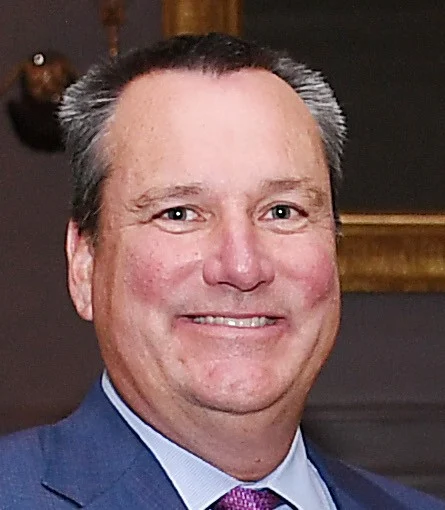
In a strategic alignment that has startled various corners of the gaming and hospitality industries, Caesars Entertainment Chief Executive Officer Tom Reeg is slated to assume leadership of Tilman Fertitta’s expansive Landry’s business portfolio. This wide-ranging operational shift is expected to take effect upon the finalization of Fertitta Entertainment Inc.’s (FEI) monumental $17.6 billion acquisition of Caesars Entertainment, a transaction projected to close by mid-2027.
The arrangement defies standard corporate merger and acquisition norms. Typically, when a massive publicly traded gaming entity is absorbed by a private holding company, the incumbent CEO steps down, often taking a lucrative severance package or retiring from executive management entirely. Instead, Reeg will not only transition with the company but will see his operational oversight expand significantly, stepping into the helm of a massive hospitality and entertainment conglomerate.
Unpacking the Leadership Transition and Scope of Power
The news of Reeg’s impending role initially broke through a late-Monday report by Vital Vegas, which illuminated the unusual retention strategy. Under the post-acquisition corporate structure, Reeg will oversee the newly combined forces of Caesars Entertainment and Fertitta’s Golden Nugget casino properties.
However, his authority will be carefully demarcated. While Reeg will manage the vast constellation of Golden Nugget casinos, hotel properties, and the massive Landry’s restaurant footprint, his mandate will exclude other segments of Fertitta’s personal business empire. Specifically, he will maintain no administrative or operational control over the Fertitta Automotive Group, the National Basketball Association’s Houston Rockets, or Fertitta’s diverse portfolio of commercial real estate holdings centered in the Houston, Texas area.
The transition marks a fascinating evolution in Reeg’s career, moving from the helm of a traditional, publicly traded casino-resort giant into a senior leadership role within a privately held hospitality powerhouse. For industry observers, keeping Reeg on board suggests that Fertitta values the executive’s deep knowledge of regulatory landscapes, gaming asset optimization, and large-scale operational management as the newly minted private entity navigates its next growth phase.
A Chronology of Corporate Consolidation: From Eldorado to Fertitta
To fully understand the weight of this leadership maneuver, one must examine the trajectory of Tom Reeg’s tenure at the top of the corporate gaming ladder. Reeg’s rise to prominence as a modern casino titan accelerated dramatically on July 20, 2020. On that date, Eldorado Resorts—then led by Reeg—completed its high-stakes, multi-billion-dollar acquisition of the legacy Caesars Entertainment corporation, a bold move that birthed the modern iteration of Caesars Entertainment.
In the wake of that monumental merger, "new Caesars" took control of an iconic portfolio spanning premier destinations in Las Vegas and regional gaming markets across the United States. Yet, the financial journey of the newly formed corporate entity has faced severe headwinds.
Since the closing of the 2020 transaction, shares of Caesars Entertainment experienced a notable downturn, sliding roughly 24.2%. By comparison, major industry competitor MGM Resorts International saw its stock value climb by nearly 75% over the same broad operational period. This divergence in market performance placed substantial pressure on executive leadership to find new avenues for value creation, culminating in the acceptance of Fertitta Entertainment’s $17.6 billion privatization proposal—a deal that Caesars investors overwhelmingly approved.
The Irony of Restaurant Empire Management
One of the most widely discussed nuances of Reeg’s upcoming leadership assignment involves the vast culinary footprint he is set to inherit. Fertitta’s Landry’s operation is a colossal force in the American dining and hospitality sector, boasting an empire of more than 600 restaurants. The portfolio includes globally and nationally recognized brands such as Bubba Gump Shrimp Co., Chart House, Del Frisco’s Double Eagle Steakhouse, Mastro’s Restaurants, and Morton’s The Steakhouse, alongside dozens of other dining and entertainment concepts.

The irony of Reeg taking charge of this multi-brand culinary giant stems from his own past commentary regarding the philosophy of casino customer loyalty and dining comps. In a prior interview addressing the operational intricacies of running a gaming enterprise, Reeg famously quipped, “God forbid they stop at McDonald’s on the way home,” expressing a characteristically pragmatic, bottom-line view regarding discretionary complimentary amenities provided to casino gamblers.
Transitioning from a philosophy that historically scrutinized auxiliary expenditures to heading one of the most prominent multi-brand restaurant groups in the country introduces a fascinating dynamic. Reeg will now be tasked with driving profitability, expansion, and guest satisfaction across hundreds of brick-and-mortar dining establishments, a mandate that requires a markedly different operational touch than traditional pit-and-slot casino management.
Asset Divestitures and Financial Restructuring
Throughout his leadership tenure at Caesars, Reeg has demonstrated a definitive aptitude for corporate asset management, particularly when it comes to unloading non-core properties to streamline operations and manage corporate balance sheets.
While Caesars has historically faced criticism from market analysts for a slow pace of long-term debt reduction, the company has executed several high-profile real estate and business divestitures with clinical efficiency. Notable examples include the strategic monetization of non-core assets, such as the high-profile unloading of the Linq Promenade on the Las Vegas Strip for $275 million.
This specific skill set will likely prove vital under Fertitta’s private ownership. Merging the expansive footprints of Caesars Entertainment and Golden Nugget will inevitably create operational redundancies and geographic overlaps. In specific regional jurisdictions, regulatory bodies and antitrust watchdogs may require the combined entity to divest certain casino assets to preserve market competition. Reeg’s proven experience in executing complex asset sales and corporate restructuring will be an invaluable asset as the integration process unfolds.
Financial Health and Recent Q3 Performance Insights
The announcement of Reeg’s future role coincided with the release of Caesars Entertainment’s financial results for the third quarter. The Harrah’s operator reported earnings to investors after the close of U.S. markets, revealing a net loss of 61 cents per share on total operating revenues of $2.94 billion. Wall Street analysts had previously anticipated a softer net loss of approximately 11 cents per share, alongside slightly higher top-line revenue expectations.
A detailed examination of the quarterly figures points once again to the Las Vegas Strip as the primary operational challenge. Softening consumer spending patterns, competitive promotional environments, and fluctuating visitation metrics in the core Las Vegas market weighed heavily on the company’s bottom-line performance.
Conversely, the report provided a much-needed silver lining regarding regional operations. Caesars noted that revenue generated across its nationwide network of regional casinos climbed by nearly 6% during the September quarter. This localized growth offers a welcome counterbalance to the volatility seen on the Las Vegas Strip and may serve to alleviate ongoing concerns regarding delicate negotiations with primary landlord VICI Properties regarding the regional casino master lease. Due to the impending privatization and acquisition process led by Fertitta Entertainment, Caesars leadership opted to forgo the traditional quarterly earnings conference call with analysts and investors.
Broader Implications for the Gaming and Hospitality Sector
The integration of Caesars Entertainment and Fertitta’s Landry’s and Golden Nugget assets represents one of the most consequential realignments in the history of the North American commercial gaming sector. By shifting Caesars from a publicly traded vehicle into a privately held powerhouse, the partnership intends to escape the relentless short-term pressures of quarterly Wall Street earnings reports, allowing for a longer-term strategic vision.
For Tom Reeg, his continuation at the helm of the combined gaming and hospitality division signals continuity amidst massive corporate transformation. While questions remain regarding how the operational cultures of Caesars and Golden Nugget will merge under private ownership, the retention of a seasoned executive ensures that institutional knowledge will guide the enterprise through the turbulent waters of regulatory approvals, asset rationalization, and brand unification leading up to the expected 2027 completion date.
