

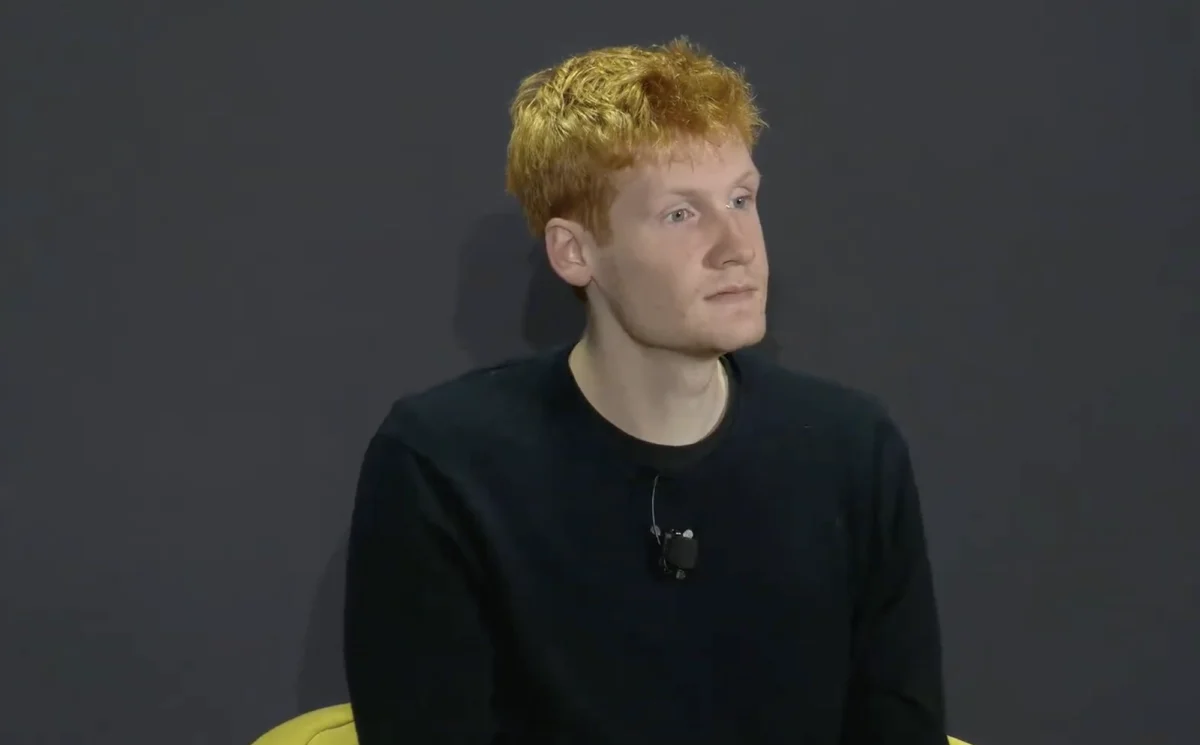
The artificial intelligence sector is witnessing another historic capital injection as Cursor, the four-year-old AI coding startup, nears a definitive agreement for a fresh funding round that would value the company at $50 billion. According to four sources familiar with the ongoing negotiations, the company is set to raise at least $2 billion in new capital, marking one of the largest private funding events for an AI application-layer company to date. The financing is expected to be led by returning heavyweights Thrive Capital and Andreessen Horowitz (a16z), signaling a massive vote of confidence in the startup’s ability to dominate the rapidly evolving software development landscape.
The deal, which remains oversubscribed, underscores the aggressive appetite venture capitalists have for AI tools that demonstrate clear utility and explosive revenue growth. While the terms are nearing finalization, sources cautioned that the final figures could still fluctuate before the closing. The proposed $50 billion pre-money valuation represents a staggering leap from the company’s previous valuation of $29.3 billion, which was set just six months ago during a $2.3 billion raise. If completed as planned, Cursor will have nearly doubled its market cap in half a year, reflecting a trajectory that mirrors the rapid scaling seen by foundation model providers like OpenAI and Anthropic.
In addition to the lead investors, the funding round is expected to see participation from new entrants and strategic partners. Battery Ventures is reportedly in talks to join the syndicate, while Nvidia—the semiconductor giant that has become a kingmaker in the AI ecosystem—is also expected to contribute capital. Nvidia’s involvement is particularly noteworthy, as it suggests a strategic alignment between the hardware that powers AI and the specialized software environments where that AI is deployed for production-level engineering.
A Meteoric Rise in Revenue and Adoption
Cursor’s valuation is not merely a product of speculative fervor but is anchored by significant financial milestones. The company, which operates an AI-integrated development environment (IDE) built as a fork of VS Code, has seen its revenue climb at a pace rarely seen even in the high-growth SaaS sector. In February 2026, Bloomberg reported that Cursor had reached an annualized revenue run rate of $2 billion, a figure calculated by projecting its most recent monthly sales over a twelve-month period.
The growth forecasts provided to potential investors are even more ambitious. Two sources close to the matter indicated that Cursor is projecting an annualized revenue run rate exceeding $6 billion by the end of 2026. To achieve this, the company would need to triple its current revenue within the next ten months. This growth is driven by a two-pronged adoption strategy: a viral bottom-up adoption among individual software engineers and a rapidly expanding enterprise segment where large corporations are looking to automate significant portions of their legacy code maintenance and new feature development.
Solving the Margin Challenge: The Shift to Proprietary Models
One of the primary concerns for AI startups over the last two years has been the high cost of inference. For much of its early history, Cursor, like many of its peers, operated at negative gross margins. The cost of calling high-performance models from third-party providers like OpenAI and Anthropic often exceeded the subscription fees charged to users. This "AI margin trap" threatened the long-term sustainability of the business model, as every new user essentially increased the company’s burn rate.
However, Cursor has recently made significant strides in correcting this imbalance. The introduction of its proprietary "Composer" model in November 2025 has been a turning point. By developing internal models optimized specifically for coding tasks, Cursor has reduced its reliance on expensive, general-purpose frontier models. Furthermore, the company has integrated the ability to route simpler tasks to more cost-effective models, such as Kimi, developed by China’s Moonshot AI.
These technical optimizations have allowed Cursor to achieve slight gross margin profitability on an aggregate basis. The economics are particularly favorable in the enterprise sector. One source noted that while the company continues to lose money on some individual developer accounts—where heavy users can rack up massive token costs—its sales to large enterprises are now firmly margin-positive. This shift is critical for justifying a $50 billion valuation, as it demonstrates a path toward traditional software-like profitability.
The Competitive Landscape and the Supplier Dilemma
The coding assistant market has become one of the most fiercely contested battlegrounds in Silicon Valley. Cursor’s primary competition comes from two fronts: established tech giants and the very foundation model providers that Cursor relies on for its underlying intelligence.
Microsoft’s GitHub Copilot remains the incumbent with the largest user base, benefiting from deep integration with the Azure ecosystem. However, Cursor has gained a "cult-like" following among power users who claim its deep integration into the IDE provides a more seamless "agentic" experience than a simple plugin.
The more immediate threat comes from Anthropic, whose "Claude Code" tool has emerged as a direct rival. This creates a complex "co-opetition" dynamic. While Cursor users often prefer using Anthropic’s Claude 3.5 Sonnet model within the Cursor interface, Anthropic is now incentivized to capture that user experience directly. By building its own proprietary models and reducing its dependency on outside providers, Cursor is attempting to "insulate" its business from being commoditized by its own suppliers.
OpenAI’s revamped Codex and its work on "Operator" agents further crowd the space, making the current funding round essential for Cursor to maintain its lead through aggressive R&D and talent acquisition.
From MIT Roots to Global Scale: A Timeline of Anysphere
The story of Cursor began in 2022 under the name Anysphere. The company was co-founded by Michael Truell, Sualeh Asif, Arvid Lunnemark, and Aman Sanger while they were students at the Massachusetts Institute of Technology (MIT). The founding team’s vision was to move beyond the "autocomplete" nature of early AI coding tools and create a "proactive" environment that could understand entire codebases and perform complex refactoring tasks autonomously.
The company’s timeline highlights the accelerating pace of the AI industry:
- 2022: Anysphere is founded and joins the Y Combinator ecosystem, focusing on reimagining the developer experience.
- 2023: The company rebrands its flagship product as Cursor and gains traction among early adopters for its superior context-handling capabilities.
- Mid-2025: Cursor raises capital at a $29.3 billion post-money valuation, marking its entry into the upper echelon of "decacorns."
- November 2025: The launch of the Composer model allows the company to begin decoupling its costs from third-party model pricing.
- February 2026: Revenue hits the $2 billion run rate mark.
- March 2026: Negotiations begin for the current $50 billion valuation round.
Broader Implications for the AI Ecosystem
The scale of this funding round has implications that extend far beyond the developer tool market. A $50 billion valuation for a company that is essentially an interface for AI suggests that the market believes the real value of the AI boom lies in the "application layer" rather than just the "model layer."
If Cursor successfully hits its $6 billion revenue target, it will provide a blueprint for other AI startups on how to navigate the transition from a "wrapper" (a company that merely packages another’s AI) to a vertically integrated platform with its own intellectual property and sustainable margins.
Furthermore, the participation of Nvidia and the lead roles of Thrive and a16z indicate that the "flight to quality" in AI investing is intensifying. Investors are increasingly concentrating their capital in a few "category killers" that have proven product-market fit and the ability to scale revenue at a triple-digit clip.
For the broader software engineering profession, the rise of Cursor signals a fundamental shift in how code is written. As Cursor moves toward positive gross margins and deeper enterprise integration, the "AI-first" IDE is likely to become the standard, moving software development away from manual syntax entry and toward high-level system architecture and AI orchestration.
As of the time of reporting, representatives for Cursor and Battery Ventures have declined to comment on the funding specifics. Thrive Capital, Andreessen Horowitz, and Nvidia have not yet responded to requests for comment. Despite the silence from official channels, the momentum behind the deal suggests that Cursor is poised to remain at the center of the AI revolution for the foreseeable future, armed with the capital necessary to defend its territory against the world’s largest technology companies.
