

Alphabet Inc., the parent company of Google, has found itself navigating one of the most significant financial transitions in its corporate history. Recent statements made during the company’s latest quarterly earnings call triggered an immediate and noticeable turbulence on Wall Street, leading to a sharp, albeit temporary, pullback in Google’s stock value. At the core of this market anxiety is an internal corporate paradox: the very technology designed to secure Google’s future dominance in the artificial intelligence landscape is actively cannibalizing its most lucrative cash cow—traditional search engine advertising.
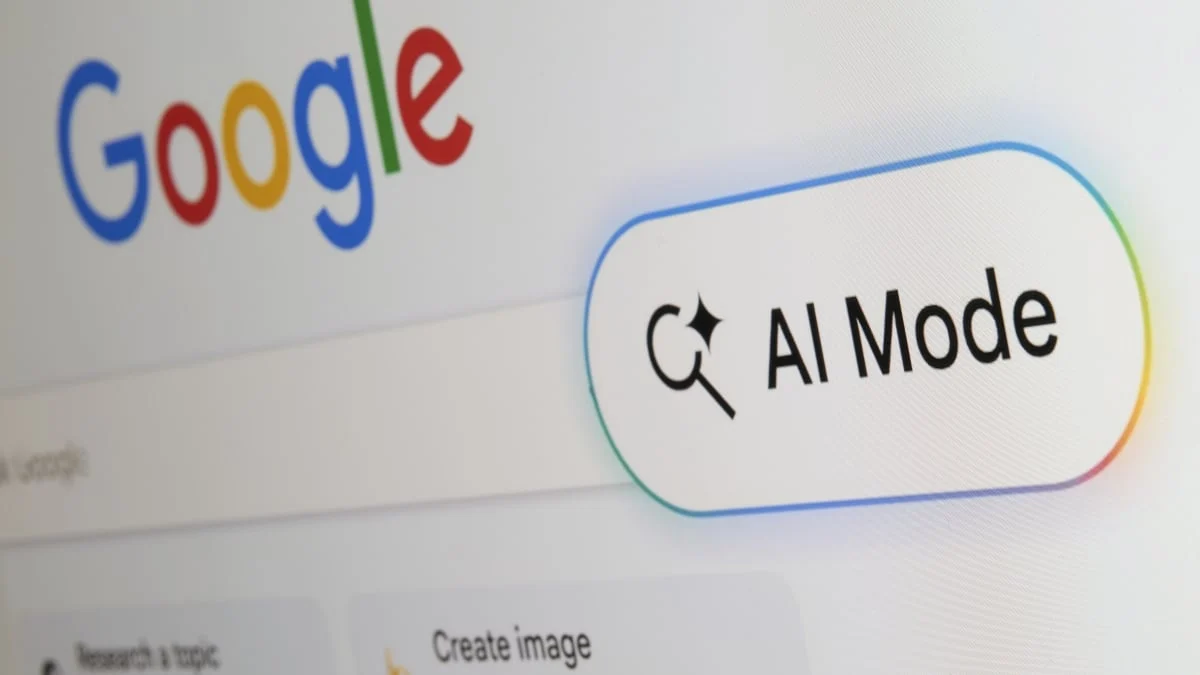
The root of this tension lies in the proliferation of AI Mode, Google’s conversational and generative summary feature designed to answer complex user queries directly at the top of the search engine results page (SERP). While this capability offers unprecedented convenience to everyday internet users by synthesizing information from across the web into concise, digestible paragraphs, it fundamentally alters user behavior. Rather than browsing through a curated list of blue hyperlinks that direct traffic to third-party publishers, authoritative sources, and commercial destination sites, consumers increasingly rely on the artificial intelligence to deliver the final answer instantly. This structural shift has popularized a phenomenon long feared by digital marketers and website publishers alike: the "zero-click search."
For decades, Google Ads—historically known as Google AdWords—has operated as a remarkably reliable pay-per-click (PPC) revenue machine, generating tens of billions of dollars every single quarter. This financial engine depends entirely on user navigation; when a consumer clicks on a sponsored link or an organic search result, the transactional funnel begins. By keeping users anchored on the search page through comprehensive generative summaries, AI Mode drastically reduces outbound web traffic, which in turn diminishes the traditional impressions and clicks that advertisers pay for.
Faced with this structural vulnerability, corporate leadership at Alphabet has made it abundantly clear that there is no turning back. The company has invested tens of billions of dollars into capital expenditures, artificial intelligence infrastructure, specialized tensor processing units (TPUs), and large language model integration. Retreating from artificial intelligence search integration is simply not a viable business strategy in a competitive market where rivals like Microsoft Bing, OpenAI, and various decentralized search startups are aggressively courting consumers. Consequently, Google has devised a direct countermeasure to recover its profit margins: flooding the AI experience with more advertisements.
The Evolution of Google Search and the Rise of Zero-Click Queries
To fully comprehend the gravity of Google’s current financial recalibration, one must examine the historical evolution of the internet’s dominant search engine. Founded in the late 1990s, Google built its empire on the premise of organizing the world’s information and universally connecting users to external web pages. The economic model was symbiotic: users received accurate search results, publishers received valuable referral traffic, and Google monetized the ecosystem by selling targeted text advertisements that appeared alongside or above organic search results.
Over the years, however, Google gradually evolved from a pure referral engine into an answer engine. Features like the Knowledge Graph, featured snippets, direct answers, flight trackers, and local business panels were introduced to save users time. Each iterative step toward keeping users on the Google property rather than sending them to external websites chipped away at organic click-through rates.
The introduction of generative artificial intelligence represents the culmination of this trajectory. AI Mode moves beyond simple extraction and syndication, synthesizing entirely new textual responses derived from multiple web sources simultaneously. While this provides a superior user experience for informational queries, it creates a severe deficit for transactional queries. If a user receives a comprehensive, AI-generated summary comparing the top three running shoes on the market directly on the search page, they have little incentive to click through to an e-commerce retailer or an affiliate review site.
Financial analysts and digital marketing agencies began sounding the alarm bells regarding zero-click searches years prior to the widespread commercial rollout of generative AI. However, the official acknowledgment during the recent earnings call that AI-driven interactions yield lower monetization rates compared to legacy search formats confirmed the worst fears of institutional investors. The stock market’s jittery reaction underscored a profound realization: Alphabet is successfully migrating users to a more expensive, resource-intensive computing model that currently generates less revenue per query than its predecessor.
Financial Disclosures and the Strategic Pivot to Enhanced Monetization
According to financial disclosures and commentary analyzed by technology publications such as Ars Technica, Google’s leadership is aggressively confronting this revenue shortfall through an aggressive product expansion strategy. Rather than scaling back the AI infrastructure, the company plans to deeply integrate commercial advertisements directly into the fabric of the AI Mode interface.
Historically, Google has experimented with contextual ads within AI-generated snapshots, displaying sponsored product listings or services alongside the synthesized text. However, the company’s newly announced roadmap takes this monetization strategy significantly further. Google intends to dynamically incorporate sponsored links and interactive advertisements throughout a user’s ongoing conversational session as they engage with the AI Mode chatbot. If a user asks follow-up questions, refines their search parameters, or asks the AI to generate a detailed itinerary, shopping list, or project plan, targeted advertisements will be woven natively into the conversational flow.
Furthermore, this aggressive monetization framework is not slated to remain restricted to domestic markets. Google has confirmed plans to systematically roll out AI Mode advertisements across international territories, expanding the surface area for generative ad placements on a global scale.
Despite these ambitious plans, Google’s executive team has proactively tempered investor expectations, issuing explicit warnings that this transition will not yield immediate financial restitution. The economic reality of digital advertising requires a two-sided marketplace: publishers and brands must be willing to spend capital on new formats. Currently, Google earns less revenue per query via AI Mode compared to traditional search ads primarily because the advertiser ecosystem is still in a nascent stage of adoption. There are fewer distinct corporate entities actively bidding on generative AI ad slots, and the conversion tracking mechanisms differ significantly from traditional PPC campaigns. Google executives noted that it will inevitably take considerable time for corporate marketing departments to fully understand, optimize for, and embrace the return on investment (ROI) offered by AI-integrated advertising channels.
Industry Reactions and the Broader Digital Ecosystem
The ripple effects of Google’s strategic pivot extend far beyond Alphabet’s corporate headquarters in Mountain View, California. The entire digital publishing, SEO (Search Engine Optimization), and digital advertising industries are currently undergoing a period of profound anxiety and structural readjustment.
Independent publishers, news organizations, niche content creators, and recipe blogs—many of which rely entirely on referral traffic from Google Search to sustain their operations—have expressed acute alarm over the expansion of AI Mode. If users no longer need to visit external websites to obtain recipes, financial advice, software reviews, or journalistic reports, the traffic foundations of the modern open web face an existential threat. While Google frequently asserts that its AI features still credit and link back to original sources via citation chips, empirical data compiled by independent web analytics firms indicates that click-through rates to those cited domains are a fraction of historical benchmarks.
Conversely, digital advertising agencies and brand managers are tasked with navigating a shifting technological landscape. Traditional search engine optimization tactics, which focused heavily on securing top-three organic rankings through keyword optimization and backlink acquisition, are rapidly losing efficacy. Marketers must now learn how to optimize their brand visibility within large language model training data and dynamic generative ad units. The challenge lies in creating ad creatives that feel organic and helpful within an AI conversational interface without alienating users who turn to AI precisely to avoid intrusive advertising.
Competitors in the search and artificial intelligence space are watching Google’s maneuvers closely. Microsoft, which integrated OpenAI’s GPT technology into its Bing search engine under the Copilot banner, faces a similar economic dilemma. Delivering generative AI responses requires immense computational power—significantly more expensive per query than traditional keyword indexing and retrieval. Both Google and Microsoft are locked in a high-stakes race to figure out how to subsidize the astronomical cost of AI computing through innovative ad formats before investor patience wears thin.
Future Implications for Search Technology and Consumer Experience
As Google pushes forward with its mandate to insert more ads into AI Mode, the fundamental character of the internet search experience is undergoing a permanent metamorphosis. The traditional social contract of the web—where search engines acted as neutral directories connecting users to a decentralized universe of independent websites—is being replaced by a centralized, walled-garden ecosystem where proprietary artificial intelligence models curate, summarize, and monetize information entirely within their own interfaces.
For the everyday consumer, the immediate future promises a mixed bag of technological convenience and commercial saturation. On one hand, generative AI search tools will continue to grow faster, smarter, and more adept at solving complex multi-step queries. On the other hand, the presence of monetized suggestions, sponsored conversational prompts, and targeted product placements within those AI responses will become an inescapable reality.
Ultimately, Google’s gambit represents a calculated corporate risk. By willingly disrupting its most reliable revenue stream in favor of an AI-first paradigm, Alphabet is betting that its dominant market share, combined with advanced contextual ad-serving technology, will successfully bridge the financial gap. Whether advertisers will adapt quickly enough to satisfy Wall Street’s insatiable quarterly demands remains the defining question for the world’s most dominant search engine as it navigates the uncharted waters of the generative AI era.
