

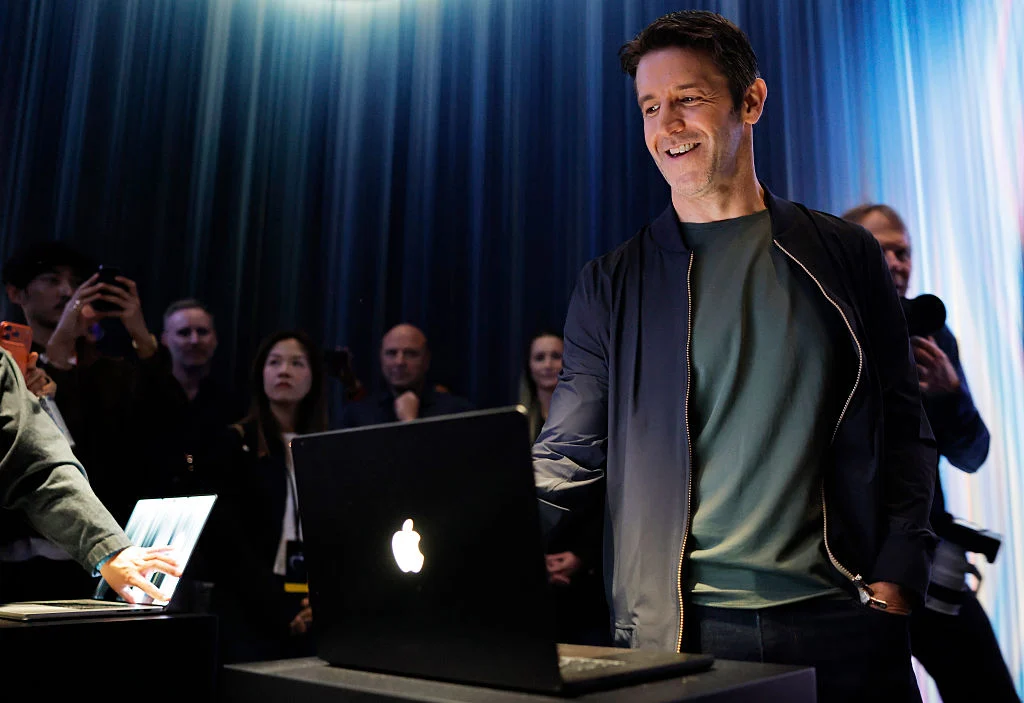
In the rapidly evolving landscape of consumer technology, artificial intelligence has emerged as the defining battleground for major silicon valley enterprises. For years, Apple has faced intense public scrutiny, investor pressure, and widespread media skepticism regarding its pace of innovation within the generative AI sector. Critics frequently pointed to delayed software rollouts and perceived conservatism as signs that the Cupertino-based tech giant was falling behind competitors such as OpenAI, Google, and Microsoft. However, in a candid and wide-ranging interview with veteran technology journalist Steven Levy for Wired, newly appointed Apple CEO John Ternus forcefully pushed back against these prevailing industry narratives, offering a comprehensive defense of the company’s deliberate, user-centric philosophy toward artificial intelligence integration.
The interview marks one of Ternus’s most significant media appearances since officially assuming the role of Chief Executive Officer at the beginning of September 2026, succeeding his long-serving predecessor. Stepping into the chief executive seat during a pivotal transitional phase for the hardware and software titan, Ternus addressed the persistent whispers that Apple missed the initial wave of the generative AI boom. While acknowledging that external observers and market analysts maintain diverse perspectives on the company’s trajectory—remarking that “everyone has an opinion”—Ternus struck a note of absolute confidence. “I really like where we’re at,” he stated, signaling that Apple’s measured approach was a strategic choice rather than a reactive delay.
The Chronology of Apple’s AI Evolution
To fully understand Ternus’s defense, it is necessary to examine the timeline of Apple’s recent software developments and strategic shifts in artificial intelligence. The narrative that Apple lagged behind competitors intensified significantly following the explosive mainstream adoption of large language models in late 2022 and throughout 2023. While rivals rushed to flood the market with standalone chatbots, cloud-based assistants, and standalone AI productivity tools, Apple maintained a characteristically quiet posture, focusing heavily on on-device processing capabilities, proprietary silicon architecture, and hardware privacy safeguards.
The friction between public expectations and Apple’s internal timeline became especially pronounced regarding the anticipated overhaul of Siri. Originally projected for a faster deployment, the rollout of a significantly more powerful, context-aware version of Apple’s native virtual assistant experienced multiple internal delays. These setbacks fueled ongoing industry chatter that the company was struggling to adapt its infrastructure to modern generative AI workloads.
However, the tide began to shift when Apple officially launched the long-awaited, deeply integrated version of Siri earlier this summer. Early user reception and critical reviews noted a substantial leap in conversational fluidity, contextual understanding, and cross-application functionality. Rather than positioning Siri as a separate, novelty chatbot, Apple embedded the upgraded intelligence directly into the operating system’s core architecture. This context clarifies Ternus’s current posture: the summer launch was not a frantic catch-up play, but the foundational realization of a carefully calculated multi-year hardware and software strategy.
Philosophy of Integration: AI Without the Gimmicks
During his conversation with Steven Levy, Ternus elaborated deeply on the core philosophy guiding Apple’s product development teams. In an industry increasingly dominated by flashy product launches designed to capture short-term consumer attention, Ternus emphasized that Apple refuses to deploy technology merely for the sake of marketing novelty.
“We are absolutely going to leverage AI in our new products,” Ternus affirmed during the Wired interview. However, he drew a distinct line in the sand regarding implementation strategies. “We don’t want to ship AI for AI’s sake. When we’re doing it right, people won’t have to think about whether it was AI that made this happen or more traditional software. What matters is, did we build something that they really love?”
This philosophy reflects Apple’s historical playbook across multiple product categories, from graphical user interfaces and touchscreens to smartwatches and wireless audio. Rather than being the absolute first to market with an unrefined technology, Apple has repeatedly demonstrated a preference for refining user experience, privacy protocols, and hardware efficiency before introducing a feature to the mass market. By abstracting the underlying artificial intelligence layer so that it seamlessly blends into daily workflows, Apple aims to eliminate the friction and cognitive load often associated with interacting with contemporary AI models.

The Future of Applications and Ecosystems
As the conversation turned toward the macro-level implications of advanced artificial intelligence, Levy pressed the Apple CEO on a profound existential question facing the software industry: could sophisticated AI agents eventually render traditional mobile applications obsolete?
In a theoretical future where autonomous AI agents can execute complex, multi-step tasks across the web and operating systems on behalf of the user—such as booking travel, managing finances, and cross-referencing schedules—the traditional app grid model pioneered by the iPhone App Store could theoretically lose its central relevance.
Ternus acknowledged the speculative convenience of such a frictionless, agent-driven paradigm, noting, “That could make life really easy, I suppose.” Yet, he quickly pivoted to emphasize the enduring value of human-centric design and the artisanal nature of hardware and software creation. “The creation of products is a deeply human and personal thing, something that we love to do.”
This perspective underscores Apple’s economic and structural reliance on its tightly controlled ecosystem. The App Store remains a massive revenue driver and a vital community for global developers. Dismantling or diminishing the role of individual applications would represent a radical transformation of Apple’s business model. By defending the personal and deliberate process of product creation, Ternus signaled that Apple views technology not merely as a utility for automation, but as an intimate medium for human expression and utility.
Industry Implications and Market Analysis
Ternus’s remarks arrive at a critical inflection point for the global technology sector. Market data from late 2026 indicates that consumers are growing increasingly discerning regarding artificial intelligence features. Initial novelty fatigue has set in, with users demanding tangible utility, enhanced battery efficiency, robust data privacy, and genuine productivity gains rather than superficial chatbot integrations.
Financial analysts monitoring the Cupertino firm suggest that Ternus’s calm demeanor reflects internal data showing strong consumer adoption of the newly upgraded hardware and software ecosystem. By anchoring its AI strategy to Apple Silicon—leveraging powerful Neural Engines built directly into consumer devices—the company maintains a distinct competitive advantage in data privacy and processing speed. Unlike cloud-dependent AI providers who must transmit sensitive user queries to massive remote server farms, Apple’s hybrid approach prioritizes on-device intelligence whenever possible, executing sensitive tasks locally.
Nevertheless, challenges remain on the horizon. Regulatory scrutiny regarding platform dominance, ongoing legal battles concerning app store monetization, and intense competition from nimble AI-first startups continue to test Apple’s executive leadership. Furthermore, as competitors push deeper into autonomous agent architectures and ambient computing hardware, Apple will need to prove that its philosophy of invisible, highly integrated AI can scale rapidly enough to satisfy Wall Street growth expectations.
As John Ternus steers Apple through his first months as Chief Executive Officer, his public statements outline a clear boundary between external noise and internal execution. By prioritizing emotional resonance, user-friendly execution, and privacy-first architecture over rushed product deployments, Apple is betting that long-term consumer loyalty will ultimately validate its patient trajectory in the age of artificial intelligence.
