

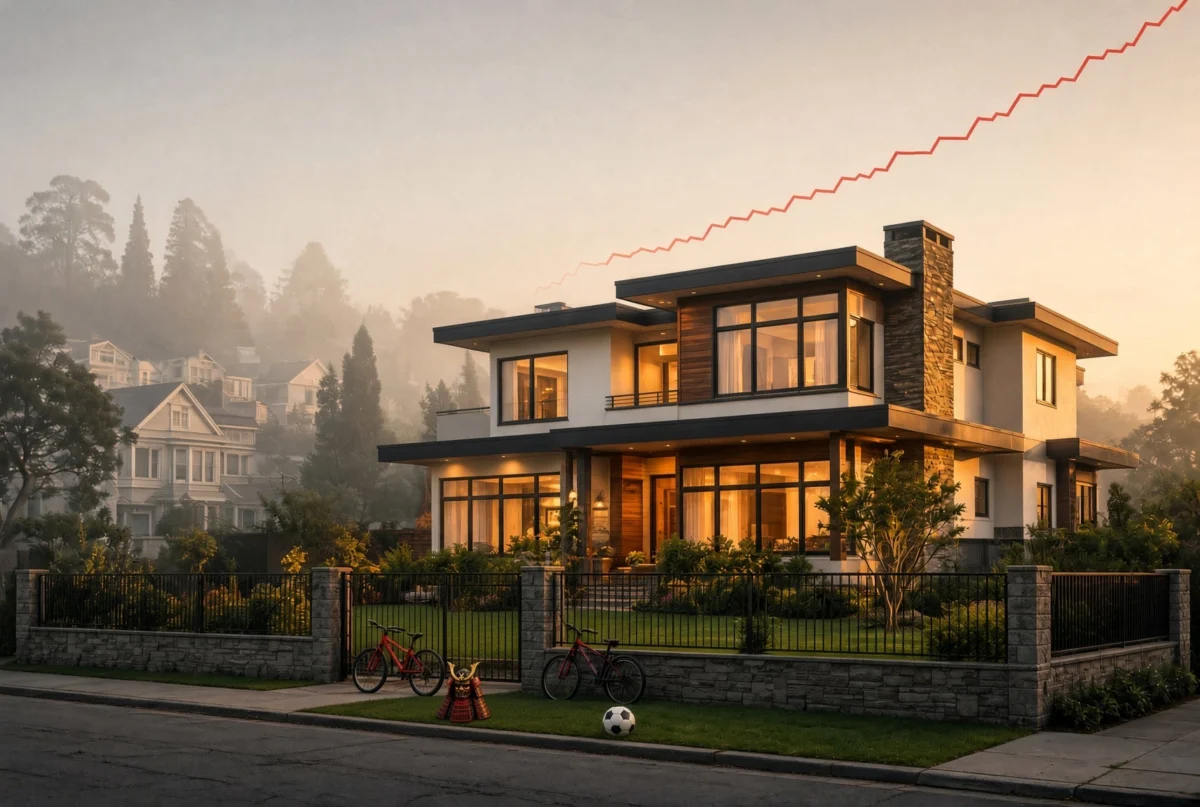
In late 2023, a significant shift in residential real estate strategy saw many homeowners opting for "upsizing," a trend characterized by the acquisition of properties that exceed the immediate functional requirements of the household. Three years post-transition, the financial and lifestyle outcomes of this decision have become a focal point for market analysts and families alike. While the primary residence is often the most significant asset in a household’s portfolio—consuming approximately 14 hours of an individual’s daily life—the decision to acquire a larger property carries substantial opportunity costs, particularly when weighed against the performance of equity markets.
The Macroeconomic Landscape of Residential Upgrading
The decision to purchase a home that exceeds one’s current needs is rarely made in a vacuum. It is typically a calculation involving long-term lifestyle utility versus the compounding potential of capital markets. Historically, real estate has been viewed as a dual-purpose asset: a durable consumption good and an investment vehicle. However, the period between 2023 and 2026 introduced volatility that challenged this dual role.
When homeowners divert capital from liquid assets—such as the S&P 500 or Treasury bonds—to finance a property upgrade, they are essentially betting that the utility of the space will match or exceed the historical returns of the broader stock market. Since 2023, the S&P 500 has demonstrated significant growth, with some sectors, such as technology, seeing double-digit returns. For those who liquidated high-growth equity positions to fund real estate acquisitions, the "opportunity cost" has, in many cases, exceeded $1 million, depending on the specific assets sold and the appreciation rate of the local housing market.
Chronology of a Strategic Move
The transition toward larger, more expensive properties often begins with a period of intense search and negotiation. For many families in high-cost-of-living areas like San Francisco, the search process can span years.
- The Planning Phase (Pre-2023): Households typically evaluate their "property ladder" status, assessing whether their current home meets the developmental needs of children or the long-term lifestyle goals of the parents.
- The Acquisition (Late 2023): The transition phase often involves a three-month escrow period. During this time, astute buyers utilize professional inspections to identify maintenance liabilities, effectively negotiating these costs into the final purchase agreement.
- The Stabilization Period (2024–2026): Once the transition is complete, the focus shifts to maintenance and utility. Data suggests that properties which underwent significant renovations shortly before sale often exhibit lower-than-average maintenance costs in the immediate years following acquisition, provided the buyers were diligent during the due diligence phase.
Data-Driven Analysis of Home Maintenance
The traditional real estate axiom suggests that homeowners should allocate 1% of their property’s value annually toward maintenance. However, longitudinal data from recent upgrades suggests this figure is often a conservative estimate, particularly for well-maintained properties.
In instances where buyers successfully leverage the escrow period to force seller-funded repairs, the actual maintenance expenditure can drop significantly. For example, some homeowners have reported spending less than $5,000 over a three-year period, effectively bypassing the 1% rule. This creates a more favorable cash-flow environment, even if the initial capital outlay for the property was substantial. The key variable remains the condition of the home at the point of sale; buying near the top of a maintenance cycle—rather than the bottom—is a primary factor in mitigating unexpected costs.
The "Frenzy Zone" and Market Dynamics
Real estate professionals frequently identify a "frenzy zone"—a price bracket where competition is highest and bidding wars are common. A recurring theme among successful buyers is the strategy of targeting properties just outside this zone. By identifying homes that are approximately 10% above the most contested price points, buyers often encounter less competition, allowing for more favorable terms and a lower likelihood of overpaying in an emotional, high-pressure bidding environment.
This approach aligns with broader market trends in regions where the economy is driven by high-growth sectors, such as artificial intelligence. In cities like San Francisco, the influx of capital and professional talent has created a "boom loop," where housing supply constraints, particularly for large, usable lots, continue to exert upward pressure on property values.
Strategic Framework for Large-Scale Property Acquisition
For those contemplating an upgrade to a larger residence, financial advisors and real estate experts recommend a structured approach to prevent long-term financial distress. This framework, often referred to as the 30/30/3-5 rule, includes:
- Capital Reserves: Maintaining at least 30% of the purchase price, consisting of a 20% down payment and a 10% cash buffer.
- Income Alignment: Ensuring that monthly housing payments—including taxes, insurance, and maintenance—remain below 30% of gross monthly income.
- Price Ceiling: Limiting the total purchase price to no more than 3 to 5 times the annual gross household income.
Failure to adhere to these metrics can lead to "house poor" scenarios, where the financial strain of the asset outweighs the quality-of-life benefits. Furthermore, stress testing the household budget—specifically by modeling a scenario where one income stream is lost for six months—is considered a standard best practice in risk management.
Broader Implications and Future Outlook
The shift toward larger, "unnecessary" homes is fundamentally a shift toward non-monetary, quality-of-life returns. While the financial opportunity cost is clear—especially when compared to the aggressive growth of equity indices—the qualitative benefits for families, such as increased space for children and the psychological benefit of settling into a permanent residence, are difficult to quantify.
However, the concentration of wealth into a single, illiquid asset remains a significant risk. As a result, many investors are exploring passive real estate alternatives, such as private real estate funds or crowdfunding platforms, to maintain exposure to the sector without the tax and maintenance burdens associated with direct ownership.
As the real estate market continues to evolve, the distinction between a "home as an investment" and a "home as a consumption good" will become increasingly stark. For the average buyer, the decision to upgrade should be grounded in a realistic assessment of cash flow and a clear understanding of the trade-offs between liquid market participation and physical property ownership. Ultimately, the success of such a transition is measured not just by the appreciation of the asset, but by the stability and utility it provides to the household over the long term.
