


After a challenging performance during the Week 7 slate, the focus shifts to the critical Week 8 NFL schedule as bettors and analysts look to recalibrate their strategies. Currently holding a 56-48 record and sitting at 33,268th in the national standings, the need for precision has never been greater. Week 8 represents a pivot point in the season where injury reports, divisional rivalries, and coaching adjustments begin to dictate the true hierarchy of the league. To navigate this week’s matchups, it is essential to move beyond surface-level statistics and evaluate the situational leverage inherent in each game.
The Landscape of NFL Week 8
The middle portion of the NFL season serves as the primary filter for contenders and pretenders. As teams surpass the two-month mark of the season, data sets have become large enough to provide reliable predictive metrics. Teams that have demonstrated resilience in divisional play, such as the Philadelphia Eagles and the Detroit Lions, are finding themselves in high-stakes positions, while others, like the Indianapolis Colts, are facing organizational shifts that impact their competitive output.
In the current environment, confidence pools require a blend of analytical rigor and situational awareness. For instance, the transition from early-season momentum to mid-season fatigue is a documented phenomenon in professional football. Coaches are tasked with managing player workloads while maintaining high performance levels, a challenge that becomes increasingly difficult as the winter months approach.
Divisional Rivalries and Tactical Advantages
Divisional games historically produce lower point spreads and higher upset potential. In Week 8, several matchups highlight this trend. The clash between the Cleveland Browns and the Pittsburgh Steelers is a prime example of a game defined by familiarity. In such contests, the underdog frequently finds an advantage, as the defensive schemes are tailored to neutralize the opponent’s specific strengths.
Similarly, the Philadelphia Eagles’ encounter with the Washington Commanders provides a case study in road-underdog strategy. While the Eagles have shown inconsistency in their passing game, their ability to remain competitive against high-caliber opponents like the Dallas Cowboys suggests they possess the grit necessary for tight divisional battles. Analytical models often overlook the psychological edge held by teams that have recently performed well in hostile environments.
Statistical Analysis of Key Matchups
Confidence pool participants must weigh the following factors when ranking their selections for the upcoming week:
The Upset Potential: Cardinals vs. Cowboys
The Arizona Cardinals and the Dallas Cowboys present a compelling matchup where traditional offensive styles clash. While the Cowboys maintain a statistically superior passing attack, the Cardinals’ efficiency in the run game provides them with a ball-control advantage. If the Cardinals can establish the line of scrimmage, they neutralize the Cowboys’ explosive potential. This is a game where the underdog status of Arizona is perhaps misaligned with their actual physical capabilities.
Defensive Dominance: Seahawks vs. Bears
The Seattle Seahawks have undergone a notable transformation, bolstered by recent personnel acquisitions from the Indianapolis Colts. The defensive unit has exhibited increased speed and cohesion, which is critical when facing a team like the Bears. A robust defense, paired with an evolving offensive scheme, often leads to higher confidence ratings in pool scenarios. The Seahawks are currently demonstrating the necessary depth to handle mid-tier opponents efficiently.
Analytical Divergence: Vikings vs. Lions
The Detroit Lions provide a fascinating case study in analytical valuation. Despite a 4-2 record that might appear less impressive on the surface compared to undefeated squads, their defensive metrics have seen a steady, measurable improvement. In the NFL, defensive reliability is a leading indicator of long-term success. Analysts tracking these trends have begun to favor the Lions in head-to-head projections against the Vikings, as Detroit’s structural integrity on the field outpaces traditional win-loss optics.
Organizational Shifts and Their Impact
Not all confidence pool picks are decided on the field; some are influenced by off-field developments. The Indianapolis Colts, for example, have experienced significant organizational shifts that have sent waves through the league. Such events often lead to a lack of continuity in team performance, making their opponents—in this case, the Jacksonville Jaguars—a statistically sound choice. The Jaguars have displayed a level of stability that is currently lacking in the Colts’ locker room, providing a reliable baseline for confidence rankings.
Furthermore, the New England Patriots face the Miami Dolphins in a game that serves as a reality check for both franchises. For the Dolphins, maintaining a focus on divisional consistency is the primary objective, while the Patriots are attempting to capitalize on the defensive weaknesses shown by their opponents throughout the season. This game represents a tactical test of whether the Dolphins can avoid the pitfalls of early-season complacency.

The Role of Coaching and Momentum
Coaching decisions, particularly on short weeks, play a vital role in game outcomes. The Green Bay Packers’ game against the Carolina Panthers following a lackluster performance is a prime example of the "rebound effect." NFL teams that perform significantly below their standard in a high-profile game often see a measurable increase in intensity during the following week’s practice. This, combined with the logistical difficulty of playing on a Thursday, creates a disadvantageous scenario for the visiting Panthers.
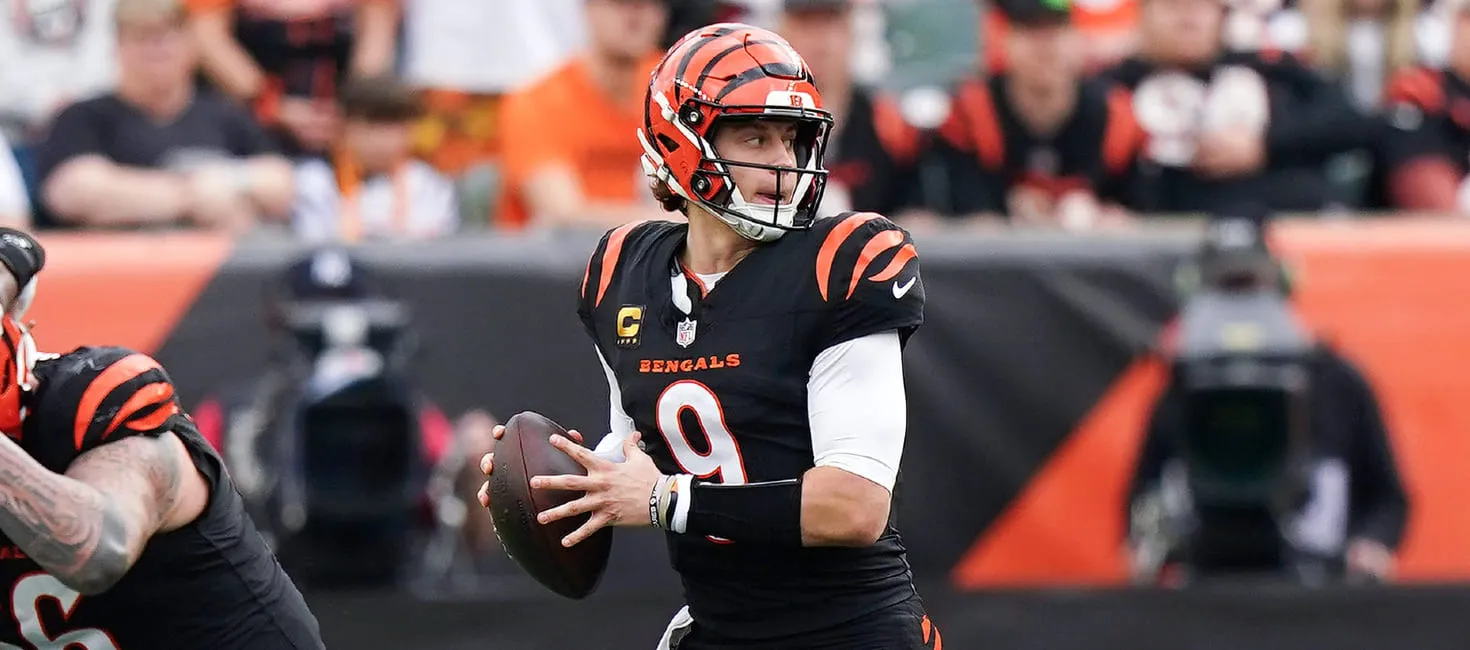
In Cincinnati, the Bengals have demonstrated the capacity for explosive scoring runs. Their ability to generate 35 unanswered points against the Tennessee Titans serves as a benchmark for their offensive ceiling. When a team demonstrates that they can control a game through a sudden surge in scoring, it dictates the game flow and forces the opposition into a reactive, less effective offensive posture.
Strategic Implications for Confidence Pools
When filling out a confidence pool for Week 8, it is important to categorize matchups by their volatility. Games involving the Kansas City Chiefs and the Denver Broncos, for example, are traditionally assigned higher confidence points because the Chiefs have proven their ability to avoid successive poor performances. Betting on a top-tier team to correct its errors is a foundational strategy in professional sports forecasting.
The following list summarizes the recommended confidence weighting for Week 8:
- Bengals vs. Titans: High confidence due to offensive momentum and established scoring depth.
- Packers vs. Panthers: High confidence based on the home-field advantage and the psychological need for a post-loss rebound.
- Jaguars vs. Colts: Moderate-to-high confidence stemming from the lack of organizational stability in Indianapolis.
- Patriots vs. Dolphins: Moderate confidence, relying on the division-focused preparation of the Patriots.
- Rams vs. Chargers: Moderate confidence in the Rams’ ability to control the Los Angeles landscape.
- Buccaneers vs. Falcons: Moderate confidence driven by recent shifts in team energy and coaching impact.
- Jets vs. Raiders: Moderate confidence in home-field comfort, with an eye on defensive vulnerabilities in the Raiders’ secondary.
- Lions vs. Vikings: Balanced confidence, favoring Detroit’s defensive progress.
- Seahawks vs. Bears: Balanced confidence, contingent on defensive cohesion.
- Chiefs vs. Broncos: Balanced confidence, favoring the Chiefs’ consistency.
- Eagles vs. Commanders: Low-to-moderate confidence due to the volatility of road divisional games.
- Bills vs. Ravens: Low-to-moderate confidence, with the outcome highly dependent on player availability.
- Browns vs. Steelers: Low confidence due to the inherent unpredictability of tight divisional rivalries.
- Cardinals vs. Cowboys: Low confidence as an upset-seeking selection based on run-game efficiency.
Conclusion and Looking Ahead
As the NFL season progresses toward the halfway mark, the importance of maintaining an objective, data-driven approach cannot be overstated. By evaluating historical performance, organizational stability, and the psychological impact of short-week preparation, participants can significantly increase their accuracy in confidence pools. Week 8 offers a wide range of opportunities to capitalize on teams that are either trending upward or struggling to find their identity. The key to long-term success in these pools remains consistent analysis rather than reliance on gut-level sentiment or past-performance bias. Monitoring official injury reports and last-minute coaching adjustments will remain the final step in refining these selections as kickoff approaches.
