
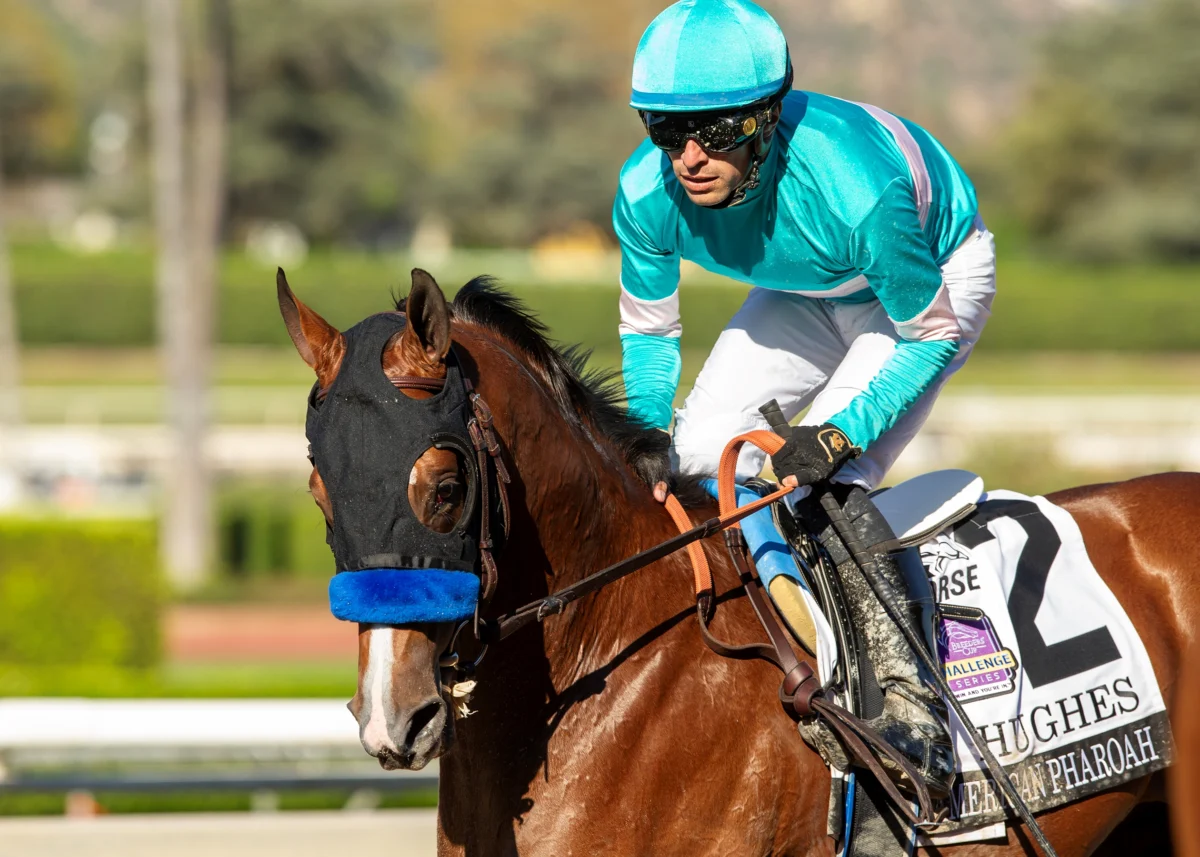
When the Albaugh family integrated their racing operations into the elite partnership colloquially known as "The Avengers" last year, the decision was driven by a pursuit of excellence rather than a cinematic namesake. Jason Loutsch, the racing manager for the Albaugh Family Stable, clarifies that the moniker was never officially adopted, yet the group’s performance has been nothing short of super-heroic. As the Albaughs navigate their first full season within this high-powered syndicate, they find themselves holding a winning ticket that could redefine their legacy in the sport: the unbeaten, grade 1-winning sensation, Hughes.
The Albaugh family, led by patriarch Dennis Albaugh and managed by Loutsch, has long been a fixture in the American thoroughbred circuit. With a resume that includes grade 1 successes with notable runners like Angel of Empire and Brody’s Cause, and a streak of seven Kentucky Derby starters, their pedigree in the industry is well-established. However, the move to partner with the Front Row Club—the group steering "The Avengers"—is a strategic pivot toward the ultimate goal: securing a victory in the Run for the Roses.
The Genesis of an Equine Powerhouse
The collaborative entity known as "The Avengers" was conceptualized eight years ago, born from the strategic minds of Sol Kumin of Madaket Stables, Jack Wolf of Starlight Racing, and Tom Ryan, who currently leads the Front Row Club. The trio first found common ground following the sale of racing rights for the Triple Crown winner Justify, a deal that allowed them to retain future breeding rights while aggressively pursuing the next generation of champions.
The group’s philosophy is rooted in a disciplined, analytical approach to bloodstock. By centralizing their resources and leveraging the expertise of top-tier bloodstock agent Donato Lanni, the syndicate focuses on purchasing approximately two dozen high-quality colts at the Keeneland September Yearling Sale. These prospects are then entrusted to the Hall of Fame trainer Bob Baffert. This closed-loop system—capital, scouting, and training—has created a pipeline of success that has outperformed industry standards by a significant margin.
Statistical Dominance and Market Performance
The efficacy of the partnership’s model is best illustrated by the cold, hard data. Since the inception of their buying strategy in 2018, the group has acquired roughly 200 yearlings. From this pool, they have produced 11 grade 1 winners and 14 grade 2 or 3 winners. This translates to a staggering 5.5% strike rate for grade 1 victories and a 12.5% rate for graded stakes winners.
To put these numbers into perspective, the national average for yearlings purchased in 2022 to eventually become graded stakes winners was a mere 2.62%. The Avengers are operating at nearly five times the national industry average, a disparity that underscores the efficiency of their vetting process. As Baffert has noted, the operation is akin to purchasing a high volume of lottery tickets, but with a selection process that tilts the odds heavily in their favor. The financial stakes are significant, with horses like Hughes commanding prices such as $675,000 at public auction, necessitating a high return on investment through both track performance and eventual stallion careers.
Hughes: The Crown Jewel of the 2024 Crop
Hughes, a son of the prolific sire Into Mischief and the Union Rags mare K P Dreamin, has become the centerpiece of the syndicate’s current ambitions. His rise has been meteoric. Having secured victories in the Del Mar Futurity (G1) and the American Pharoah Stakes (G1), Hughes enters the $2 million Breeders’ Cup Juvenile (G1) at Keeneland as the prohibitive favorite.
The colt’s development has been marked by a level of professional maturity rarely seen in 2-year-olds. In his most recent outing in the American Pharoah, Hughes transitioned from a sprinter to a route horse, handling a mile and a sixteenth with remarkable ease. He displayed the ability to track the pace before accelerating with a six-length margin of victory, a performance that solidified his status as a leading contender for the Eclipse Award for Champion 2-Year-Old Male.
"Hughes is the best horse we have had at this stage of their career," Tom Ryan stated. "He is precocious, fast, and has developed exactly how we hoped. He’s a step ahead of where Citizen Bull was at this time last year."
A Strategic Partnership for the Long Term
For the Albaugh family, the partnership is not merely about one horse; it is about infrastructure and access. "We generally buy 10 to 15 yearlings, and it’s getting tougher to compete with so many different partnerships out there," Loutsch explained. "We’ve had horses with Bob Baffert before, and this was a way to work with him again. This gives us a better opportunity to reach our ultimate goal of winning the Derby."
The collaboration creates a symbiotic relationship. For the Avengers, the Albaughs bring deep industry knowledge and additional capital to sustain their buying power. For the Albaughs, they gain access to a network of partners—including Stonestreet Stables, Robert Masterson, Golconda Stable, Waves Edge Capital, and Catherine Donovan—that shares their vision for winning classic races.
Chronology of Excellence
The history of the partnership is paved with notable names that have defined the last half-decade of American racing:
- 2018: The partnership forms, focusing on a refined acquisition strategy at the Keeneland September Yearling Sale.
- 2020: The crop produces Authentic, who captures the Kentucky Derby and the Breeders’ Cup Classic, ultimately being crowned Horse of the Year. The same cohort produces top-tier winners Charlatan and Eight Rings.
- 2023: National Treasure cements the group’s reputation by winning the Preakness Stakes.
- 2024: Citizen Bull secures the Breeders’ Cup Juvenile and the Eclipse Award for his age division.
- Late 2024: Hughes emerges as the next potential champion, aiming to extend the group’s dominance at the Breeders’ Cup.
Implications for the Future of Thoroughbred Racing
The success of the Avengers syndicate has profound implications for the commercial landscape of horse racing. By pooling capital and focusing on a concentrated number of high-potential individuals, these groups are increasingly dominating the top-tier racing programs. This "super-syndicate" model creates a high barrier to entry for smaller, independent owners, forcing a shift in how racing stables compete for the best bloodstock.
However, the model also provides a degree of risk mitigation. By spreading the ownership interest across multiple partners, the financial burden of a multi-million dollar yearling purchase is shared, allowing for the acquisition of more expensive, higher-quality horses. The success of the partnership has also sparked a wave of copycat ventures, though, as Baffert observes, few have managed to replicate the results due to the immense pressure and the level of coordination required between trainers, bloodstock agents, and managing partners.
The Road to the Breeders’ Cup
As the racing world turns its eyes to Keeneland for the Breeders’ Cup Juvenile, the focus is squarely on Hughes. For Loutsch, the race serves as the definitive litmus test. "Everything looks so easy for Hughes," he remarked. "He is a great-looking athlete, and he does exactly what the jockey asks. I’m excited to see him against the best of the best to see where he stands. This will be a very telling sign for us going into next year."
The outcome of the race will not only determine a champion but will also likely set the trajectory for the 2025 Kentucky Derby trail. For the Albaugh family, the transition from independent owner-operators to members of the Avengers collective has already yielded tangible, high-level results. Whether or not Hughes adds the Juvenile trophy to their cabinet, the partnership has proven that their collaborative approach to the sport is a formidable force, one that seems poised to continue influencing the highest levels of the racing industry for years to come.
