


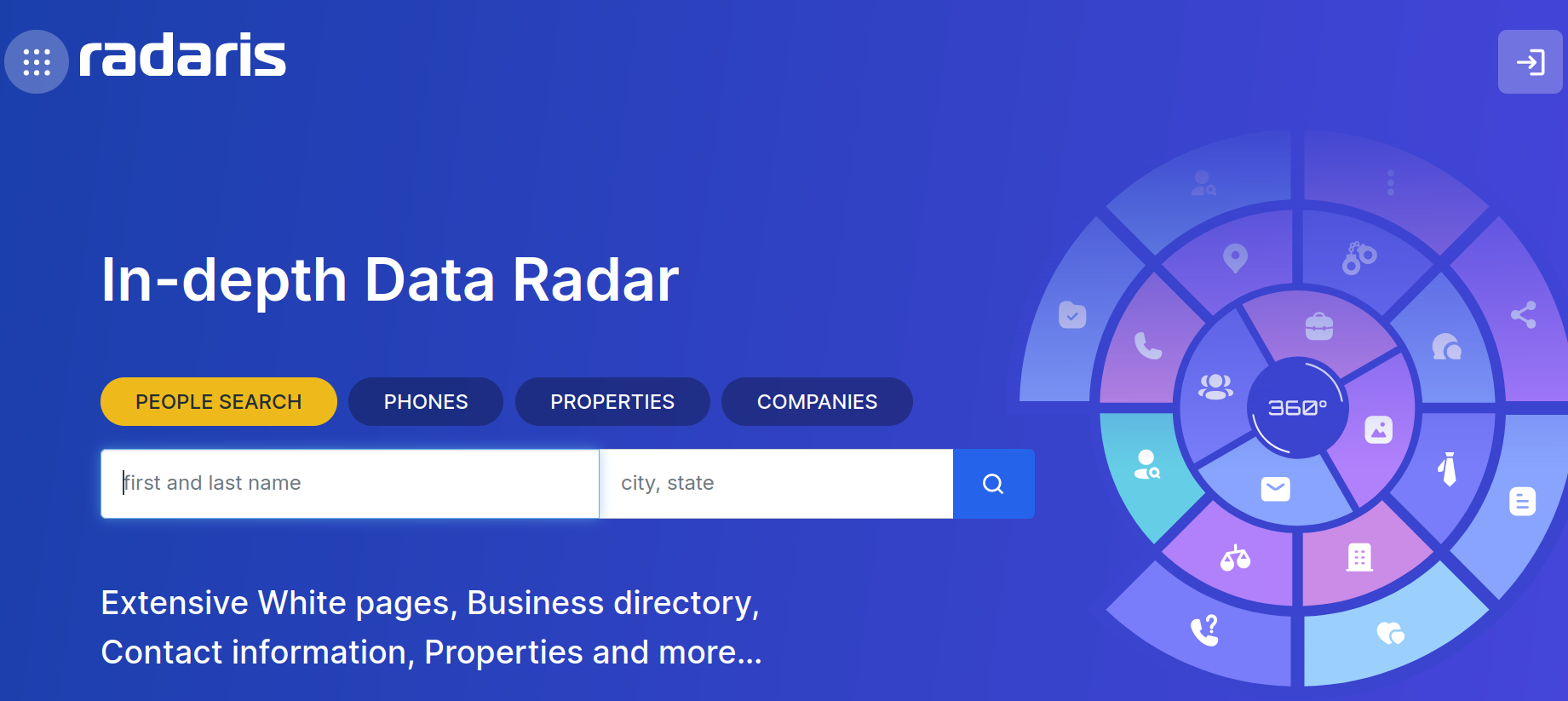
The consumer data broker Radaris.com, a platform long criticized for its aggressive aggregation of personal information and its systematic refusal to honor removal requests, has suffered a significant legal defeat that could redefine the landscape of digital privacy litigation. Following years of procedural maneuvering and efforts to obfuscate ownership, a New Jersey court has ordered the transfer of Radaris.com—along with more than a dozen associated domains—to Atlas Data Privacy Corp. This development serves as a milestone in the enforcement of Daniel’s Law, a New Jersey statute designed to shield law enforcement officials, judges, and government personnel from the risks associated with the public disclosure of their private data.
The seizure of these domains is the culmination of a protracted legal conflict between Atlas Data Privacy Corp and the opaque ownership structure behind Radaris. For years, the platform operated as a "people-search" engine, monetizing the personal dossiers of millions of Americans while employing a strategy of attrition against those who sought to remove their information. The court-ordered transfer represents a rare instance where the technical infrastructure of a data broker has been effectively dismantled through judicial intervention.
A Chronology of Evasion and Litigation
The legal battle against Radaris began in earnest in February 2024, when Atlas Data Privacy Corp filed suit, alleging systemic violations of Daniel’s Law. The statute, born from the tragic murder of the son of a federal judge, provides for $1,000 fines per violation for companies that fail to remove the personal information of protected individuals upon request.
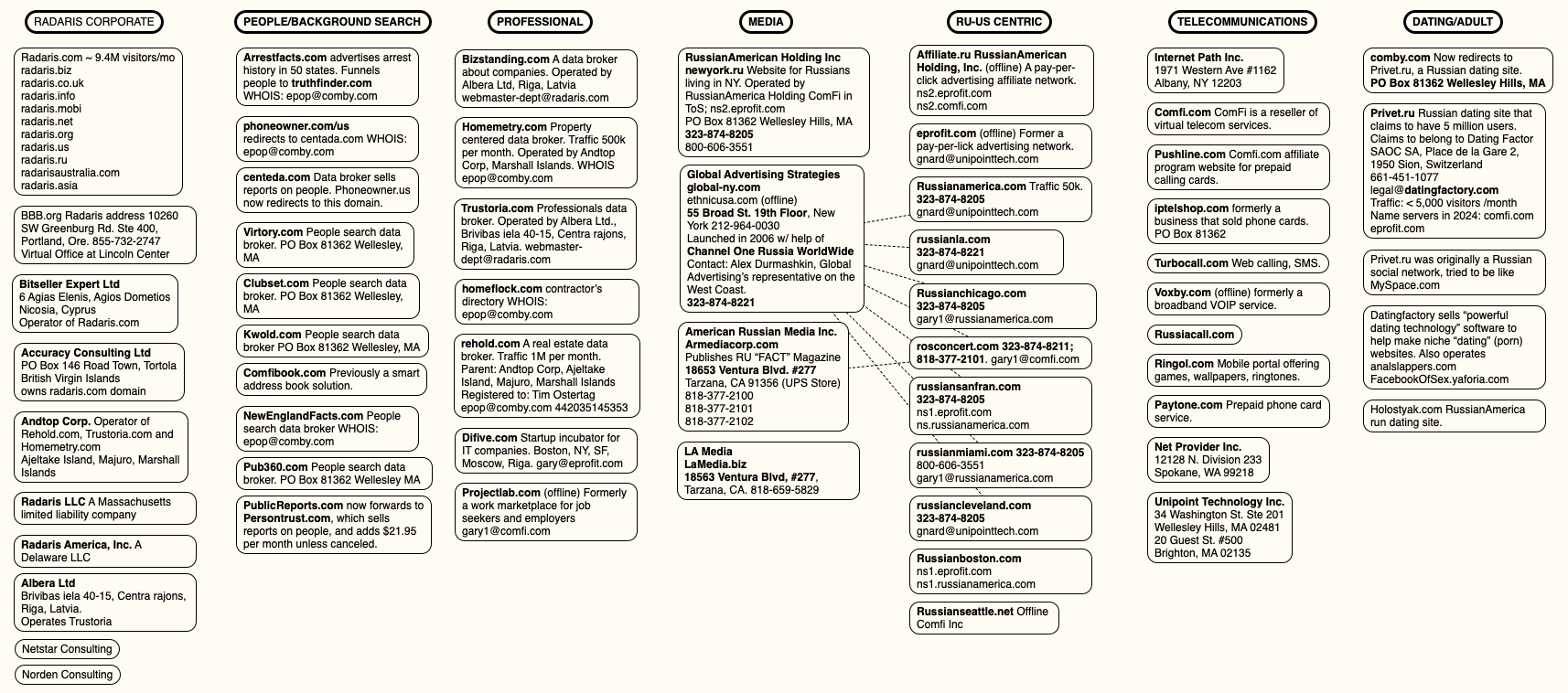
However, the legal proceedings were characterized by what industry observers describe as a "shell game." Radaris and its affiliates frequently shifted corporate registrations across jurisdictions, including the Marshall Islands, the British Virgin Islands, and the Seychelles. This "island-hopping" strategy was designed to complicate the service of process and force plaintiffs to navigate an endless cycle of changing corporate entities.
The internal operations of Radaris were further scrutinized when it was revealed that the company had long utilized a fictitious CEO, "Gary Norden," in press releases and investor solicitations. Investigations linked the actual management of the platform to Russian-born brothers Igor and Dmitry Lubarsky, who operated from the Boston area. Despite legal threats of defamation against journalists who exposed these connections, evidence obtained through discovery—including over 10,000 internal emails—confirmed that the various corporate shells were merely administrative fronts for a single, centralized operation.
The Anatomy of the Radaris Operation
Discovery materials obtained by Atlas paint a picture of a highly profitable, centralized enterprise. Emails and financial records indicate that Radaris.com and at least 25 other people-search websites were managed by a small team using a unified technical and financial infrastructure. These sites utilized shared payment processors, hosting providers, and even a consistent set of administrative mail domains, such as "difive.com" and "scienteco.com."
The financial scale of these operations is substantial. Data provided by Atlas suggests that Radaris.com generated approximately $42,000 in monthly revenue, while its sister site, Veripages.com, brought in roughly $45,000 per month. A significant portion of this revenue was bolstered by partnerships with marketing firms and, ironically, data removal services. The "cure" for the privacy risks posed by these brokers is often sold by the same entities that created the problem; for instance, Onerep—a company that markets itself as a privacy protection service—was found to have maintained close ties with the operators of these data-search sites, earning roughly $25,000 per month from the Radaris family of sites.

Legal Defenses and the Constitutional Challenge
In response to the court-ordered transfer of the domains, attorneys representing the entities associated with Radaris have characterized the move as an overreach. Victor Worms, acting as counsel for the defendants, has argued that the judgment is void because it targeted "Radaris.com," which he asserts is a domain name rather than a legal entity. The defense has filed motions to vacate the judgment and intends to pursue appeals based on constitutional grounds, specifically citing concerns regarding due process and the potential for the transfer to be viewed as an unconstitutional forfeiture.
This case is part of a broader, national struggle. Atlas Data Privacy Corp is currently engaged in litigation against roughly 150 other data brokers. Many of these companies have coordinated to shift their defense to federal court, arguing that state-level privacy laws like Daniel’s Law are overly broad and infringe upon First Amendment rights. This constitutional challenge is currently pending before the U.S. Court of Appeals for the Third Circuit, and legal experts expect the issue to eventually reach the U.S. Supreme Court, given the conflicting rulings emerging from various state and federal jurisdictions.
The Broader Implications for Privacy Legislation
The case of Radaris highlights the profound limitations of the current U.S. regulatory framework regarding data privacy. While states like New Jersey, West Virginia, and others have attempted to implement stricter controls, they are frequently hamstrung by broad exemptions for "public records." These exemptions allow brokers to continue scraping and selling information derived from motor vehicle records, property filings, marriage certificates, and court documents.
Privacy expert Justin Sherman, author of the upcoming book The Middlemen, emphasizes that the data broker industry is shielded by a combination of intense lobbying and the lack of a comprehensive federal privacy law. "The lack of comprehensive federal privacy law is not for a lack of knowledge," Sherman notes. "We have had eight million wake-up calls, from massive identity theft incidents to the commercialization of sensitive information on the dark web."
The absence of federal oversight means that the burden of data protection falls almost entirely on the individual, who must engage in a time-consuming, site-by-site process to request the removal of their personal details. When brokers refuse to comply—or when they use "shell" entities to evade legal responsibility—the cost of enforcement becomes prohibitive for the average citizen.
Future Outlook and Regulatory Challenges
The seizure of the Radaris domains signals a shift in how plaintiffs are approaching the data broker industry. Rather than seeking monetary damages—which are notoriously difficult to collect from foreign-based shell companies—plaintiffs are increasingly targeting the digital assets that give these companies their power: their web domains and their ability to appear in search engine results.
However, the path forward remains precarious. With West Virginia’s version of Daniel’s Law being ruled facially unconstitutional by a federal district court, the legal viability of state-level restrictions remains uncertain. Furthermore, the rise of artificial intelligence and the increasing reliance on data scraping for large language models have emboldened the tech industry to lobby against restrictions on data collection, arguing that such measures could stifle economic growth.
For now, the Radaris.com homepage displays a notice regarding the court-ordered transfer, a rare visual testament to a successful legal challenge against an industry that has long operated in the shadows. Whether this victory will lead to systemic change or remain an outlier in an otherwise unregulated market depends on the outcome of the constitutional challenges currently winding their way through the judiciary. As it stands, the battle for digital privacy remains a high-stakes struggle between individual security and the profitable, largely unchecked industry of data brokerage.
