

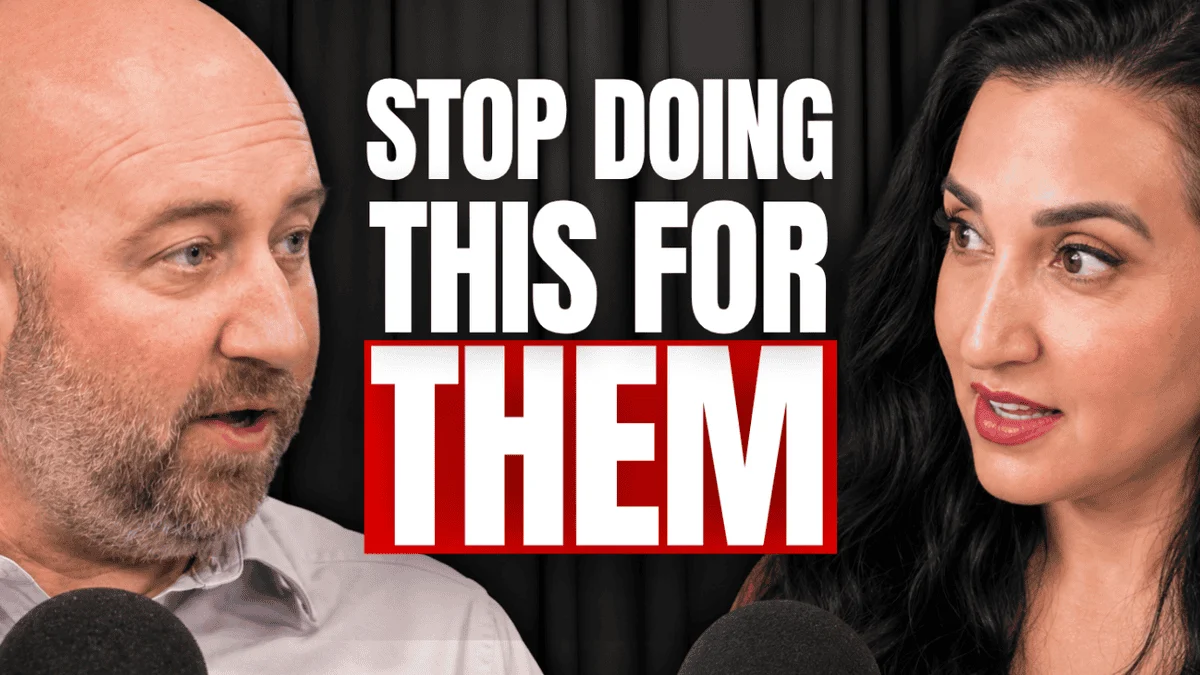
The modern individual exists in a state of constant social negotiation, frequently finding their sense of self compromised by the demands of external groups. In the latest installment of the Afford Anything podcast, entrepreneur and author Luke Burgis examines the mechanisms behind social contagion and the internal struggle to maintain personal integrity while navigating the complex hierarchies of professional, familial, and community life.
The Genesis of an Entrepreneurial Perspective
Luke Burgis’s path to understanding human desire and social influence began in the unglamorous trenches of early-stage entrepreneurship. At age 23, Burgis launched a venture that utilized vending machines as a retail channel. While the business model was straightforward—stocking machines with pita chips and granola bars—the branding required a strategic pivot. By framing the operation as "food distribution" rather than simple machine maintenance, Burgis navigated the early hurdles of professional perception.
This initial career phase, characterized by rapid growth and the eventual sale of multiple companies, provided the foundation for his later philosophical inquiry. However, the external success masked a growing internal disconnection. By the age of 29, the dissonance between his professional output and his personal values culminated in an existential crisis, leading him to exit the business world temporarily to enter a seminary.
A Humbling Return to Origins
The transition from a high-stakes business environment to the structured, communal life of a seminary served as a pivotal case study in Burgis’s research on belonging. Upon arriving at the seminary, he was assigned a "house job," a mandatory service requirement for all residents. In an ironic twist of fate, his assigned duty was to restock the campus vending machines—the very activity that had defined his early career.
This experience, occurring in an environment where his previous professional achievements were unknown, forced a confrontation with the performative aspects of identity. Burgis notes that this moment provided a unique lens through which to observe how communities—whether in a religious setting, a corporate office, or a digital group chat—exert quiet but persistent pressure on individuals to conform to specific social roles. This phenomenon, which he explores extensively in his latest work, The One and the Ninety-Nine: Forging Identity in the Age of Social Contagion, illustrates how social groups dictate "what" we should want and "how" we should behave to gain acceptance.
The Mechanics of Social Contagion and Belonging
At the core of Burgis’s analysis is the concept of mimetic desire, which suggests that human beings do not desire objects in a vacuum. Instead, our wants are largely modeled after the desires of others. When individuals become part of a group, they often adopt the collective’s priorities, sometimes at the expense of their own authentic goals.
Psychological data suggests that this phenomenon is deeply rooted in evolutionary biology. Human beings possess a fundamental drive for social inclusion, as historically, ostracization could be fatal. In a modern context, however, this drive frequently manifests as a susceptibility to "social contagion," where emotions, beliefs, and behaviors spread through a group with little critical evaluation by the individual members.
Key Factors Influencing Conformity
- The Need for Security: The biological imperative to belong often overrides the desire for individual expression.
- Mimetic Influence: The tendency to adopt the preferences of high-status peers or authority figures within a social network.
- Information Cascades: The process by which individuals make decisions based on the observed actions of others, leading to a collective shift in behavior that may not align with the group’s individual preferences.
The Shift from Conflict Resolution to Exclusion
A significant portion of the discussion focuses on the deteriorating state of interpersonal conflict resolution in the 21st century. Burgis observes a societal trend toward the "cancellation" or outright cutting off of individuals who hold dissenting views, replacing the traditional necessity of working through interpersonal friction.
Sociological studies on digital communication platforms indicate that the anonymity and distance provided by social media facilitate this trend. When communication is stripped of nuance and body language, individuals are more likely to view others in binary, dehumanized terms. This shift has profound implications for workplace culture, where the ability to navigate disagreement is often a precursor to innovation and collective problem-solving.
Professional Implications: The Zero-Tolerance Environment
Burgis proposes that maintaining personal integrity in professional settings requires a deliberate effort to establish clear boundaries and expectations. He advocates for a "zero-tolerance" policy regarding passive-aggressive communication, suggesting that such behaviors are the primary indicators of a toxic culture.
In a professional context, the cost of failing to address these cultural rot points is high. Research from organizations such as the Society for Human Resource Management (SHRM) indicates that toxic work environments lead to higher turnover rates, decreased productivity, and significant financial losses. By fostering environments that encourage transparency and direct communication, organizations can mitigate the negative effects of group pressure and encourage authentic engagement.
Navigating the Age of Social Contagion
The broader implications of Burgis’s research touch upon the sustainability of modern community structures. As digital platforms continue to accelerate the spread of ideological and consumer trends, the ability to maintain a stable, independent identity becomes increasingly difficult.
Strategies for Maintaining Individual Agency
- Curating Social Inputs: Being mindful of the groups one participates in and recognizing the influence those groups exert on personal desires.
- Defining Core Values: Establishing a framework of internal principles that remain constant, even when faced with external social pressure.
- The "Small Circle" Approach: Focusing on the quality of relationships over quantity. Burgis suggests that a small number of trusted, candid confidants is more effective for maintaining one’s identity than a large, superficial social network.
Broader Societal Impact
The transition from a localized community to a global, hyper-connected society has fundamentally altered the way individuals form their identities. In the past, identity was largely inherited through geography, family, and local tradition. Today, identity is increasingly "chosen" or "curated" through affinity groups, which are often susceptible to rapid, volatile shifts in trend and ideology.
The danger, as Burgis points out, is the total loss of the "whole" person. When an individual dissolves their identity into the group, they lose the capacity for critical thinking and moral autonomy. This leads to a state of fragility where the individual is only as stable as the group they currently occupy.
Conclusion: The Path Forward
The lessons gleaned from Burgis’s experience—from the vending machine route to the seminary—underscore a universal truth: true belonging does not require the sacrifice of the self. Instead, it requires the courage to remain "whole" while remaining in contact with the group.
As society continues to grapple with the pressures of social contagion, the ability to pause, reflect on the origins of one’s desires, and maintain a distinction between the "self" and the "social" is becoming a critical skill. Whether in the boardroom or the community center, the preservation of personal integrity remains the most effective defense against the pressures of an increasingly loud and reactive world.
For those seeking to explore these concepts further, Burgis’s work provides a framework for identifying the influences that shape our daily lives and reclaiming the agency necessary to lead a life defined by internal values rather than external contagion.
Resources and Further Reading
- The One and the Ninety-Nine: Forging Identity in the Age of Social Contagion – Luke Burgis (2024).
- FiiRE Guide: A 10-day program on financial flexibility and individual agency.
- Afford Anything Community: A digital forum for individuals seeking to balance financial health with personal and professional growth.
This article is based on the insights provided by Luke Burgis during episode #743 of the Afford Anything podcast.
