

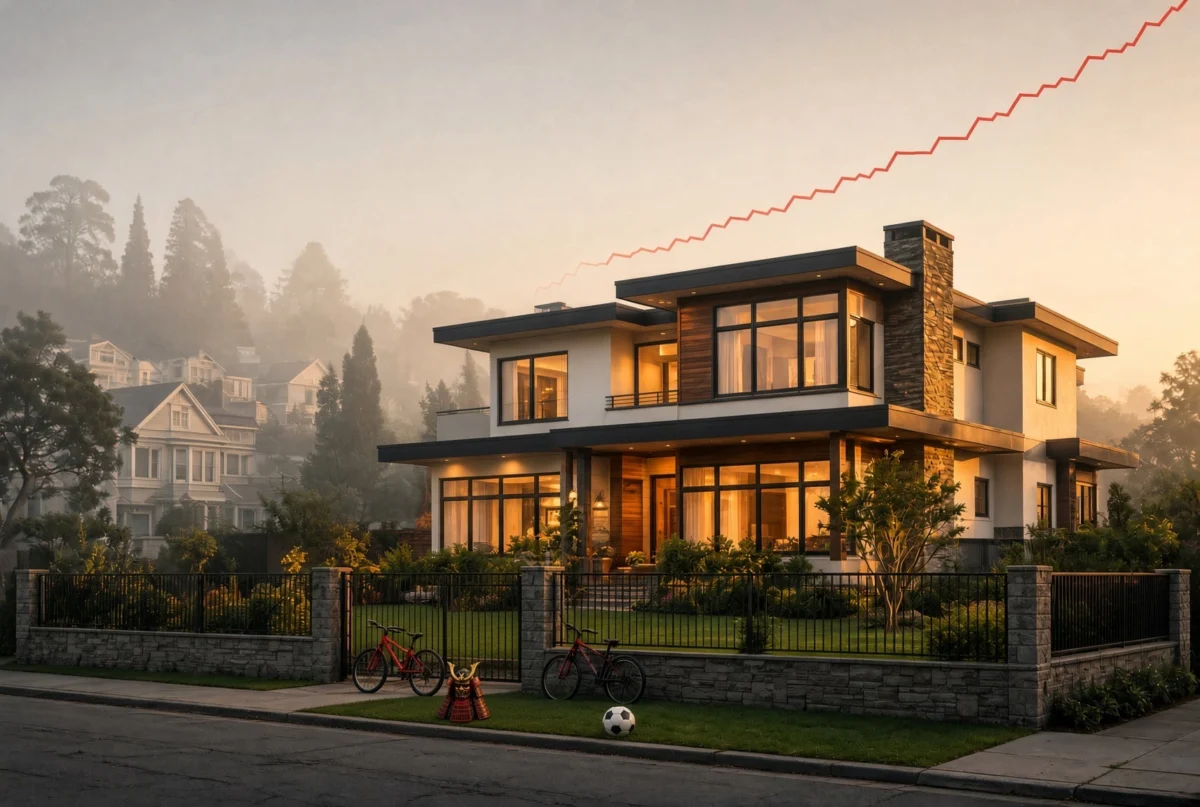
At the conclusion of 2023, a significant shift in residential real estate strategy saw many homeowners transitioning into larger, "unnecessary" properties—a trend that prompts a critical examination of whether the utility of additional square footage justifies the heavy financial opportunity costs. Three years post-acquisition, data suggests that while the emotional and lifestyle benefits of a larger home are substantial, the fiscal implications require a nuanced understanding of market dynamics, asset allocation, and long-term wealth management.
The Evolution of Residential Investment
For the average household, the primary residence remains the single largest financial commitment and the most utilized asset. Unlike depreciating consumer goods such as apparel or luxury accessories, real estate typically functions as both a shelter and a vehicle for capital appreciation. While high-end watches and jewelry are often cited as alternative investments, they lack the daily utility of a home. Residential property occupies a unique intersection where life satisfaction meets portfolio growth.
However, the decision to "oversize" a housing footprint introduces specific risks. When homeowners move into properties that exceed their functional needs, they often move outside the "frenzy zone"—the price bracket where market demand is highest and most consistent. Buying in this zone ensures liquidity; buying outside of it can often lead to stagnation during market downturns.
A Chronology of the Decision
The transition to a larger, "unnecessary" home is rarely an impulsive act. In the case of many families who made this jump in late 2023, the process was a multi-year negotiation of personal and financial priorities. For many, the primary catalyst was the changing needs of growing children. Specifically, the requirement for safe, enclosed outdoor spaces became a dominant factor for families in urban environments like San Francisco, where high-density living can restrict physical activity.
The transition typically follows a rigorous, albeit challenging, timeline:
- The Planning Phase (Months 1–6): Establishing a baseline for financial stability and consensus between partners.
- The Search (Months 6–18): Identifying properties that offer long-term value, often focusing on neighborhoods that provide both safety and proximity to essential services.
- The Escrow and Negotiation (3 months): A period defined by intense due diligence, including physical inspections and the push for seller-funded repairs.
- The Post-Purchase Integration (Years 1–3): Adjusting to the new financial reality, which often involves a shift from high-growth equity investments to a concentrated, illiquid asset.
The Cost of Opportunity: An Analysis
The most significant hurdle for those upgrading their living space is the opportunity cost of capital. By liquidating stock holdings or Treasury bonds to facilitate a down payment or an all-cash purchase, homeowners forfeit the potential compounding returns of the equity market.
Market data from the last three years underscores this tension. While the S&P 500 experienced significant growth—surpassing 80% in many windows—real estate appreciation has been more localized. For instance, an investor who liquidated positions in high-growth tech stocks in 2009 or 2015 to fund a property purchase would, in hindsight, have seen their stock portfolio outperform their real estate gains by a factor of 10x or 20x.
However, this analysis is incomplete without factoring in the "utility value." The daily improvement in quality of life—specifically the impact on childhood development and the psychological relief of "settling" into a permanent home—represents a non-monetary return that is difficult to quantify but impossible to ignore.
Maintenance and Operational Efficiency
A common misconception among potential homeowners is that larger homes inevitably lead to exponentially higher maintenance costs. Conventional financial wisdom suggests setting aside 1% of the property’s total value annually for repairs and upkeep.
However, recent evidence from homeowners who conducted aggressive due diligence during the escrow process suggests this figure can be significantly lower. By ensuring that a home is "gut renovated" and fully landscaped prior to closing, the annual maintenance expenditure can drop to a fraction of the 1% rule. Data indicates that proactive negotiation with sellers to address structural and cosmetic defects before the final sign-off is the most effective method for controlling long-term costs.
A Framework for Decision-Making
Financial analysts and real estate experts often recommend a structured approach to prevent the "buyer’s remorse" that frequently follows major real estate upgrades. The "30/30/3-5" rule serves as a primary benchmark for those considering such a move:
- The 30% Savings Threshold: Ensure at least 30% of the total purchase price is saved before initiating the transaction (20% for the down payment and a 10% buffer for liquidity).
- The 30% Debt-to-Income Ratio: Monthly mortgage obligations should not exceed 30% of gross household income.
- The 3-5x Valuation Limit: The total home price should not exceed three to five times the annual gross household income.
Beyond these metrics, prospective buyers are urged to "stress test" their cash flow. This involves modeling a scenario where one income stream is lost for a duration of at least six months. If this model creates significant financial distress, the property purchase may be deemed over-leveraged.
Broader Implications and Market Outlook
The shift toward larger, more stable home environments reflects a broader societal trend: the post-FIRE (Financial Independence, Retire Early) movement, where individuals prioritize long-term "decumulation" and the enjoyment of capital over perpetual growth.
From a macroeconomic perspective, the rise of artificial intelligence and the subsequent economic "boom loop" in regions like the San Francisco Bay Area have created unique pressures on the real estate market. The scarcity of large, usable lots in major metropolitan centers has resulted in a decoupling of price from traditional value metrics. As the demand for high-quality, large-lot residential property remains robust, the "frenzy zone" continues to shift, often creating barriers to entry for all but the most prepared buyers.
Alternative Real Estate Exposure
For those who desire real estate exposure without the burdens of physical ownership—such as tax bills, plumbing maintenance, or property management—the rise of private real estate investment platforms offers a viable alternative. By investing in data centers, residential developments, or commercial assets through diversified funds, individuals can capture real estate growth without the liquidity constraints associated with a single, high-value asset.
As the physical infrastructure for the digital age (data centers and power grids) becomes increasingly critical, the alignment between passive real estate investment and broad economic growth becomes more pronounced. For the average investor, this represents a way to participate in the real estate market while maintaining the flexibility and liquidity of a diversified investment portfolio.
Conclusion
Upgrading to a larger home remains a deeply personal decision that balances the desire for immediate quality of life against the long-term mathematical reality of investment returns. When executed with financial discipline—adhering to strict debt-to-income ratios and rigorous inspection protocols—the move can yield profound, non-quantifiable benefits. However, as with all significant capital allocations, the decision must be tempered by the awareness that every dollar locked in a residence is a dollar no longer participating in the broader market. The ultimate success of such an upgrade is not measured solely by property appreciation, but by the stability and utility provided to the occupants over the course of their tenure.
