


The 2026 Thoroughbred racing season at Woodbine Racetrack is scheduled to commence this Saturday, marking a highly anticipated return to action for one of North America’s premier racing venues. This year’s opening day is distinguished not only by the return of elite competition but also by a significant wagering opportunity: a mandatory payout on the Pick 6 sequence. With a carryover of US$44,615 already established in the pool, the racing community expects a surge in betting handle as players across the continent vie for a share of the redistributed funds.
The opening day program features a seven-race card, with the first post scheduled for 1:20 p.m. EDT. The Pick 6 wager, which remains a focal point for handicappers, encompasses Races 2 through 7 and is slated to begin at 1:52 p.m. EDT. In a notable scheduling decision for the season opener, all seven contests will be conducted as sprints on Woodbine’s signature synthetic Tapeta surface. This consistency in surface and distance provides a unique challenge for bettors, who must navigate the nuances of early-season form and track biases that typically emerge during the spring thaw in Ontario.
Strategic Insights and Surface Trends
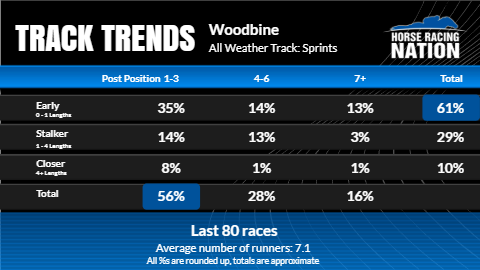
As the 2026 meet begins, analysts are closely examining historical data to identify potential trends that could influence the outcome of the opening day races. According to data derived from Horse Racing Nation’s Track Trends Tool, the first month of racing at Woodbine has historically favored specific running styles. During the initial four weeks of the previous season, "inside speed"—horses with early tactical foot breaking from lower post positions—demonstrated a statistically significant advantage on the Tapeta surface.
The Tapeta surface itself, a mixture of fine sand, wax, and fibers designed to mimic the feel of turf while providing the durability of a traditional dirt track, often behaves differently depending on ambient temperature and moisture levels. In the early spring, the track can play "tight," allowing front-runners to maintain their momentum through the stretch. To account for these variables, many professional handicappers utilize pace reports to project the early leaders of each race. These reports offer a confidence interval for each projection, allowing bettors to weigh the likelihood of a "wire-to-wire" victory versus a late-closing upset.
For the mandatory Pick 6 payout, identifying these pace dynamics is essential. Because the payout is mandatory, the entire pool—including the $44,615 carryover and all new money wagered on Saturday—must be distributed to those holding tickets with the most winners. This often leads to massive pool sizes that far exceed the carryover amount, as the "value" of the bet increases when "dead money" from the carryover is added to the total.
Statistical Analysis of First-Time Starters
The concluding leg of the Pick 6 sequence features a particularly complex puzzle for bettors: a field that includes three first-time starters. In maiden races, where past performance data is non-existent, statistical modeling of pedigree, workout times, and trainer intent becomes the primary method of evaluation.

Historical data from Woodbine highlights the stark disparity in success rates among debut runners. Last year, first-time starters assigned a "five-star" power rating by analysts won at a 25.6% clip. Despite the high win percentage, the Return on Investment (ROI) for these favorites sat at -1%, suggesting that while these horses are highly likely to win, the betting public is well aware of their talent, leading to short odds.
Conversely, the data for lower-rated debutantes is sobering. Horses assigned a "one-star" rating failed to record a single victory in 33 attempts last year. Extending the lens further, one-star debut runners have gone 0-for-170 over the last four years at the Rexdale oval. "Two-star" horses have fared only marginally better, posting a 3-for-83 record with a dismal -68% ROI. For Pick 6 players, these statistics provide a clear roadmap for "tossing" certain runners to reduce the cost of their tickets, while focusing their capital on high-probability contenders like the No. 1 horse, Up N the Ante, who enters Saturday with a five-star rating and a 6-1 morning line.
The 2026 Racing Calendar and Seasonal Progression
The opening of the 2026 season initiates a gradual ramp-up of the racing schedule at Woodbine. For the first three weeks of the meet, racing will be conducted exclusively on Saturdays and Sundays. This limited schedule allows the horse population to acclimate to the racing surface and provides trainers with the opportunity to finalize the fitness of their stables after the winter break.
The schedule is set to expand as the weather improves and the stakes calendar intensifies. On May 8, Woodbine will add Friday afternoon racing to its weekly rotation. This will be followed by the addition of Thursday cards starting June 11, bringing the track to its full four-day weekly schedule. This progression is designed to maximize field sizes and wagering handle as the prestigious summer meet approaches.
The pinnacle of the 2026 season will occur on August 15 with the 167th running of the King’s Plate. As the first leg of the Canadian Triple Crown and the oldest continuously run stakes race in North America, the King’s Plate remains the most significant event on the Canadian racing calendar. The race, contested at 1 1/4 miles on the Tapeta, carries not only a $1 million purse but also immense cultural and historical weight. The path to the King’s Plate begins with the maiden and allowance races held during these opening weeks, as owners and trainers look for "Plate potential" in their three-year-old sophomores.
Economic and Industry Implications
The start of the Woodbine season is a vital economic driver for the Ontario agricultural and gaming sectors. Woodbine Entertainment, a non-profit corporation that operates the track, reinvests its profits into the provincial horse racing industry, supporting thousands of jobs ranging from grooms and exercise riders to veterinarians and hay farmers.
The mandatory Pick 6 payout on opening day is a calculated marketing move designed to capture the attention of the "ADW" (Advance Deposit Wagering) market. By offering a guaranteed distribution of a pool bolstered by a carryover, Woodbine ensures that its opening day handle will be among the highest of the early spring season. In an increasingly competitive gambling landscape where horse racing vies for attention with sports betting and online casinos, these "event" wagers are critical for maintaining the sport’s relevance and financial health.
Furthermore, the reliance on data-driven handicapping tools—such as the Pace Report and First-Timer Power Ratings—reflects a broader trend in the industry. Modern bettors are increasingly sophisticated, utilizing algorithmic analysis and deep-data archives to find an edge. Woodbine’s integration of these insights into its promotional materials suggests a recognition of this shift toward a more analytical fan base.
Stakeholder Perspectives and Expectations
While official statements from the Woodbine front office emphasize the excitement of the new season, the sentiment on the "backstretch"—where the trainers and owners reside—is one of cautious optimism. The early season is often a period of discovery, as trainers determine which of their horses have handled the winter transition well.
"Opening day is always about seeing where your horses stand," noted one veteran conditioner who requested anonymity. "The Tapeta can be tricky in April. You want to see that inside speed holding, but you also need to know if your horse has the fitness to finish a sprint after a long layoff. The Pick 6 payout definitely adds a bit of pressure because there are more eyes on these early races than usual."
For the wagering public, the mandatory payout represents a "positive expectation" scenario. When a carryover is present and a payout is mandatory, the effective "takeout" (the percentage the track keeps) is significantly reduced or even eliminated, depending on the amount of new money wagered. This creates a rare environment where the bettor has a mathematical advantage over the "house," provided they can correctly handicap the sequence.
Broader Impact on Canadian Thoroughbred Racing
The success of the Woodbine opening day often sets the tone for the entire Canadian racing circuit. As the flagship track of the country, Woodbine’s ability to attract international interest and maintain high wagering standards is essential for the prestige of Canadian-bred horses.
The 2026 season arrives at a time when the industry is focusing heavily on horse safety and surface consistency. The Tapeta surface at Woodbine is widely regarded as one of the safest in the world, a factor that continues to attract high-quality stables from the United States and Europe. By starting the season with a series of sprints on this synthetic track, Woodbine minimizes the risks associated with the unpredictable spring weather, which can often render turf courses unusable or dirt tracks dangerously muddy.
As the gates swing open this Saturday at 1:20 p.m. EDT, the eyes of the racing world will be on Toronto. Between the strategic depth of the Pick 6 mandatory payout, the debut of highly-rated three-year-olds, and the long road toward the 167th King’s Plate, the 2026 Woodbine season promises to be a landmark year for the sport in North America. Whether the "inside speed" trend holds or the five-star debutantes dominate, the return of racing at Woodbine signifies the true beginning of the spring sports calendar in Canada.
