

The pursuit of financial independence, while celebrated for its emphasis on long-term stability and wealth accumulation, has increasingly come under scrutiny for a psychological byproduct that experts call the decumulation paradox. Recent observations of retirees suggest that the same discipline required to build a nest egg often renders individuals psychologically incapable of spending it, leading to a phenomenon where wealth remains locked away, ultimately passing to heirs or back into the market rather than enhancing the owner’s quality of life.
The Psychology of Persistent Thrift
For many individuals who adhere to the Financial Independence, Retire Early (FIRE) movement, frugality is not merely a temporary strategy; it is a behavioral pattern reinforced over decades. Research in behavioral economics indicates that financial habits formed during the formative working years—typically from age 30 to 60—become deeply ingrained neurological pathways. By the time an individual reaches the traditional retirement age of 65, the ability to flip a switch and shift from an "accumulation mindset" to a "spending mindset" is rarely instantaneous and often impossible.
Data from the Employee Benefit Research Institute (EBRI) consistently shows that many retirees spend down their assets at a much slower rate than financial models anticipate. A significant portion of retirees retains 80% to 90% of their pre-retirement assets even two decades into retirement. This behavior is not always dictated by a need for medical contingency funds, but by a psychological resistance to the act of spending, even when the financial data indicates that such expenditures would be entirely sustainable.
Chronology of the Decumulation Window
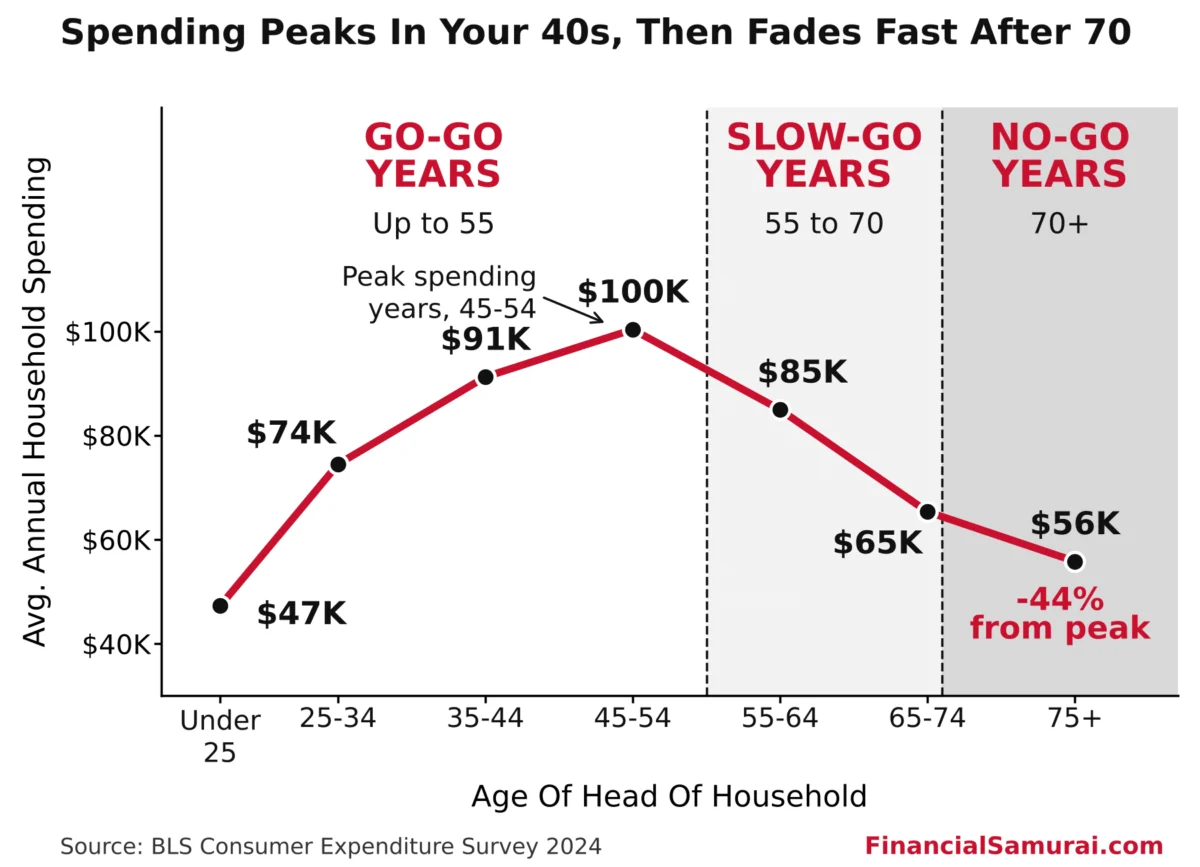
Financial planning experts suggest that the "go-go years" of retirement—typically defined as the period between age 65 and 75—represent the primary window for high-value consumption. During this timeframe, health and mobility are generally sufficient to support travel, hobbies, and leisure activities. However, the window of opportunity is narrower than most retirees assume.
- Age 45 to 55 (Pre-Retirement): The final decade of high-intensity career growth. It is during this period that individuals are encouraged to begin "psychological re-training" to prepare for the shift in spending.
- Age 55 to 70 (The Transition): Often marked by the end of primary child-rearing responsibilities and the cessation of traditional employment. This is the period where behavioral inertia is most likely to set in.
- Age 70+ (The Static Period): Empirical evidence suggests a sharp decline in discretionary spending. At this stage, lifestyle preferences often shift toward home-centric activities, and physical limitations begin to override the desire for novelty or luxury experiences.
The Impact of Lifestyle Creep in Reverse
The phenomenon of "reverse lifestyle creep" is particularly prevalent among those who spent years sacrificing comfort to reach a net-worth milestone. Even when provided with the financial resources to upgrade their standard of living—such as replacing aging technology, purchasing more comfortable vehicles, or funding family travel—these individuals frequently decline.
Interviews with families observing elderly relatives reveal a recurring theme: the "barrier to spending" is often not the lack of liquidity, but the perceived risk of depleting capital. When children offer to subsidize experiences for their parents, the refusal is rarely rooted in a lack of funds. Instead, it is rooted in a fundamental lack of interest in high-consumption activities. The "muscle memory" of saying "no" to discretionary costs has, over time, become a defining personality trait that overrides the desire for enrichment.

Economic and Societal Implications
The broader economic impact of this behavior is significant. When a large segment of the aging population fails to spend their accumulated wealth, that capital remains stagnant. From a macroeconomic perspective, the velocity of money—the rate at which money changes hands in an economy—is diminished.
Furthermore, the failure to engage in decumulation creates a transfer-of-wealth issue. Instead of being utilized to improve the retiree’s quality of life, the money is often transferred to the next generation, who are likely already in their peak earning years and may not require the infusion of capital as much as the retiree required the quality-of-life benefits that the money could have provided.
The Role of Financial Modeling
To combat the inability to spend, financial advisors are increasingly emphasizing the use of robust retirement modeling tools. These tools do not simply track growth; they simulate "worst-case" scenarios to provide retirees with a mathematically verified "spending ceiling."
By modeling these numbers, retirees can see that they have a surplus, which can alleviate the fear of poverty in old age. Professional financial reviews serve as an objective, third-party authority that can provide "permission" to spend, countering the internal narrative of scarcity. Many retirees find that having an external audit of their finances provides the necessary security to shift their mindset from preservation to utilization.
Strategic Recommendations for Retirees
- Front-Load Experiences: Experts recommend prioritizing physical and travel-intensive activities earlier in the retirement window. The physical ability to enjoy these experiences is a depreciating asset.
- Budget for Discretionary Spending: Much like a business manages its operating budget, retirees should allocate a specific, non-negotiable budget for "joy-based" spending. If the funds are earmarked, they are less likely to be viewed as "stolen" from future needs.
- Address the Root Fear: For many, the refusal to spend is masked as fiscal responsibility but is actually a fear of the unknown. Life insurance and long-term care planning are essential tools to address these specific anxieties, effectively "hedging" against the risks that cause retirees to hoard cash.
- Shift Focus from Accumulation to Utility: Retirees are encouraged to treat their net worth as a tool for utility rather than a scoreboard. The value of a dollar is not its face value in a brokerage account, but the utility it can provide at the moment it is spent.
Conclusion
The narrative of the aging saver who remains trapped in a cycle of frugality serves as a cautionary tale for the modern worker. While building financial security is an essential goal, it is equally important to develop a strategy for the eventual usage of that wealth. As individuals approach their 50s and 60s, the focus must shift from the mathematical certainty of the balance sheet to the human reality of the life cycle.
The goal of financial planning should not be to die with the largest number on a screen, but to ensure that the resources accumulated over a lifetime are successfully converted into meaningful experiences while the capacity to enjoy them still exists. The lesson for the current generation of savers is clear: the most expensive cost of frugality is the missed opportunity to live well during the years when such living is still physically and mentally possible.
