

The world of mixology, much like any creative field, grapples with the perennial question of originality. In this landscape, the cocktail known as The Left Hand stands as a peculiar case study. It possesses a name, a clear identity, and has achieved a status that many would deem a "neo-classic"—its recipe is widely published, and bartenders globally can prepare it from memory. Yet, a critical examination prompts a fundamental query: Is The Left Hand truly an independent creation, or merely a Boulevardier in a subtly altered guise? This exploration delves into the origins, evolution, and enduring appeal of this popular cocktail, examining its place within the pantheon of mixed drinks.
The Genesis of a Cocktail: The Challenge of Innovation in a Crowded Market
The contemporary cocktail scene is characterized by an unprecedented proliferation of bars and an easily accessible repository of mixological knowledge, a stark contrast to the landscape of two decades ago. In 2006, when The Left Hand first emerged, the global cocktail bar count was a fraction of what it is today. Moreover, the vast majority of historical cocktail literature—thousands of recipes meticulously documented over 150 years—was largely out of print, inaccessible, and un-digitized. This environment fostered a unique atmosphere for cocktail creation, where serendipitous discoveries were less likely to overlap with pre-existing, albeit forgotten, creations.
It was within this context that Sam Ross, a bartender at the renowned Milk & Honey in New York City, conceived of a new drink. Inspired by the then-recently introduced Bitterman’s Xocolatl Mole Bitters, Ross described his creation as "a love child of a Negroni and a Manhattan." His recipe was straightforward: two parts bourbon, one part sweet vermouth, and one part Campari, with the distinctive addition of the mole bitters. The cocktail’s name, "The Left Hand," was a deliberate nod to the character "Lefty" Ruggiero, portrayed by Al Pacino in the 1997 film Donnie Brasco. This choice of name, linking the drink to a character known for his duality and complex allegiances, perhaps subtly foreshadowed the very debate surrounding its own identity.
The Shadow of Precedent: The Boulevardier’s Long Slumber
Unbeknownst to Ross at the time of his creation, a similar libation had been crafted a few years prior. In San Francisco, at the bar Range, bartender Dominic Venegas had developed a drink he called the "1794." This cocktail featured rye whiskey (instead of bourbon), sweet vermouth, and Campari, but notably omitted the bitters. While the geographical distance and the nascent state of internet-driven cocktail discourse meant that these two creations did not immediately intersect, their existence highlights the inherent challenges of claiming absolute originality in mixology.
The more significant, and perhaps overlooked, progenitor in this narrative is the Boulevardier. Invented approximately 80 years before Ross’s Left Hand, the Boulevardier is a classic cocktail comprising equal parts bourbon (or rye), Campari, and sweet vermouth. It is, in essence, The Left Hand without the bitters. The Boulevardier, however, had largely faded from popular consciousness, relegated to obscure pages of out-of-print cocktail books. This obscurity meant that bartenders like Ross and Venegas were, in effect, rediscovering and reinventing components of a classic without necessarily being aware of its existence.
The Modern Reawakening of Classic Cocktails

The past two decades have witnessed a profound resurgence of interest in classic cocktails, driven by a generation of bartenders and enthusiasts dedicated to unearthing and revitalizing historical recipes. Digitization efforts, the growth of cocktail-focused publications, and the interconnectedness facilitated by the internet have made once-lost cocktails readily accessible. This renewed appreciation has also brought to the fore questions of attribution and originality. In today’s hyper-connected beverage culture, introducing a drink that is a mere variation of a well-known classic without acknowledgment could indeed be perceived as derivative, akin to launching a footwear brand named "Niké" and expecting no controversy.
The Enduring Identity of The Left Hand: A Question of Taste and Recognition
Despite the spectral presence of the Boulevardier and the now-vanished 1794, The Left Hand has carved out its own distinct niche in the cocktail world. The author argues for its independent standing, citing two primary reasons. Firstly, the inclusion of mole bitters fundamentally alters the sensory experience. These bitters introduce a "broody chocolatey depth in the mid-palate" and enhance the final bitterness, creating a flavor profile that is perceptibly different from a standard Boulevardier. This distinction is not merely academic; it translates into a subjective craving—one might desire The Left Hand when seeking its specific complexity, and a Boulevardier when in the mood for its cleaner, more direct profile. This difference in palate preference, the author contends, is proof of its unique character.
Secondly, and perhaps more crucially in the realm of cocktail culture, The Left Hand possesses a name and widespread recognition. It has achieved "grandfathered in" status, solidifying its position as a bona fide neo-classic. This recognition, built over years of consistent preparation and appreciation, grants it a legitimacy that transcends mere ingredient similarity. The cocktail’s journey from an obscure bar creation to a widely recognized modern classic underscores the power of naming, dissemination, and cultural adoption in the evolution of culinary art.
The Recipe and Its Nuances: Crafting The Left Hand
The preparation of The Left Hand is a relatively simple affair, involving the careful combination of its core components.
The Classic Left Hand Recipe:
- 2 oz Bourbon
- 1 oz Sweet Vermouth
- 1 oz Campari
- 2 Dashes Bitterman’s Xocolatl Mole Bitters
Instructions:
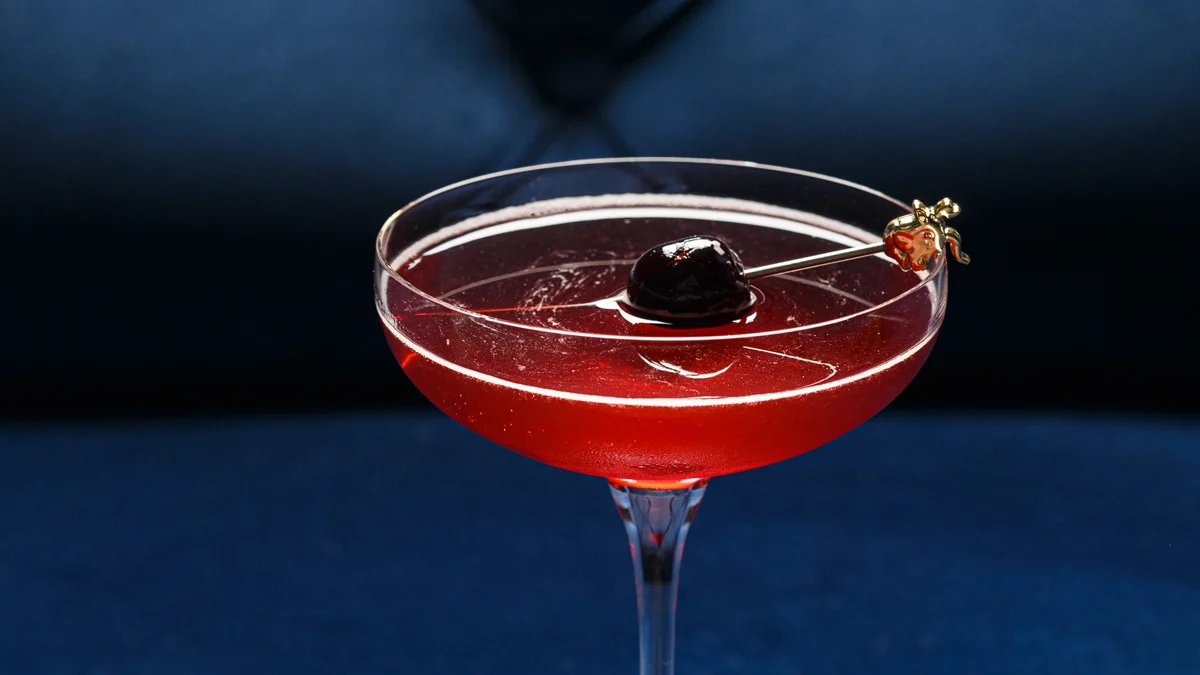
Combine all ingredients in a mixing glass filled with ice. Stir vigorously for 15 to 20 seconds until well-chilled. Strain the mixture into a chilled coupe glass or over a large ice cube in a rocks glass. Garnish with a maraschino cherry or an orange peel.
Ingredient Considerations:

- Bourbon: While many bourbons can be used, a spirit with a higher rye content, such as 1792 or Bulleit, is often favored for its spicy character that complements the other ingredients. However, the cocktail is generally forgiving and palatable with a wide range of bourbons. The choice of bourbon can significantly influence the final profile, with higher-rye options leaning towards a spicier, more robust drink, while wheated bourbons might offer a softer, sweeter foundation.
- Sweet Vermouth: The selection of sweet vermouth is a critical decision that impacts the cocktail’s sweetness, herbal complexity, and overall balance. Options range from the rich and potent Carpano Antica Formula, which offers a powerful flavor profile with notes of vanilla and dark fruit, to the more elegant and clean Cocchi Vermouth di Torino, characterized by its balance of sweetness and subtle spice. Dolin Rouge provides a lighter, more delicate profile, though some may find it slightly thin. The overarching advice is to opt for a quality vermouth, as a subpar ingredient will inevitably detract from the final drink. The nuanced interplay of botanicals in different vermouths can subtly shift the character of The Left Hand, from intensely spiced to softly floral.
- Chocolate Bitters: The genesis of The Left Hand is inextricably linked to Bitterman’s Xocolatl Mole Bitters. These specific bitters are recommended not only for their superior compatibility—providing a dry cacao spice that deepens the drink without introducing cloying sweetness—but also because they are considered an essential component for any serious cocktail enthusiast’s bar. Their unique flavor profile, reminiscent of Mexican mole sauce, adds a complex layer of savory and earthy notes that differentiate it from standard chocolate bitters, which can sometimes lean overly sweet or artificial. The judicious use of these bitters is key to achieving the intended depth.
- Campari: As the defining bitter liqueur of the Negroni family, Campari provides the characteristic herbaceous and bittersweet foundation. Its robust flavor is essential for balancing the sweetness of the vermouth and the richness of the bourbon. While some variations might explore other amari, Campari remains the standard for its iconic profile. The intensity of Campari can be adjusted to personal preference, though its presence is integral to the cocktail’s identity.
Ratio Adjustments for Serving Style:
The standard recipe for The Left Hand, often found online, typically uses 0.75 oz each of sweet vermouth and Campari, resulting in a 2:1:1 ratio. This ratio, attributed to Sam Ross’s original specifications, produces a drink that leans closer to a bitter Manhattan. However, the author proposes a slightly modified ratio (as presented in the recipe above, with 1 oz of each) that yields a profile more akin to a bourbon Negroni. This alteration emphasizes the Campari and vermouth, creating a richer, more robust drink.
The choice between these ratios often hinges on the intended serving method. For cocktails served "up" in a coupe or martini glass, the original 2:1:1 ratio is recommended, as the absence of ice minimizes dilution, allowing the subtler nuances of the ingredients to shine. Conversely, when serving The Left Hand on the rocks, the slightly increased proportions of vermouth and Campari provide additional body and flavor to counter the inevitable dilution from the melting ice, ensuring a more consistent taste experience throughout the drink. This adaptation speaks to the practical considerations of cocktail engineering, where presentation directly influences formulation.
Garnish:
Historically, The Left Hand was garnished with a cherry, a practice inherited from its Manhattan lineage. While a cherry provides a pleasant aroma and a touch of sweetness, it is considered a neutral element in terms of its contribution to the cocktail’s overall aroma. Personally, the author favors an orange peel, which releases aromatic oils that add a bright, citrusy counterpoint to the drink’s richer, darker notes. The choice of garnish, while seemingly minor, can subtly enhance the drinking experience by engaging the sense of smell, a crucial component of taste perception.
The Left Hand’s Place in the Cocktail Pantheon
In conclusion, The Left Hand has successfully navigated the complex terrain of cocktail creation and consumption to establish itself as a distinct and appreciated beverage. While its origins may be intertwined with the forgotten echoes of the Boulevardier, its unique flavor profile, enhanced by the thoughtful inclusion of mole bitters, and its widespread recognition have solidified its status as a neo-classic. It stands as a testament to the fact that innovation in mixology can arise not only from entirely novel combinations but also from subtle, yet impactful, modifications to established templates. The ongoing evolution of cocktail culture, with its blend of historical reverence and contemporary creativity, ensures that drinks like The Left Hand will continue to be debated, celebrated, and, most importantly, enjoyed. Its enduring presence on bar menus and in home bars worldwide is a clear indication that it is more than just a disguised classic; it is a drink that has earned its own identity.
