

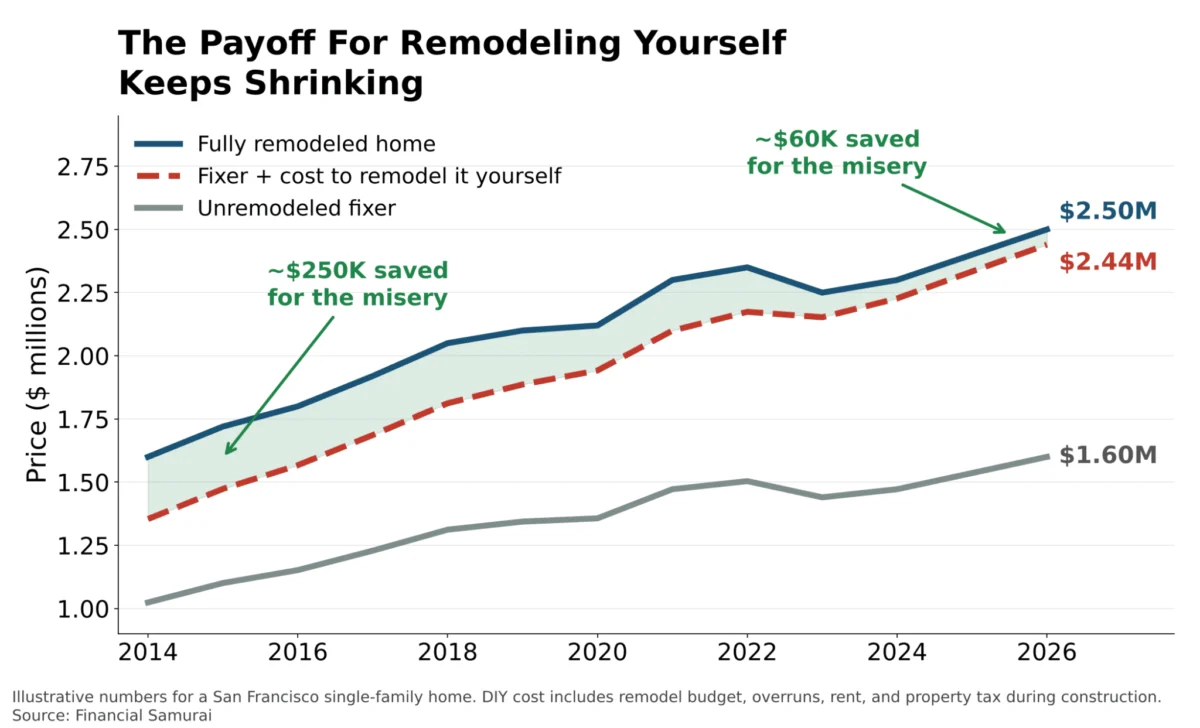
The decision to undertake a gut renovation of a residential property is increasingly viewed by industry experts as a high-stakes financial and psychological endeavor. As urban development regulations tighten and labor markets remain volatile, the traditional narrative of "buying a fixer-upper to build equity" is undergoing a significant reassessment. Current data indicates that homeowners who opt for full-scale renovations frequently encounter substantial deviations from initial budgetary and timeline projections, often leading to hidden costs that erode the anticipated return on investment.
The Evolution of Permitting and Construction Timelines
The complexity of modern residential construction is largely dictated by municipal oversight and the increasing duration of the permitting process. According to a recent analysis by ResiClub, which synthesizes data from University of Chicago and Princeton researchers, the time required to move from permit application to project completion for a single-family home has seen a marked increase over the past two decades. In the year 2000, the national average for permitting was approximately 1.6 months; by 2023, that figure had climbed to 4.9 months.
This trend is not uniform across the United States, with significant disparities observed between major metropolitan hubs and smaller, less densely regulated markets. In cities like San Francisco, the cumulative time to secure permits and finalize construction for a single-family residence can exceed four years. Conversely, markets such as Indianapolis, El Paso, and Colorado Springs report completion cycles of approximately six months. These figures represent a critical risk factor for developers and private homeowners alike, as longer timelines inevitably lead to higher carrying costs, including property taxes, insurance premiums, and the necessity of financing temporary housing.
Deconstructing the Financial Iceberg
Financial analysts often categorize the expenses of a gut renovation into visible and invisible tiers. While the construction contract represents the primary, visible expenditure, the "invisible" costs frequently account for a substantial portion of the total financial commitment.
Consider a hypothetical scenario involving the purchase of a property valued at $1.6 million, with an earmarked $400,000 renovation budget. If the project follows industry-standard patterns of 50% cost overruns and significant timeline extensions, the financial landscape changes drastically. A 2.5-year construction schedule—extended from an initial 18-month estimate—triggers a series of compounding financial pressures:

- Carrying Costs: Property taxes, insurance, and maintenance expenses continue to accrue during the construction period, even if the property is uninhabitable.
- Opportunity Costs: Capital locked into a non-performing asset is unavailable for alternative investment vehicles, such as equities or fixed-income securities, which may offer reliable compound growth.
- Inflationary Pressures: Extended project timelines expose homeowners to fluctuations in the cost of raw materials and labor, which have historically trended upward in the post-pandemic construction market.
- Temporary Displacement: The requirement for alternative housing during the renovation period adds a significant monthly overhead that is rarely factored into initial equity-building calculations.
When these variables are aggregated, the total cost of the project often exceeds the market value of the finished home, effectively nullifying the "discount" sought by purchasing a property in need of repair.
The Shift Toward Turnkey Real Estate
In response to these challenges, there has been a detectable shift in buyer preference toward fully renovated, "turnkey" properties. Market data suggests that while these homes carry a higher initial purchase price, the lack of immediate renovation requirements offers a predictable financial outcome.
Industry observers note that the market may currently undervalue the "convenience premium" of a completed home. Given the volatility of the construction industry, the time and effort saved by avoiding a gut remodel are tangible assets. For buyers over the age of 40, or those operating in high-cost, slow-permitting jurisdictions, the financial wisdom of paying a premium for a finished product is increasingly supported by the data on project failure rates and budget slippage.
Why Renovation Projects Persist
Despite the well-documented risks, the demand for custom gut renovations remains robust. This persistence is attributed to two primary drivers: the desire for architectural and aesthetic customization and the miscalculation of personal project management efficiency.
Homeowners with specific, non-traditional design preferences—such as integrated smart home systems, unconventional interior layouts, or bespoke material requirements—often find that existing housing stock does not meet their needs. However, the technical execution of these designs requires a level of coordination between architects, structural engineers, and general contractors that is difficult for the average homeowner to manage effectively.
Furthermore, the "illusion of control" often leads homeowners to believe they can navigate the permit and inspection process with greater efficiency than previous owners. This perspective frequently underestimates the bureaucratic friction inherent in municipal planning departments and the operational challenges faced by general contractors, who must manage a rotating cast of subcontractors and supply chain dependencies.

Strategic Recommendations for Prospective Renovators
For those who proceed with a gut renovation, professionals suggest a framework for risk mitigation to ensure the project remains viable:
- Contingency Allocation: Financial advisors recommend setting aside a minimum of 25% to 50% above the initial contractor estimate to account for unforeseen structural issues, regulatory changes, or material price spikes.
- Buffer Timelines: Estimating a completion date at least 50% longer than the contractor’s initial timeline provides a realistic window for inevitable delays in inspection and labor availability.
- Professional Oversight: Engaging a project manager or an experienced architect to act as a fiduciary agent can help navigate the complexities of local zoning laws and contractor relations.
- Contractual Rigor: Utilizing clear, milestone-based contracts that tie payments to verified project stages can protect the homeowner from the risk of contractor abandonment or prolonged work stoppages.
Broader Market Implications
The ongoing trend of lengthy renovation timelines has secondary effects on the broader housing market. In neighborhoods where a high percentage of homes are undergoing major renovations, the result is a perpetual state of construction that impacts local quality of life, including noise pollution, traffic congestion, and infrastructure strain.
Furthermore, the concentration of capital in high-end renovation projects can inflate local property values, potentially pricing out entry-level buyers while simultaneously reducing the inventory of "fixer-upper" homes that have historically served as a starting point for first-time homeowners.
Conclusion
The decision to renovate is no longer a straightforward path to wealth creation. As bureaucratic hurdles, rising labor costs, and the complexity of modern construction continue to evolve, the risks associated with gut remodels have risen. Investors and prospective homeowners are increasingly advised to conduct a rigorous analysis of the "total cost of ownership," which includes not only the price of materials and labor but also the profound impact of time, stress, and opportunity cost. For the majority of participants in the housing market, the purchase of a fully renovated home now represents a more efficient, predictable, and statistically sound strategy for long-term financial stability.
