

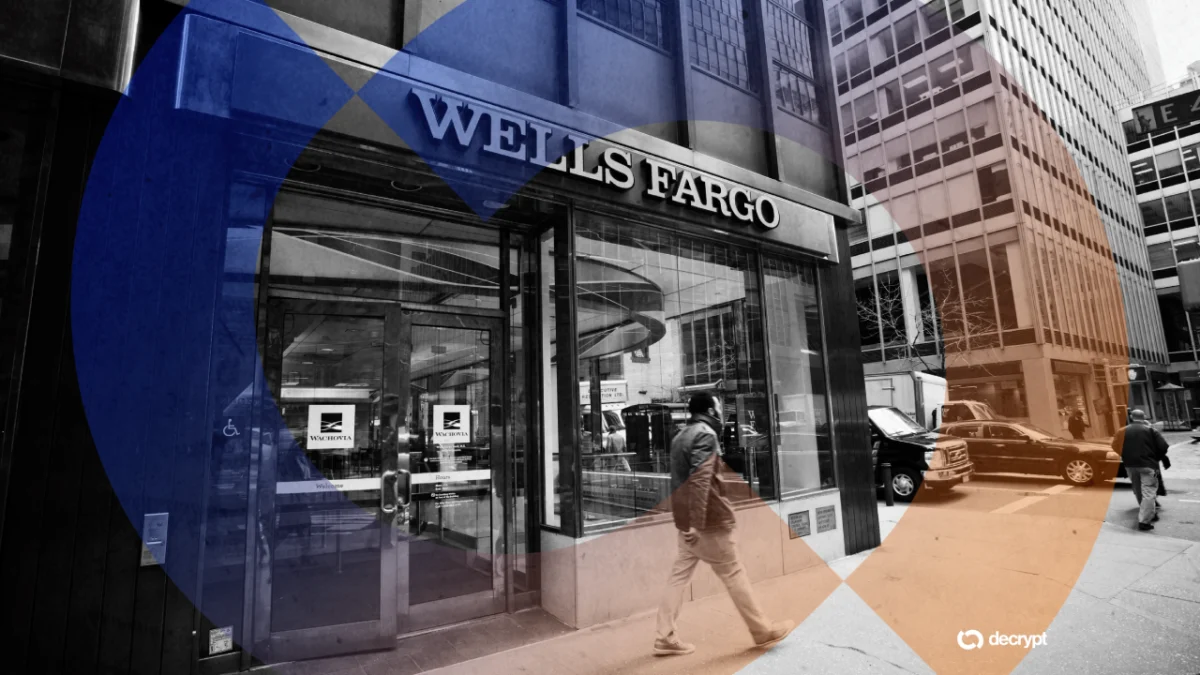
The roster of companies formally requesting that their shares remain excluded from the OKXICE Tokenized Securities Venue (TSV) continues to expand at a rapid pace, reflecting a deepening divide between traditional financial institutions and the push for 24/7 blockchain-based equity trading. As of the most recent public notice dated Friday, October 26, 2026, the number of objecting issuers has climbed to 22, a substantial increase from the 16 recorded on October 19 and the mere nine identified in the initial filings on October 15.
The latest additions to this "opt-out" list represent a broad cross-section of the U.S. economy. Among the six newly named entities are financial giant Wells Fargo, networking hardware leader Cisco Systems, semiconductor firm Marvell Technology, chip-design powerhouse Arm Holdings, biotech leader Moderna, and software giant Intuit. These firms join a pre-existing group of heavyweights, including Microsoft, Alphabet, Goldman Sachs, Verizon, Broadcom, and UnitedHealth Group, all of whom have signaled their intent to keep their securities off the experimental trading platform.
A Controversial Venture into 24/7 Trading
The OKXICE TSV is a high-profile, 50-50 joint venture between the Intercontinental Exchange (ICE)—the parent company of the New York Stock Exchange—and the U.S. holding arm of the crypto exchange OKX. The platform’s core value proposition is the ability for approved users to trade tokenized versions of U.S. equities around the clock. By leveraging Uniswap v4 liquidity pools on OKX’s XLayer blockchain and utilizing stablecoins like USDC for settlement, the venture aims to bridge the gap between traditional stock markets and the high-speed, always-on nature of decentralized finance (DeFi).
The initiative operates under the Securities and Exchange Commission’s (SEC) "innovation exemption," a regulatory framework introduced in September 2026 following the stagnation of the Clarity Act in the U.S. Senate. This exemption was intended to foster experimentation in digital asset markets; however, the lack of enthusiastic participation from the very companies being tokenized highlights the significant legal and operational hurdles that remain.
Chronology of Opposition
The rapid escalation of the objection list illustrates the unease felt in corporate boardrooms regarding the tokenization of their shares.
- October 15, 2026: The initial public notice is released, identifying nine companies that have formally objected to their inclusion in the tokenized venue.
- October 19, 2026: The list expands to 16 issuers as more blue-chip tech and financial firms issue similar directives.
- October 26, 2026: The total count hits 22. The inclusion of Wells Fargo marks the second major U.S. bank to join the list, following Goldman Sachs, signaling that even institutions deeply embedded in the financial ecosystem are wary of the current structure of tokenized venues.
Notably, none of the companies have provided detailed, public explanations for their objections. Furthermore, the legal enforceability of these "objections" remains unclear. The venue’s documentation does not explicitly state how an issuer’s refusal to participate affects the listing process, nor does it confirm if the venue will unilaterally remove these assets from its potential pool.
Technical Risks and Operational Vulnerabilities
The latest public notice from the OKXICE TSV is remarkably candid regarding the risks inherent in its operations. By outlining these vulnerabilities, the platform may be attempting to shield itself from future liability, but the disclosures also serve as a red flag for institutional investors.
Among the primary concerns is the lack of traditional circuit breakers. While the platform has committed to pausing trading when the underlying stock is halted on its primary exchange, it does not employ the same rigorous, multi-layered circuit breakers that protect traditional equity markets from extreme volatility.

Furthermore, the notice acknowledges the absence of policies to address "Maximal Extractable Value" (MEV). MEV refers to the profit that miners or validators can capture by reordering, inserting, or censoring transactions within a blockchain block. In the context of tokenized stocks, MEV could lead to "front-running" or price manipulation, where trades are executed at suboptimal prices for the user but favorable prices for the network validators.
Other highlighted risks include:
- Governance and Smart Contract Control: Administrators retain the ability to upgrade smart contracts without prior notice to users, creating a "centralization" risk that contradicts the ethos of DeFi.
- Internal Auditing: The contract that governs trading eligibility has only been audited internally, rather than by a third-party cybersecurity firm, raising questions about code integrity.
- Regulatory Uncertainty: Broker-dealers participating in the venue face unresolved issues regarding trade reporting and "best execution" requirements—a standard that requires brokers to secure the most favorable terms for customers. If liquidity remains thin due to these uncertainties, the platform could suffer from significant price slippage.
Broader Market Implications
The reluctance of major issuers to participate in this experiment reflects the broader tension between legacy market infrastructure and the tokenized future. While the International Monetary Fund (IMF) recently acknowledged that there is "real demand" for tokenized stocks—particularly for investors looking to trade during off-hours—they simultaneously cautioned that such markets are currently prone to high volatility and illiquidity.
The situation is further complicated by competing visions for the future of securities. Nasdaq, which has received SEC approval for its own tokenized securities pilot program, has explicitly stated that it will opt its shares out of such exemptions. This indicates that major exchange operators are not necessarily in lockstep regarding how or when equity markets should migrate to blockchain technology.
For now, the OKXICE TSV has noted that it remains open to listing shares tokenized by the issuers themselves, rather than relying on third-party aggregators. However, as of late October, none of the objecting companies have chosen this route.
The Path Ahead: Regulation vs. Innovation
The ongoing standoff raises critical questions about the role of the SEC and the future of market structure. If the SEC’s innovation exemption is intended to be a sandbox for the future of finance, the current participation gap suggests that the regulatory framework may need to evolve further to provide the legal certainty that corporations and traditional brokers require.
Without the participation of the underlying issuers, tokenized venues risk becoming "shadow markets" that operate in parallel to, but detached from, the official corporate equity registers. This fragmentation could lead to significant price discrepancies, creating arbitrage opportunities that might further destabilize the underlying assets.
As 2026 draws to a close, the industry is watching to see whether more companies will join the boycott or if a major issuer will break ranks and embrace the tokenized format. For now, the "opt-out" list stands as a testament to the fact that while technology may be ready for 24/7 markets, the legal, risk-management, and corporate governance structures are still catching up. The success of this experiment will depend not just on the technical capability of the blockchain, but on the ability of platforms like the OKXICE TSV to satisfy the stringent demands of the world’s most influential corporations.
