

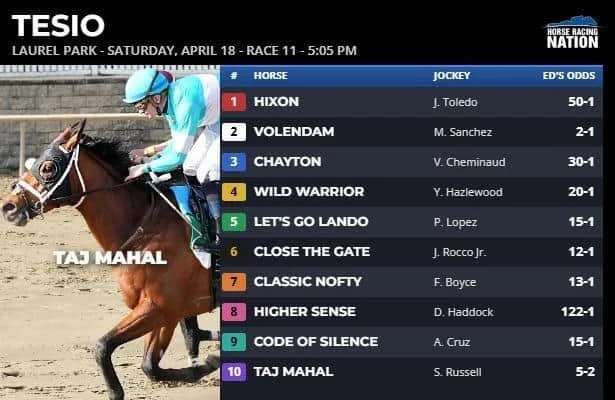
The upcoming Federico Tesio Stakes, a premier event scheduled for Saturday’s Preakness preview day at Laurel Park, represents more than just a 1 1/8-mile test on the main track; it serves as the definitive local pathway to the middle jewel of the Triple Crown. This year, the stakes are exceptionally high as the race takes place at the very venue that will host the Preakness Stakes itself. Due to the comprehensive multi-year reconstruction of Pimlico Race Course in Baltimore, Laurel Park has stepped into the spotlight, assuming the role of host for the 2026 Preakness. This shift in geography transforms the Federico Tesio from a traditional "Win and You’re In" qualifier into a vital home-field dress rehearsal for three-year-olds eyeing classic glory on May 16.
Historically, the Federico Tesio Stakes—named after the legendary Italian breeder often referred to as the "Wizard of Dormello"—has been the cornerstone of Maryland’s spring racing calendar. While the race has produced notable champions in the past, including Deputed Testamony, who won both the Tesio and the Preakness in 1983, recent years have seen a divergence in the quality of the local circuit compared to the national stage. Over the last decade, five winners of the Tesio have parlayed their victories into a starting spot in the Preakness Stakes. However, none of those contenders managed to hit the board, highlighting the significant jump in class required to compete against the elite colts arriving from the Kentucky Derby trail. The 2026 edition, however, carries an air of renewed optimism, bolstered by the presence of late Triple Crown nominees and horses with figures that suggest they may belong among the nation’s best.
The Strategic Shift to Laurel Park
The relocation of the Preakness Stakes to Laurel Park is a historic anomaly necessitated by the $400 million redevelopment project at Pimlico. The project, overseen by the Maryland Stadium Authority, aims to modernize the aging infrastructure of the "Old Hilltop" and ensure the long-term sustainability of the Preakness in Baltimore. In the interim, Laurel Park has been tasked with maintaining the prestige of the event. For trainers and owners, this transition offers a unique advantage: the Federico Tesio is now run over the exact same surface and at the same facility where the Preakness will be contested four weeks later.
This "home court advantage" has not been lost on the connections of this year’s field. Typically, the Tesio attracts local Maryland-based runners, but the 2026 entry list features horses that have demonstrated high-level ability on various surfaces across the country. The decision by the owners of Volendam and Taj Mahal to pay the late Triple Crown nomination fee—a significant financial commitment—underscores the belief that this year’s Tesio winner could be a legitimate factor in the second leg of the Triple Crown.
Profiling the Top Contenders: Volendam and Taj Mahal
The narrative of this year’s race is dominated by two colts with vastly different backgrounds but similarly high ceilings. Volendam enters the Tesio following a striking performance at Turfway Park. Winning a maiden special weight on the undercard of the Grade 3 Jeff Ruby Steaks is a feat in itself, but it was the manner of his victory that caught the attention of speed figure analysts. Volendam earned the highest Ragozin figure of the Tesio field in that debut, a metric that accounts for wind, track speed, and weight to provide a more nuanced view of a horse’s performance than traditional Beyer Speed Figures.
However, Volendam faces a significant hurdle: the transition from synthetic Tapeta to traditional dirt. While many horses handle the switch seamlessly, others struggle with the "kickback" and the different muscular demands of a dirt surface. Furthermore, the Federico Tesio will mark his stakes debut, a stern test for a horse with only one career start under his belt. Despite these variables, his raw talent and the high-performance ceiling indicated by his Ragozin data make him a formidable presence in the betting windows.
On the other side of the rivalry is Taj Mahal, an undefeated colt who has already proven he can handle the Laurel Park main track. Taj Mahal’s versatility was on full display in his first two starts. He began his career by closing from the back of the pack to secure a victory on debut, showing a professional maturity rarely seen in young horses. He followed that performance with a dominant gate-to-wire win in the Miracle Wood Stakes, contested over a sloppy track.
Taj Mahal’s challenge in the Tesio is largely tactical. He has been assigned an outside post position in a field crowded with early speed. With several "need-the-lead" types drawn to his inside, jockey assignments will be critical. If Taj Mahal is forced to expend too much energy to clear the field from his wide draw, he may be vulnerable in the final furlong. Conversely, if he can rate just off the pace as he did in his debut, his experience and proven affinity for the Laurel surface could give him the edge over the less experienced Volendam.
Analyzing the Longshot: The Case for Classic Nofty
While the spotlight remains on the favorites, the Federico Tesio often rewards battle-hardened horses who can capitalize on a contested pace. Classic Nofty has emerged as a person of interest for value-seeking bettors. Trained by Phil Schoenthal, Classic Nofty is entering his second race following a layoff. Statistical data suggests that horses under Schoenthal’s care often show significant improvement in their second start back, a trend known in racing circles as the "second-off-the-layoff" bounce.
In his previous outing, Classic Nofty found himself too far back in a race dominated by a blistering early pace, leaving him with an insurmountable amount of ground to make up. With a more favorable trip and the retention of veteran jockey Forest Boyce—who continues to ride the colt despite not having a high volume of assignments for the Schoenthal barn—Classic Nofty represents a classic "wise guy" horse. If the leaders, including Taj Mahal and Volendam, engage in a speed duel, the race could set up perfectly for a closer like Classic Nofty to sweep past tired rivals in the stretch.
Historical Data and Preakness Implications
To understand the weight of the Federico Tesio, one must look at the data governing the "Win and You’re In" program. Since its inception, the program has aimed to bolster the Preakness field by providing a guaranteed spot to the winner of the Tesio, provided the horse is nominated to the Triple Crown. In 2026, the late nomination of both Volendam and Taj Mahal indicates that their respective camps are not merely looking for a local stakes win, but are actively pursuing the $2 million Preakness purse.
The jump from the Tesio to the Preakness is statistically daunting. Over the last twenty years, horses coming out of the Maryland circuit have struggled to match the speed figures produced by the Grade 1 contenders coming out of the Kentucky Derby. However, the unique circumstances of 2026—specifically the surface familiarity at Laurel—could bridge that gap. If Volendam or Taj Mahal can produce a career-best performance on Saturday, their speed figures would likely align with the mid-level contenders of the Derby, making them viable "spoiler" candidates for the Preakness.
The Economic and Cultural Impact on Maryland Racing
The Federico Tesio Stakes and the subsequent Preakness at Laurel Park represent a pivotal moment for the Maryland Jockey Club and the state’s thoroughbred industry. The Preakness is more than a race; it is a cultural institution that generates tens of millions of dollars in economic activity for the region. By hosting the event at Laurel, the industry is demonstrating its resilience during the Pimlico transition.
Industry stakeholders, including the Maryland Thoroughbred Horsemen’s Association, have expressed a cautious optimism regarding the temporary move. "The goal is to maintain the integrity of the Triple Crown while we build a future for Maryland racing at Pimlico," a representative noted during a recent briefing. "The Federico Tesio is the first major test of Laurel’s ability to host these high-stakes events under the national spotlight."
Conclusion: The Road Ahead
As the horses break from the gate this Saturday, the Federico Tesio Stakes will provide the first clear answers regarding the strength of the local 2026 crop. For Volendam, it is a test of surface and class. For Taj Mahal, it is a test of tactical positioning and the ability to maintain an undefeated record under pressure. For the longshots like Classic Nofty, it is an opportunity to disrupt the established hierarchy.
Regardless of the winner, the eyes of the racing world will remain on Laurel Park. The transition from the Tesio to the Preakness on May 16 will be watched closely by analysts and fans alike. If this year’s winner can finally break the decade-long drought and hit the board in the Preakness, it will signal a renaissance for Maryland racing and validate the Federico Tesio Stakes as a premier proving ground for the champions of tomorrow. With the Triple Crown trail reaching its midpoint, the results at Laurel Park will resonate far beyond the borders of Maryland, shaping the betting markets and the competitive landscape for the most prestigious races in the sport.
