

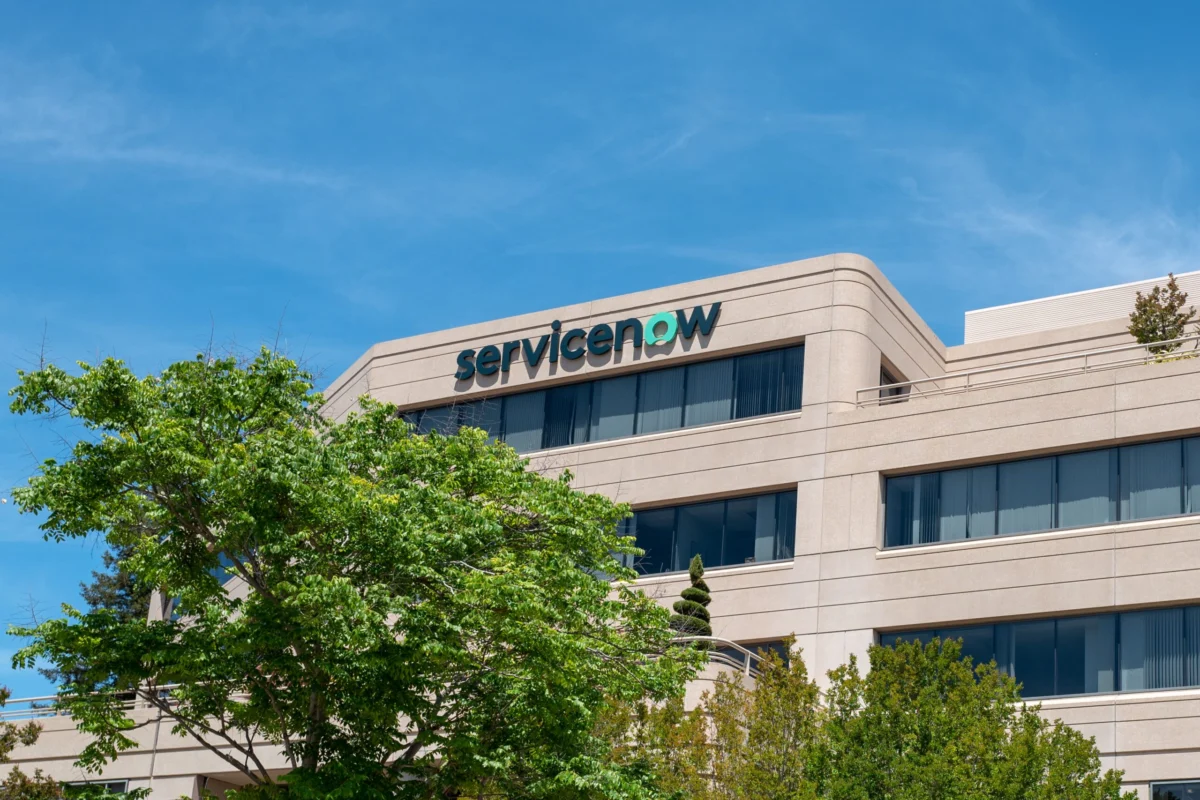
ServiceNow, the California-headquartered enterprise software titan renowned for its dominance in IT service management and workflow automation, has announced a strategic investment of $40 million in BusinessNext, an Indian firm specializing in AI-driven banking solutions. This transaction values the Noida-based BusinessNext at approximately $700 million, representing a significant appreciation from its 2021 valuation of $181 million. Through this deal, ServiceNow acquires a roughly 5% equity stake in the 24-year-old company, signaling a deeper commitment to the global financial services sector and a tactical move to integrate specialized banking intelligence into its broader enterprise ecosystem.
The investment serves as more than a mere capital infusion; it establishes a framework for a long-term commercial partnership. Under the terms of the agreement, BusinessNext will gain unprecedented access to ServiceNow’s expansive global sales infrastructure and go-to-market "machinery." This synergy is designed to accelerate BusinessNext’s expansion into mature markets like North America and Europe, while simultaneously allowing ServiceNow to offer its clients a more vertically integrated suite of banking-specific automation tools.
Strategic Synergy and Global Ambitions
The partnership between ServiceNow and BusinessNext addresses a critical gap in the enterprise software market. While ServiceNow has long been the industry standard for back-office automation, HR operations, and IT workflows, BusinessNext brings a specialized focus on customer-facing banking processes. By combining these two strengths, the companies aim to provide financial institutions with an end-to-end digital transformation platform that handles everything from internal employee requests to complex retail banking transactions.
Nishant Singh, the founder and CEO of BusinessNext, emphasized that the decision to partner with ServiceNow was driven by a desire for strategic alignment rather than a simple need for liquidity. In recent interviews, Singh noted that the company prioritized ServiceNow over traditional venture capital or private equity firms because of the immediate access to a global enterprise sales engine. BusinessNext, which already generates approximately 50% of its revenue from international markets, views this partnership as a catalyst for its next phase of growth in the Middle East, Southeast Asia, and the United States.
For ServiceNow, the investment is a calculated entry into the "autonomous banking" space. As legacy financial institutions face increasing pressure from nimble fintech startups and digital-native banks, the demand for AI-led operational efficiency has reached a fever pitch. By backing BusinessNext, ServiceNow positions itself at the center of this transition, leveraging BusinessNext’s deep domain expertise in banking workflows to enhance its own value proposition to the world’s largest lenders.
The Evolution of BusinessNext: From CRM to Autonomous Banking
Founded in 2002 under the name CRMNext, the company spent two decades establishing itself as a dominant player in the Indian banking software market. In 2022, the firm underwent a comprehensive rebranding to BusinessNext, a move that reflected a fundamental shift in its technological architecture. The company transitioned from being a traditional Customer Relationship Management (CRM) provider to an "autonomous banking" platform.
This shift involved a complete rewrite of the company’s software stack to place artificial intelligence at its core. Unlike many legacy providers that have attempted to "bolt on" AI features to existing products, BusinessNext integrated AI agents into the foundational layers of its platform. These agents are designed to automate complex banking workflows—such as loan processing, account opening, and fraud detection—while ensuring that sensitive customer data remains within private, secure AI infrastructures. This focus on privacy and regulatory compliance has been a major selling point for the company, particularly when dealing with central banks and large-scale public sector lenders.
BusinessNext currently employs over 1,300 professionals and has raised a total of more than $60 million in external funding. Its roster of existing investors includes prominent names such as Norwest Venture Partners, Avataar Ventures, and Ascent Capital. Despite the capital-intensive nature of software development, the company has maintained a rare level of fiscal discipline, reporting profitability alongside a revenue of approximately $32 million in its most recent financial year.
Dominance in the Indian Financial Landscape
The company’s pedigree is rooted in its success within the Indian financial ecosystem, one of the most complex and rapidly evolving markets in the world. BusinessNext serves more than 70 major financial institutions globally, but its footprint in India is particularly notable. Its client list includes:
- The Reserve Bank of India (RBI): The nation’s central bank, which utilizes the platform for critical regulatory and operational workflows.
- State Bank of India (SBI): India’s largest public-sector lender, which manages hundreds of millions of accounts.
- HDFC Bank: The country’s largest private-sector bank, known for its aggressive digital adoption and high transaction volumes.
The ability to scale within these massive institutions has proven that BusinessNext’s technology can handle the rigors of high-volume, highly regulated environments. Kulmeet Bawa, ServiceNow’s Group Vice President and Managing Director for India and SAARC, noted that India’s financial sector is currently at an "inflection point." He observed that institutions are moving beyond experimental digital pilots toward full-scale, AI-led operations. This partnership is intended to provide the "connective tissue" between a bank’s back-office resilience and its front-office agility.
Chronology of Growth and Key Milestones
The journey of BusinessNext is a testament to the maturation of the Indian SaaS (Software as a Service) sector. The following timeline outlines the key stages of the company’s development:
- 2002: Founded as CRMNext, focusing on specialized CRM solutions for the financial services industry in India.
- 2010–2015: Rapid expansion within the Indian banking sector, securing contracts with major lenders and establishing a reputation for handling high-scale deployments.
- 2014: Secured significant Series A funding from Norwest Venture Partners, totaling approximately $15 million, to fuel international expansion.
- 2021: Reached a valuation of $181 million following a funding round led by Avataar Ventures and Norwest.
- 2022: Rebranded as BusinessNext and pivoted to an "AI-first" autonomous banking platform, signaling a departure from traditional CRM models.
- 2024: Announced a $40 million strategic investment from ServiceNow at a $700 million valuation, marking its entry into a global partnership framework.
Industry Implications: The Rise of AI-Native SaaS
The deal between ServiceNow and BusinessNext highlights a broader trend in the global software industry: the rising scrutiny of traditional SaaS models. As generative AI and autonomous agents become more sophisticated, enterprise customers are increasingly questioning the value of "seat-based" licensing for software that primarily serves as a system of record.
There is a growing demand for "systems of action"—software that does not just store data but actively executes tasks. For ServiceNow, partnering with an AI-native firm like BusinessNext allows it to stay ahead of this curve. By integrating BusinessNext’s specialized agents, ServiceNow can offer financial institutions a way to automate the entire lifecycle of a customer interaction, from the initial digital inquiry to the final back-office reconciliation.
Furthermore, the deal underscores the strategic importance of the Indian market. India is no longer viewed merely as a source of low-cost engineering talent; it is increasingly recognized as a hub for sophisticated, high-scale software products. The fact that a U.S. giant like ServiceNow chose to invest in a Noida-based firm to bolster its global banking strategy is a significant endorsement of the Indian tech ecosystem’s maturity.
Financial and Market Analysis
The $700 million valuation for BusinessNext, based on $32 million in revenue, represents a price-to-sales multiple of roughly 22x. While high, this premium is reflective of the company’s profitability, its high retention rates among tier-1 banks, and the significant growth potential unlocked by the ServiceNow partnership.
Industry analysts suggest that the "ServiceNow effect" could lead to a rapid acceleration in BusinessNext’s top-line growth. By tapping into ServiceNow’s existing relationships with nearly 80% of the Fortune 500, BusinessNext can bypass the lengthy and expensive customer acquisition cycles typically associated with enterprise banking software.
Conversely, for ServiceNow, the $40 million investment is a relatively low-risk entry into a high-reward segment. With a market capitalization exceeding $150 billion, ServiceNow has the financial latitude to make strategic bets on vertical-specific leaders. This investment follows a pattern of ServiceNow expanding its platform through a mix of organic development, acquisitions (such as the recent purchase of G2K for IoT and Raytion for AI search), and strategic minority stakes.
Future Outlook and Conclusion
As BusinessNext and ServiceNow begin their joint go-to-market efforts, the focus will shift to technical integration. The goal is to create a seamless experience where a bank’s employees can use ServiceNow’s familiar interface to trigger complex, banking-specific workflows powered by BusinessNext’s AI agents.
The success of this partnership will likely be measured by its adoption in the North American and European markets, where ServiceNow has its strongest foothold but where BusinessNext has historically had a more limited presence. If the duo can successfully displace legacy banking systems with their integrated, AI-led approach, it could redefine the standard for financial services technology.
In conclusion, ServiceNow’s $40 million investment in BusinessNext is a landmark deal that bridges the gap between horizontal enterprise workflow and vertical banking expertise. It validates the "autonomous banking" vision championed by Nishant Singh and provides ServiceNow with a powerful toolset to dominate the digital transformation of the global financial sector. As AI continues to reshape the enterprise landscape, such strategic alliances are expected to become the blueprint for how legacy software giants maintain their relevance in an increasingly automated world.
