

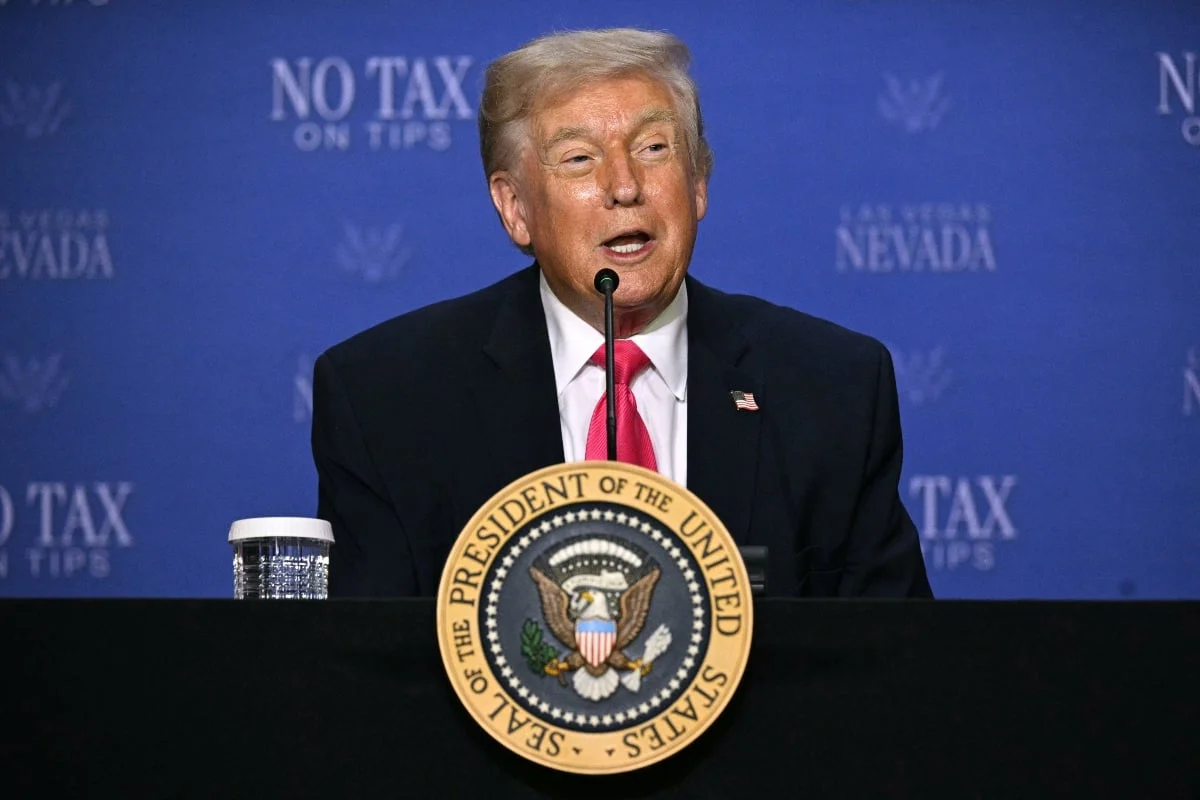
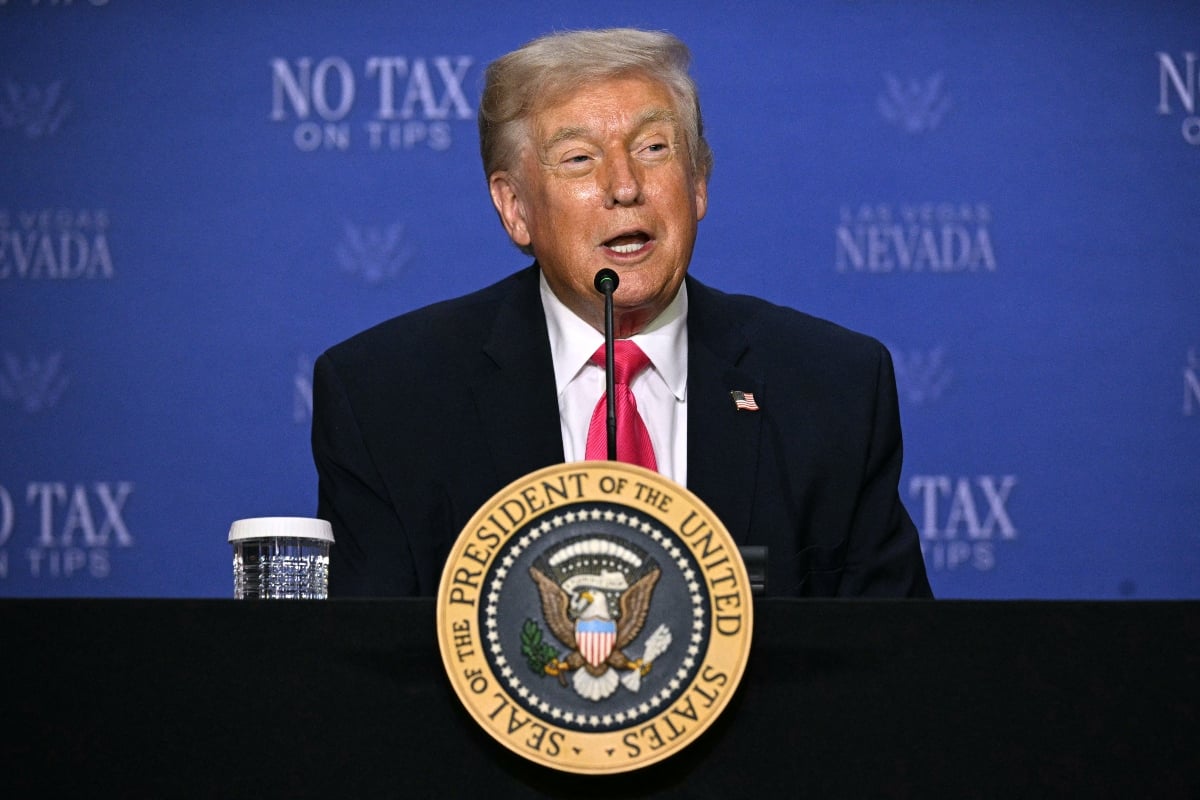
In a significant political address delivered from Las Vegas on Thursday, April 16, 2026, President Donald Trump unveiled the unexpected genesis of his widely publicized "No Tax on Tips" policy, attributing the groundbreaking idea to a chance encounter with a local waitress during a campaign stop in Southern Nevada in 2024. Speaking at the AC Hotel Las Vegas Symphony Park in the heart of downtown Las Vegas, the President recounted the interaction that he claims ignited a key plank of his economic agenda, one that has since become law and is set to significantly impact millions of service industry workers nationwide.
The Spark of an Idea: A Las Vegas Encounter
President Trump, returning to a city synonymous with its vibrant hospitality sector, highlighted Las Vegas as the "birthplace" of the innovative policy. "A young waitress came up to me during dinner and she said, ‘Sir, we should have no tax on tips.’ I said, ‘That’s the greatest thing I’ve ever heard.’ I walked outside to the fake news media and said, ‘Ladies and gentlemen, there will be no tax on tips. That was it,’" Trump revealed to an enthusiastic audience. This impromptu declaration, made during a pivotal election year, quickly evolved from a campaign promise into a legislative reality, underscoring the responsive nature of his political platform to perceived grassroots concerns.
The decision to exempt tips from federal taxation marked a strategic appeal to a vast demographic of American workers. Las Vegas, often dubbed the service industry capital, boasts the highest concentration of tipped employees globally, making it a particularly resonant locale for such an announcement. The President underscored this point, stating, "Las Vegas is home to the largest concentration of tipped workers anywhere in the country, anywhere in the world, actually." He then broadened the scope, asserting that "thanks to our tax cuts, thousands of Nevada waiters, waitresses, casino dealers, bartenders, bellmen, barbers, caddies – boy do I love those caddies – and valets received the biggest tax refunds of their entire lives."
From Campaign Promise to Legislative Reality: The One Big Beautiful Bill
The "No Tax on Tips" provision was not a standalone measure but rather an integral component of the broader legislative package championed by President Trump and the Republican Party, officially dubbed the "One Big Beautiful Bill" (OBBB). This comprehensive bill, signed into law by the President on July 4, 2025, represented a significant overhaul of various tax codes and economic policies. The tip tax exemption specifically allows tipped workers to retain 100% of their tips, up to an annual threshold of $25,000, before these earnings are considered taxable income at the federal level.
This particular provision is slated to be in effect for the federal tax years spanning 2025 through 2028. Following this initial four-year period, the policy would require an extension by Congress to remain active, setting the stage for future legislative debates and political maneuvering. The implementation of this policy has been met with varied reactions, reflecting its complex economic and social implications. For millions of service workers, particularly those in high-cost-of-living areas or those heavily reliant on tips for their livelihood, this change translates directly into increased take-home pay, offering a tangible boost to their personal finances.
Historical Context of Tip Taxation in the United States
To fully appreciate the significance of the "No Tax on Tips" policy, it is crucial to understand the historical context of tip taxation in the United States. For decades, the Internal Revenue Service (IRS) has considered tips as taxable income, requiring employees to report these earnings. The rationale behind this has been rooted in the principle of treating all forms of compensation, regardless of source, as income subject to federal taxation. Employers have also had responsibilities, including withholding income taxes, Social Security, and Medicare taxes from reported tips.
The IRS provides extensive guidelines for both employees and employers regarding tip reporting, which include specific forms like Form 4070A (Employee’s Daily Record of Tips) and Form 4070 (Employee’s Report of Tips to Employer). Furthermore, the agency has mechanisms in place, such as the Tip Rate Determination/Education Program (TRD/EP), to ensure compliance in industries where tipping is prevalent. Historically, arguments against tip taxation have often centered on the fluctuating nature of tip income, the perceived burden of reporting for low-wage workers, and the idea that tips are gifts from patrons rather than traditional wages. However, these arguments have rarely gained significant legislative traction until the recent intervention by President Trump. His policy marks a substantial departure from established federal tax practices and represents a direct challenge to the long-standing IRS interpretation of tip income.
Economic Impact and Demographic Reach
The economic implications of the "No Tax on Tips" policy are substantial, potentially affecting millions of Americans. According to the Bureau of Labor Statistics, the service industry, encompassing roles such as waiters, bartenders, hotel staff, and personal care workers, employs over 30 million people in the United States. A significant portion of these individuals relies on tips as a primary or substantial component of their income. While precise national data on average tip income varies widely by profession, location, and economic conditions, studies have indicated that many tipped workers can earn anywhere from a few thousand dollars to well over $25,000 annually in tips, especially in high-volume establishments or luxury markets.
The $25,000 threshold for tax immunity is particularly impactful. For a worker earning $25,000 in tips, this policy could translate into several thousand dollars in annual tax savings, depending on their individual tax bracket and other deductions. This increase in disposable income is argued by proponents to stimulate local economies as workers are likely to spend their additional earnings on goods and services. Conversely, critics and fiscal watchdog groups have raised concerns about the potential impact on federal tax revenue. While exact projections are complex and depend on factors like worker compliance and overall economic activity, estimates suggest that exempting tips could result in a significant annual reduction in federal coffers, potentially running into billions of dollars. This revenue loss would need to be offset or absorbed, potentially contributing to the national deficit or requiring cuts in other federal programs.
Political Strategy and Reactions from the Aisles
The "No Tax on Tips" policy was undeniably a cornerstone of President Trump’s 2024 re-election campaign, strategically aimed at mobilizing a crucial segment of the American workforce. His repeated visits to key swing states like Nevada, which boasts a disproportionately large service industry workforce, underscored the political importance of this demographic. During his Las Vegas address, Trump thanked Nevadans for delivering him the Silver State, though he wryly added that "the competition wasn’t the toughest," a clear jab at his political rivals. He framed the policy as a testament to his belief in the working class, declaring, "Americans finally have the kind of president who believes in them. I believe in rewarding you for the great work you’ve done, the great job you’ve done, and for having to suffer for four years of embarrassment. Our country was an embarrassment. All over the world, they laughed at us. They’re not laughing anymore."
The policy also sparked a significant political exchange with then-Vice President Kamala Harris, the Democratic candidate in the 2024 election. Harris, facing pressure to address the same demographic, eventually voiced her support for eliminating federal taxes on tips as well. President Trump quickly seized on this, labeling his challenger a "copycat," thereby attempting to diminish her initiative and reinforce his claim to the original idea. This political jousting highlights the bipartisan appeal of tax relief for service workers, yet also the fierce competition to claim credit for popular policies, especially in a closely contested election year. Labor unions, such as the powerful Culinary Workers Union Local 226 in Las Vegas, which represents tens of thousands of hospitality workers, have largely welcomed the tax relief, although some have also continued to advocate for increased base wages and stronger benefits alongside the tip exemption. Hospitality industry associations, like the American Hotel & Lodging Association and the National Restaurant Association, have lauded the policy as a boost for their workforce and potentially for employee retention in a sector often challenged by high turnover.
The "One Big Beautiful Bill" and the Gambling Deduction Controversy

While the "No Tax on Tips" provision garnered widespread attention, the "One Big Beautiful Bill" contained other significant changes, one of which has drawn considerable controversy, particularly in gambling hubs like Nevada. The OBBB also included a provision that reduced the deduction for gambling losses against winnings from 100% to 90%. This means that individuals who engage in gambling, even if their losses equal their winnings over a tax year, would still be required to pay federal taxes on 10% of their winnings.
This creates what is commonly referred to as "phantom income." For example, a person who wins $100,000 gambling during a year but also incurs $100,000 in losses would, under this new law, still need to declare $10,000 as taxable income. This change has been met with strong opposition from lawmakers representing gaming states and from the gambling industry itself. U.S. Representative Dina Titus (D-NV), a vocal critic of this specific provision, has actively introduced legislation in Congress to restore the gambling deduction to its previous 100% level. Taking to social media platform X, Rep. Titus expressed her frustrations, stating in a video, "Just imagine, you owe taxes on money you never earned. We call that phantom income. That sounds unfair, right? Well, it is, but that’s exactly what’s happening under President Trump’s Big Beautiful BS bill."
Implications of the Gambling Deduction Change
The reduction in the gambling loss deduction carries several significant implications. For high-stakes gamblers, who often experience both substantial wins and losses, this change could result in considerable unexpected tax liabilities. This could potentially deter high-rollers from frequenting U.S. casinos, impacting the tourism and gaming industries in states like Nevada, New Jersey, and Mississippi. The gaming industry relies heavily on these high-value customers, and any policy that makes gambling less financially attractive could translate into reduced revenues for casinos, potentially affecting employment and state tax collections derived from gaming.
Proponents of the change might argue that it ensures a broader tax base and prevents individuals from using gambling losses to entirely offset significant winnings, thereby contributing more fairly to federal revenue. However, critics, including Rep. Titus, contend that taxing "phantom income" is fundamentally unjust, as it levies taxes on money that never truly constituted a net gain for the individual. The debate over this provision highlights the complex interplay between tax policy, individual financial behavior, and the economic health of specific industries, particularly those with unique income and loss structures like gambling.
The Future of Tax Policy and the Working Class
President Trump’s recent address in Las Vegas not only reinforced his commitment to the "No Tax on Tips" policy but also served as a broader message about his administration’s approach to tax policy and its impact on the working class. The initial success of the tip tax exemption for the specified four-year period will likely be a key talking point in future political campaigns, especially as the 2028 deadline for its extension approaches. The economic realities of the policy – the increased disposable income for service workers versus the potential federal revenue loss – will continue to be analyzed by economists and debated by policymakers.
The contrasting approaches within the "One Big Beautiful Bill" – offering tax relief to tipped workers while imposing new tax liabilities on gamblers – illustrate a nuanced, and at times contradictory, legislative strategy. While one aims to boost the income of a broad segment of the working population, the other seeks to increase federal revenue from specific activities, potentially at the expense of another industry. As the nation moves forward, the lasting impact of these policies on individual citizens, industries, and the federal budget will continue to unfold, shaping future economic and political discourse. The Las Vegas waitress who sparked an idea, however inadvertently, has now become a footnote in a significant chapter of American tax history.
