
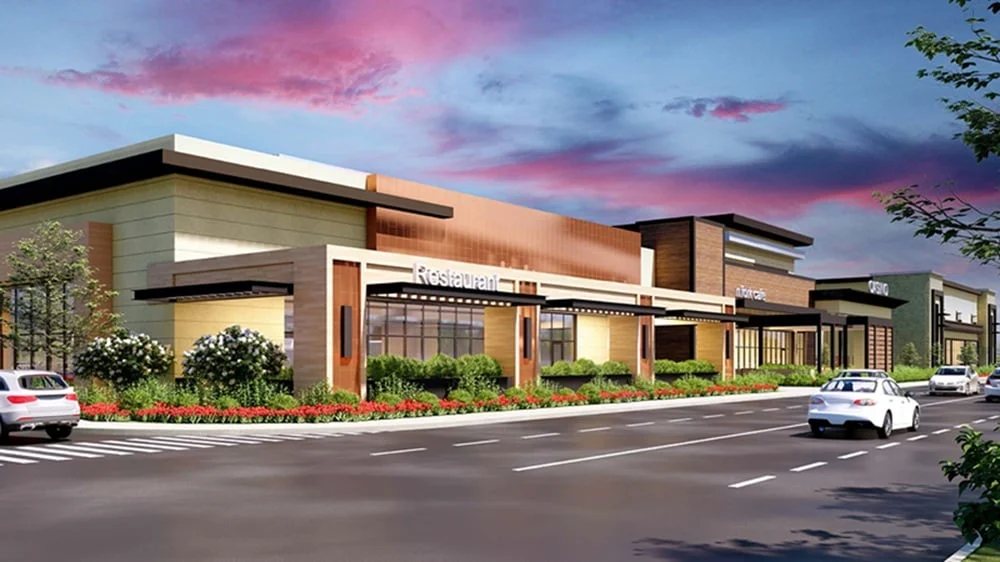
The North Fork Rancheria of Mono Indians has declared its unwavering commitment to proceed with the construction of its ambitious $400 million casino resort in Madera County, California, despite a recent decision by the California Supreme Court that upheld a lower court ruling deeming the project unauthorized by the state. This assertion sets the stage for a significant legal and political confrontation, highlighting the complex interplay between tribal sovereignty, federal law, and state jurisdiction in the realm of Indian gaming. The tribe maintains that its project, already well into construction and slated for a late 2026 opening, is fully sanctioned by federal approvals that supersede state objections, including a statewide referendum that previously rejected the development.
The California Supreme Court’s decision to decline hearing the case effectively solidified a 2025 appellate ruling which concluded that the casino project lacked state authorization. This ruling harks back to Proposition 48, a statewide referendum in 2014 where California voters rejected the tribal-state compact necessary for the casino under state law. However, the North Fork Rancheria posits that its legal standing is rooted firmly in federal statutes and judicial decisions, creating a direct challenge to the state’s authority and the will of its voters as expressed through the referendum. The ongoing construction, a tangible defiance of state-level legal setbacks, underscores the tribe’s conviction in its federal protections.
A Decades-Long Vision Encounters State Roadblocks
The journey to establish the North Fork Mono Casino has been protracted, spanning more than two decades of planning, legal battles, and political maneuvering. The North Fork Rancheria first acquired the 305-acre parcel of land off Highway 99, approximately 25 miles northwest of Fresno, 23 years ago, with the explicit aim of developing a gaming facility to foster economic self-sufficiency for its more than 3,000 tribal citizens. This pursuit aligns with the broader objectives of the Indian Gaming Regulatory Act (IGRA) of 1988, which provides a statutory basis for the operation of gaming by Indian tribes as a means of promoting tribal economic development, self-sufficiency, and strong tribal governments.
Under IGRA, tribal gaming is divided into three classes. Class I gaming encompasses traditional tribal games for minimal prizes. Class II gaming includes bingo and non-banked card games. Class III gaming, which the North Fork project falls under, involves casino-style games such as slot machines, blackjack, and roulette. For Class III gaming, a tribe must negotiate a tribal-state compact with the state in which it is located. These compacts, once approved by the Secretary of the Interior, govern the scope of gaming, regulatory oversight, and revenue sharing. The North Fork case’s complexity arises from the tribe’s intention to build on land acquired away from its historical reservation, a practice often termed "off-reservation gaming" or "reservation shopping," which frequently draws heightened scrutiny and opposition.
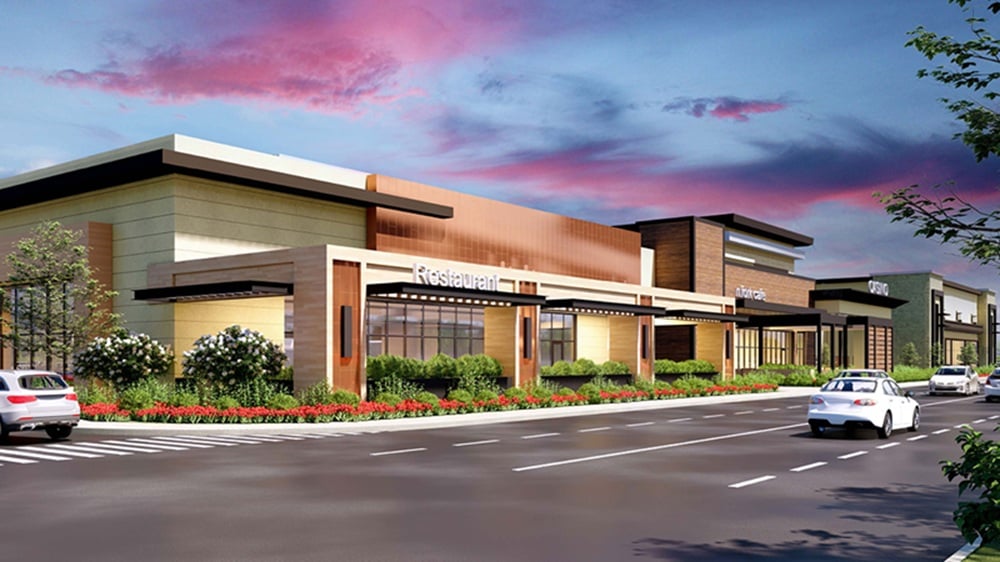
The tribe’s development partner, Red Rock Resorts’ Station Casinos, a prominent player in the gaming industry, broke ground on the $400 million resort in late 2024. The project, envisioned as a comprehensive entertainment destination, is expected to feature a casino floor with thousands of slot machines and table games, multiple restaurants, a hotel, and other amenities, promising significant job creation and economic stimulus for the Madera County region. The estimated 1,500 permanent jobs and substantial tax revenues are key arguments for the project’s proponents, offering a counter-narrative to the legal and social objections.
Chronology of a Contentious Project
The timeline of the North Fork Mono Casino project is marked by a series of pivotal federal and state decisions, culminating in the current standoff:
- Early 2000s: The North Fork Rancheria begins the process of acquiring the 305-acre site in Madera County, specifically for gaming purposes.
- 2009-2012: The tribe undertakes the rigorous federal "two-part determination" process under IGRA, which requires the Secretary of the Interior to determine if an off-reservation casino is in the best interest of the tribe and not detrimental to the surrounding community. This involves extensive environmental reviews and public consultations.
- 2012: The U.S. Interior Department issues a Secretarial Determination, concluding that the land should be placed into federal trust for gaming, citing the tribe’s ancestral ties to the area and the economic benefits. Following this federal approval, then-Democratic Governor Jerry Brown signed a tribal-state compact with the North Fork Rancheria, outlining the terms of gaming operations and revenue sharing with the state. This compact was also approved by the Interior Department.
- 2014: Opponents of the project, including local activist group Stand Up for California! and the Picayune Rancheria of Chukchansi Indians (which operates a competing casino 35 miles away), successfully gather enough signatures to force a statewide referendum, Proposition 48. California voters ultimately reject the compact, effectively blocking the casino under state law.
- 2016: In a significant federal intervention, the United States District Court for the District of Columbia upholds the federal approval of the casino project. Judge Beryl Howell ruled that while she acknowledged the concerns of the casino’s opponents, "the law is not on their side," affirming the federal government’s authority in the matter. This ruling provided a critical legal shield for the tribe against state-level opposition.
- Late 2024: Bolstered by federal court victories, the North Fork Rancheria, in partnership with Station Casinos, officially breaks ground on the $400 million casino resort, signifying a strong commitment to the project’s completion.
- 2025: A California appellate court rules against the project, reiterating that it is not permitted under state law due to the rejection by voters in Proposition 48.
- April 2026: The California Supreme Court declines to review the appellate court’s decision, leaving the state-level ruling against the casino project in place.
- Later 2026: The North Fork Mono Casino is scheduled to open its doors, despite the persistent state-level legal challenges.
Federal Backing Versus State Sovereignty
The North Fork Rancheria’s steadfast position is rooted in its belief that federal law and the subsequent federal court decisions provide an unassailable legal foundation for the casino. In a statement to The Fresno Bee, the tribe articulated its stance: "The North Fork Rancheria’s right to game on its federal trust land near Madera… is governed exclusively by federal law. Federal approvals of the North Fork project occurred in 2012 and 2016 and the federal courts have since upheld each approval in final, non-appealable decisions." The tribe further affirmed its intention to "continue to comply with all applicable law as it proceeds with construction of its project to benefit the regional economy and the lives of its more than 3,000 tribal citizens." This statement underscores the tribe’s interpretation of the Supremacy Clause of the U.S. Constitution, which generally holds that federal law takes precedence over state law when there is a conflict between the two, particularly in areas where the federal government has exercised its constitutional powers.
Conversely, the state of California, through its appellate court system and the Supreme Court’s decision not to intervene, has upheld the principle of voter sovereignty and the state’s right to regulate tribal-state compacts. The 2014 rejection of Proposition 48 by nearly 60% of voters was a clear signal of public opposition at the state level. Opponents like Stand Up for California! have consistently argued that allowing the casino to proceed despite the referendum undermines democratic processes and sets a dangerous precedent for future tribal gaming expansions, particularly those involving off-reservation sites. They contend that the voters’ rejection should be honored, regardless of federal approvals, asserting that the state’s authority in compact negotiation should be respected.
The Picayune Rancheria of Chukchansi Indians, operating the Chukchansi Gold Resort & Casino, also remains a vocal opponent. Their concerns extend beyond legal principles to the potential economic impact of a new, large-scale competitor. The Madera County market is finite, and the introduction of another major gaming facility could dilute the customer base, impacting revenues, jobs, and the tribal government services funded by existing casinos. This competitive dimension adds another layer of complexity to the already intricate legal and political landscape.
Broader Implications and Uncharted Territory

The situation surrounding the North Fork Mono Casino presents a unique and potentially precedent-setting scenario in the landscape of tribal gaming in California and across the nation. While tribes often face state-level opposition to gaming projects, proceeding with construction and an announced opening date despite a definitive state court ruling of "unauthorized" is highly unusual.
One of the primary implications is the challenge to state regulatory power. If the North Fork Rancheria successfully opens and operates its casino without state authorization, it could embolden other tribes to similarly challenge state restrictions, relying on federal protections. This could lead to a more fragmented regulatory environment where federal decisions increasingly override state compacting processes. For California, which has the largest and most lucrative tribal gaming market in the United States, with over 70 tribal casinos generating billions in annual revenue, this case could redefine the boundaries of state control over a significant economic sector.
The legal analysis hinges on how enforcement might proceed. While the state courts have ruled the project unauthorized, directly intervening on federal trust land or attempting to halt construction or operations could trigger further federal litigation. The tribe operates under the Indian Gaming Regulatory Act, and its federal trust land status provides significant protections against state encroachment. However, the state could potentially deny permits related to off-reservation infrastructure (e.g., water, sewer, road access), or pursue other regulatory avenues that fall within its jurisdiction. The long-term viability of the casino without full state cooperation or a new, federally mandated compact remains an open question.
Furthermore, the involvement of a major gaming partner like Red Rock Resorts’ Station Casinos highlights the significant financial stakes. Their decision to proceed with a $400 million investment, despite the state’s legal posture, indicates a strong confidence in the federal legal framework. However, the ongoing legal ambiguity could pose challenges for financing, future expansion, and potential regulatory hurdles down the line.
The North Fork Mono Casino project represents a crucible moment for tribal sovereignty and the interpretation of federal Indian law. As construction continues and the scheduled opening approaches, all eyes will be on Madera County to see how this unprecedented clash between federal supremacy and state authority ultimately unfolds, potentially reshaping the future of tribal gaming compacts and intergovernmental relations in California. The coming months are expected to bring further legal and political maneuvers, as both sides remain committed to their respective positions in this high-stakes dispute.
