

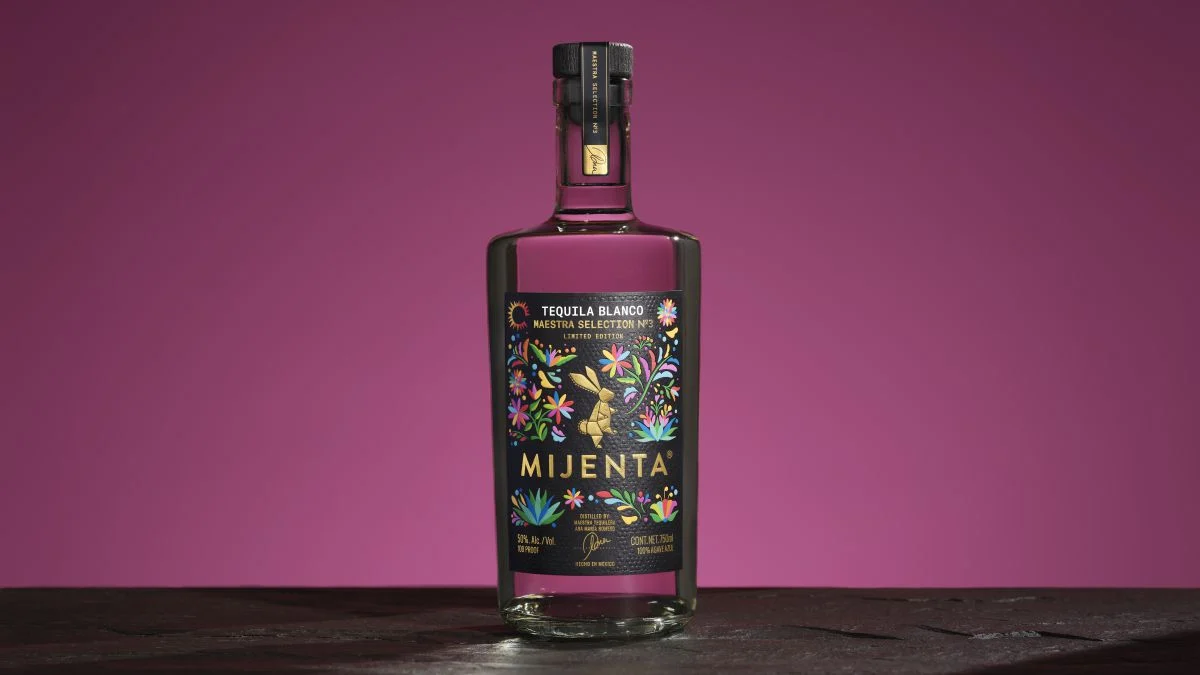
The modern agave spirits landscape continues to evolve as consumers increasingly prioritize transparency, heritage, and uncompromising production standards. Among the brands driving this contemporary renaissance is Mijenta, a label recognized across the industry for producing celebrated aged and un-aged expressions. While regulations set by Mexico’s governing bodies prohibit brands from explicitly labeling their spirits as additive-free in official marketing channels, discerning connoisseurs widely regard Mijenta as a standard-bearer for pure, unadulterated tequila. Building upon a reputation for meticulous craftsmanship, the brand has officially announced its latest offering: the Maestra Selection No. 3. This new blanco tequila leverages rare agricultural practices and ancient production methodologies, resulting in a complex bottling that collectors and aficionados will undoubtedly seek to acquire.
A Foundation Built on Expertise and Vision
Established in 2020, Mijenta emerged through the collaborative vision of industry veterans and entrepreneurs Juan Coronado, Elise Som, and former Bacardi CEO Mike Dolan. From its inception, the brand sought to bridge the gap between industrial efficiency and historical authenticity, positioning sustainability and artisanal integrity at the core of its business model. Central to this mission is Ana Maria Romero, who serves as the brand’s esteemed maestra tequilera.
Romero brings decades of sensory expertise and technical mastery to her role. Though she lends her consulting talent to a select group of other respected spirit houses, her ongoing stewardship of Mijenta’s portfolio remains a defining element of the brand’s success. Under her guidance, Mijenta has systematically explored the boundaries of tequila production, transforming every release into a study of agriculture, terroir, and chemistry. The introduction of Maestra Selection No. 3 marks the latest chapter in a limited-edition series that continually challenges conventional manufacturing norms within the highlands and lowlands of Jalisco.
The Chronology of Innovation: Tracing the Maestra Selection Series
To fully appreciate the significance of Maestra Selection No. 3, one must examine the intentional progression of the series that preceded it. Each expression in the lineup has served as a single-variable exploration, allowing Romero and her team to isolate specific factors that influence flavor, mouthfeel, and aromatic profile.
The trajectory began with the launch of the inaugural Maestra Selection bottling, a groundbreaking expression crafted entirely from “agaves de semilla.” Unlike the vast majority of commercial tequila, which relies on vegetative propagation—using clonal offshoots known as hijuelos to maintain genetic uniformity—this inaugural release utilized agaves grown directly from seeds. This biological divergence introduced unique genetic diversity into the fermentation tanks, yielding a complex flavor profile that captivated the industry.
Following this agricultural milestone, Mijenta released the second iteration in the series. This expression shifted its focus entirely to terroir. The brand sourced agaves from all five Mexican states officially recognized under the Denomination of Origin for Tequila (DOT): Guanajuato, Jalisco, Michoacán, Nayarit, and Tamaulipas. By blending piñas harvested from these diverse microclimates—ranging from the iron-rich red soils of the Jalisco highlands to the distinct geological compositions of the peripheral states—Romero demonstrated the profound impact of geography on the final spirit.
With Maestra Selection No. 3, the brand synthesizes these rigorous philosophies into a singular, comprehensive masterclass in traditional tequila-making.
Inside the Production of Maestra Selection No. 3
Maestra Selection No. 3 returns to the rare agricultural roots of the inaugural release while expanding the scope of its operational methodology. This new blanco expression is crafted from eight-year-old agaves de semilla cultivated in the mineral-rich soils of Jamay, located in the state of Jalisco. Allowing these plants to mature for eight full years ensures an optimal accumulation of complex sugars and starches, providing a robust structural foundation for the subsequent fermentation and distillation phases.
The manufacturing process intentionally rejects modern industrial shortcuts in favor of time-honored techniques. Once harvested, the agave piñas are cooked slowly inside a traditional masonry oven. Notably, this oven was constructed using volcanic stone transported directly from Popocatépetl, the iconic active stratovolcano situated near Mexico City. This specific stone is believed by traditional distillers to contribute distinct thermal properties during the cooking phase, ensuring even heat distribution and caramelization without scorching the delicate plant fibers.
Following the thermal conversion process, the cooked piñas undergo extraction via a tahona—a massive, multi-ton volcanic stone wheel dragged in a circular path by mechanical or animal power to crush the agave fibers and release their sweet juices. The inclusion of the fibrous bagazo (agave pulp) during fermentation is a critical choice. Mijenta utilizes wooden fermentation tanks rather than stainless steel vats, allowing indigenous wild yeasts and environmental bacteria to interact with the agave sugars over an extended period. This biological activity generates a diverse array of aromatic congeners that heavily influence the complexity of the wash.
The fermented liquid is subsequently double-distilled in traditional copper pot stills, a process that concentrates desirable volatile compounds while stripping away harsh chemical off-notes. However, the production journey does not conclude at the still. Maestra Selection No. 3 is rested in porous clay pots for a mandatory period of 15 days prior to bottling. This short resting phase allows the fiery spirit to aerate and mellow, while subtly drawing out unique earthy and mineral qualities from the earthenware vessels.

The Philosophy of Craft: Statements from the Maestra Tequilera
The deliberate integration of these historic methods is no accident. In an official statement accompanying the release, Ana Maria Romero elaborated on the philosophy governing the creation of this expression, emphasizing the holistic nature of the craft.
“Every part of the production process plays a vital role in shaping the final taste profile of a tequila,” Romero stated. “For this expression, I wanted to explore this impact more deeply and in a way that honors the origins and craftsmanship of tequila. While previous expressions in this series have explored a single variable at a time—first agave cultivation methods, then terroir—this release takes a broader view of the entire craft. The result is a tequila that is both unmistakably Mijenta and a unique spirit shaped by production methods not used in our core expressions.”
Romero’s remarks underscore a growing movement within the artisanal spirits sector: the belief that transparency and procedural integrity are paramount. By shedding light on the mechanical and chemical nuances of stone-oven roasting, tahona extraction, wood-tank fermentation, and clay-pot resting, Mijenta provides consumers with an educational framework that elevates the drinking experience from a mere consumption act to a mindful appreciation of heritage.
Tasting Notes and Sensory Profile
Industry experts and reviewers who have received early samples of Maestra Selection No. 3 report a remarkably balanced and multi-dimensional spirit that defies the aggressive ethanol punch often associated with standard un-aged blancos.
The sensory journey begins on the palate with a welcoming wave of natural sweetness, derived from the fully matured eight-year-old agaves. This initial sugary richness is quickly tempered and balanced by vibrant notes of zesty citrus and fresh-cut grass, evoking the humid fields of Jalisco during the rainy season. As the spirit opens up in the glass, deeper earthy characteristics emerge, featuring cooked agave, cracked black pepper, and a subtle, sophisticated hint of dark chocolate and toasted almond on the lingering finish. This complex interplay of flavors demonstrates the efficacy of the clay-pot resting period and the genetic complexity of the seed-grown agaves.
Artistic Collaboration and Packaging Design
Beyond the liquid itself, Mijenta has consistently treated its packaging as a canvas for cultural celebration and fine art. For Maestra Selection No. 3, the brand reunited with Mexico City-based artist Sophia Castellanos, who previously designed the striking visual identity for the second expression in the series.
Castellanos contributed an original artwork titled “Tapestry of Dreams” specifically for the bottle’s label. The piece reflects the ethereal yet grounded nature of the tequila, utilizing vibrant color palettes and intricate motifs that mirror the organic complexity of the spirit within. This fusion of contemporary Mexican art and traditional spirit-making reinforces Mijenta’s positioning as a luxury lifestyle brand deeply rooted in Latin American culture.
Broader Market Implications and Availability
The release of Maestra Selection No. 3 arrives at a critical juncture for the global tequila market. In recent years, consumer demand for high-end, additive-free, and meticulously crafted spirits has skyrocketed, leading to increased scrutiny over industrial farming practices, diffusion methods, and diffuser-heavy production lines. Brands that champion traditional techniques—such as brick ovens, roller mills or tahonas, and copper pot stills—are increasingly capturing the attention of connoisseurs who are willing to pay a premium for authenticity.
With a suggested retail price (SRP) of $100, Maestra Selection No. 3 occupies the upper echelon of the blanco tequila category. Its limited availability ensures that it will appeal strongly to serious collectors, high-end hospitality venues, and spirits enthusiasts seeking to expand their understanding of what un-aged agave can achieve when handled by a master blender.
Mijenta’s Maestra Selection No. 3 is currently available through select fine wine and spirits retailers across the United States, as well as directly via the brand’s official web platform. As the category continues to mature, releases of this caliber serve as a vital reminder that the future of tequila lies in a profound respect for its past.
