

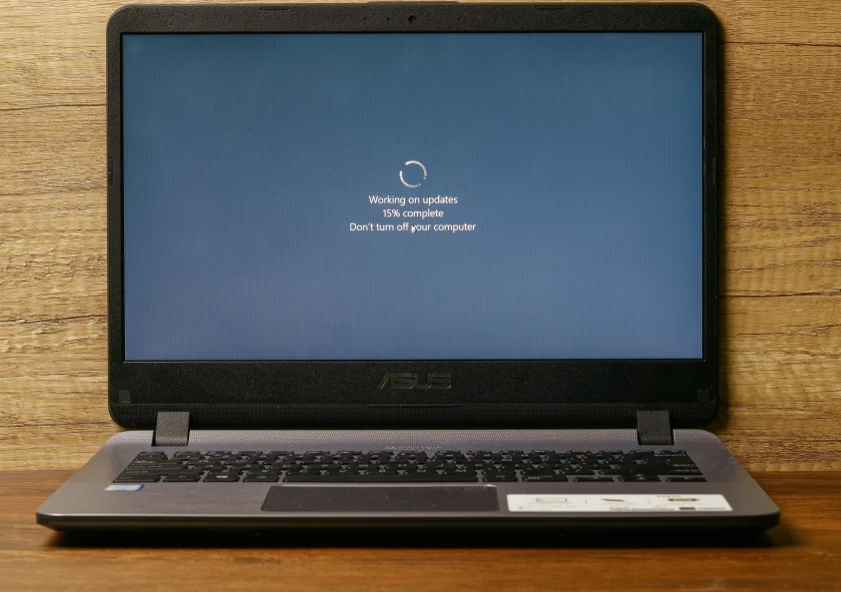
The global cybersecurity landscape shifted dramatically this month as Microsoft Corp. released a historic wave of software updates, addressing an unprecedented 570 security vulnerabilities across its Windows operating systems and associated software suite. This staggering figure represents nearly triple the volume of the company’s previous record-setting Patch Tuesday release, signaling a new era in software maintenance where artificial intelligence has become the primary engine for both identifying and remediating digital weaknesses. Microsoft executives have explicitly linked this surge in vulnerability reports to the integration of advanced AI tools in their security research pipelines, a move that highlights the dual-edged nature of machine learning in the ongoing arms race between defenders and cybercriminals.
Of the 570 flaws addressed in the July release, approximately 60 were classified as "critical," a designation reserved for vulnerabilities that allow for remote code execution without user intervention. Such flaws are the primary tools of state-sponsored hacking groups and ransomware operators, as they enable an attacker to seize full administrative control over a target device. Perhaps most concerning to security administrators was the inclusion of three zero-day vulnerabilities—flaws that were known to the public or being actively exploited before a patch was available. Two of these zero-days were confirmed by Microsoft to be under active exploitation in the wild at the time of the release, necessitating immediate action from IT departments worldwide.
The AI Catalyst: A New Paradigm in Vulnerability Research
The sheer volume of the July update is a direct consequence of Microsoft’s "Secure Future Initiative," which has seen the company pivot toward AI-driven security auditing. Pavan Davuluri, Microsoft’s Executive Vice President of Windows and Devices, noted in a detailed briefing that the pace of discovery has fundamentally changed. According to Davuluri, AI models are now capable of scanning millions of lines of legacy and modern code simultaneously, identifying patterns and edge cases that would take human researchers years to uncover.
"The pace of vulnerability discovery is changing with advances in AI making it possible to find more issues, faster, across more code, with new mechanisms that can accelerate both discovery and analysis," Davuluri stated. He warned that Windows users should prepare for a "higher volume of security updates" as a standard feature of future releases. This shift suggests that the traditional, manageable trickle of monthly patches is being replaced by a flood of data-driven fixes, a development that poses significant logistical challenges for enterprise environments.
Deep Dive into Critical Vulnerabilities and Zero-Days
Among the most pressing issues addressed this month were two zero-day elevation of privilege (EoP) vulnerabilities: CVE-2026-56155 and CVE-2026-56164. The former affects Active Directory Federation Services (ADFS), a critical component for identity management in large organizations, while the latter targets Microsoft SharePoint. Elevation of privilege flaws are particularly dangerous because they allow an attacker who has already gained a foothold on a network—perhaps through a phishing email—to escalate their permissions to that of a system administrator, effectively giving them the "keys to the kingdom."
Another notable entry in the July catalog is CVE-2026-50661, a security feature bypass in Windows BitLocker. While this flaw requires an attacker to have physical access to the device, it potentially allows for the decryption of sensitive data, bypassing the very encryption meant to protect stolen or lost hardware. Although Microsoft stated there is no evidence of this bug being exploited in the wild yet, the public disclosure of the vulnerability increases the risk of "evil maid" attacks in corporate and government sectors.
Perhaps the most modern threat addressed was CVE-2026-48561, a remote code execution (RCE) flaw in Microsoft Copilot. Boasting a near-perfect Common Vulnerability Scoring System (CVSS) score of 9.6, this vulnerability allows an unauthorized attacker to execute malicious code over a network. Jack Bicer, Director of Vulnerability Research at Action1, explained that the exploit involves hosting a malicious website that triggers Microsoft Edge for Android to send specially crafted prompts to Copilot. This interaction could allow an attacker to hijack the AI’s permissions, demonstrating that as AI assists in defense, it also creates a new, complex attack surface.
The Exploitability Index and the "Machine Speed" Challenge
As Microsoft ramps up its discovery phase, industry analysts are raising concerns about the accuracy of traditional risk assessment metrics. Satnam Narang, a senior staff research engineer at Tenable, has argued that Microsoft’s "exploitability index"—a rating system designed to help IT admins prioritize patches—is failing to keep up with AI-enhanced exploitation.
Narang pointed to the SharePoint zero-day, which Microsoft initially rated as "exploitation less likely," despite the fact that the Cybersecurity and Infrastructure Security Agency (CISA) had added it to its Known Exploited Vulnerabilities (KEV) list on July 1. This discrepancy highlights a growing gap between vendor predictions and real-world threats.
The threat is further illustrated by research from Anthropic’s Red Team. Using their Mythos Preview model, researchers were able to generate functional proof-of-concept exploits for 13 out of 14 vulnerabilities that had been officially rated by vendors as "unlikely" to be exploited. "Our way of looking at Patch Tuesday has changed because the exploitability index is centered around humans, not AI tools," Narang observed. The implication is clear: if AI can find the bugs, AI can also figure out how to break them, often faster than a human-led security team can react.
A Broader Industry Trend: The "Patch Flood"
Microsoft is not alone in this sudden acceleration. The July reporting cycle revealed that the entire software industry is struggling to manage the output of AI-driven bug hunting. Adobe recently announced it would move to a twice-monthly update schedule—releasing bulletins on the second and fourth Tuesday of every month—citing the need to address vulnerabilities more rapidly. Similarly, Google’s patch batches in mid-2026 exceeded 900 security fixes, while Cisco, Mozilla, and Oracle have all reported increased patch cadences.
This trend creates a "patching fatigue" among IT professionals. In the past, a system administrator might spend a few hours a month testing and deploying updates. In the current environment, the volume of changes is so high that the risk of a patch "breaking" a critical business application has increased exponentially. This has led to a cautious approach where many organizations are now waiting several days to observe if the community reports stability issues before deploying the updates to their entire fleet.
Chronology of the July Update Cycle
The timeline leading up to this record-breaking release suggests a concentrated effort by Microsoft to clear a massive backlog of AI-discovered issues:
- June 25, 2026: Microsoft internal security teams begin final testing on a batch of over 500 fixes, the largest in the company’s history.
- July 1, 2026: CISA issues an alert regarding the SharePoint vulnerability (CVE-2026-56164), noting it is being used in targeted attacks.
- July 5, 2026: Security researchers at Action1 and Tenable report a surge in "automated" exploit attempts targeting unpatched Microsoft services.
- July 9, 2026 (Patch Tuesday): Microsoft officially releases the 570 updates. Pavan Davuluri publishes a blog post detailing the role of AI in the discovery process.
- July 10, 2026: Major software vendors, including Adobe, align their messaging, confirming that AI is now the primary driver of vulnerability management.
Analysis of Implications for Global Security
The transition to AI-assisted vulnerability management marks a fundamental shift in the cybersecurity "cat-and-mouse" game. On the positive side, the ability to find and fix 570 holes in a single month is a testament to the power of defensive AI. It allows for the hardening of software at a scale previously thought impossible. However, the implications for the end-user are complex.
First, the "Patch Gap" is widening. While Microsoft can release 570 patches, the average enterprise takes weeks, if not months, to fully deploy them across a global network. This leaves a massive window of opportunity for attackers who can use their own AI tools to reverse-engineer these patches and create "N-day" exploits within hours of the release.
Second, the reliability of software is at stake. With hundreds of changes being introduced to the Windows kernel and core services simultaneously, the probability of "regressions"—where a fix for one problem creates a new bug elsewhere—is high. Organizations must now invest more heavily in automated testing environments to ensure that these massive updates do not result in costly system downtime.
Finally, there is the issue of the "Exploitation Index." As demonstrated by the Anthropic research, human-centric risk assessments are becoming obsolete. Moving forward, organizations will likely need to adopt AI-driven patch prioritization tools that can simulate an attacker’s ability to exploit a bug in real-time, rather than relying on static scores provided by vendors.
Recommendations for Systems Administrators
Given the unprecedented volume of the July release, security experts recommend a tiered deployment strategy. Rather than an immediate "push" to all workstations, administrators should:
- Prioritize Zero-Days: Focus immediately on the SharePoint and ADFS vulnerabilities (CVE-2026-56155 and CVE-2026-56164) and the Copilot RCE.
- Backup and Snapshot: Ensure robust system backups are in place, as the sheer number of patches increases the likelihood of boot failures or driver conflicts.
- Phased Rollout: Deploy to a "canary" group of non-essential machines first, monitoring for 48 to 72 hours before expanding the rollout.
- Monitor AI Interactions: Given the RCE found in Copilot, organizations should review their mobile device management (MDM) policies for Edge for Android and monitor AI-related network traffic for anomalies.
The July 2026 Patch Tuesday will likely be remembered as the moment the cybersecurity industry fully entered the age of AI. While the tools to find vulnerabilities have never been more powerful, the challenge of maintaining and securing the world’s digital infrastructure has never been more daunting.
