

A comprehensive new study by Optimove, a leading CRM and player engagement platform provider for the iGaming and sports betting sectors, has illuminated critical insights into wagering patterns during the recently concluded NCAA March Madness collegiate basketball championship. The study, focusing primarily on the men’s side of the tournament, revealed a significant 60% surge in betting activity. Crucially, this substantial increase was almost entirely fueled by existing bettors, with a staggering 97% of depositing players already established customers of sportsbooks. This finding challenges conventional wisdom regarding major sporting events as primary acquisition drivers, instead positioning March Madness as a paramount retention opportunity for operators.
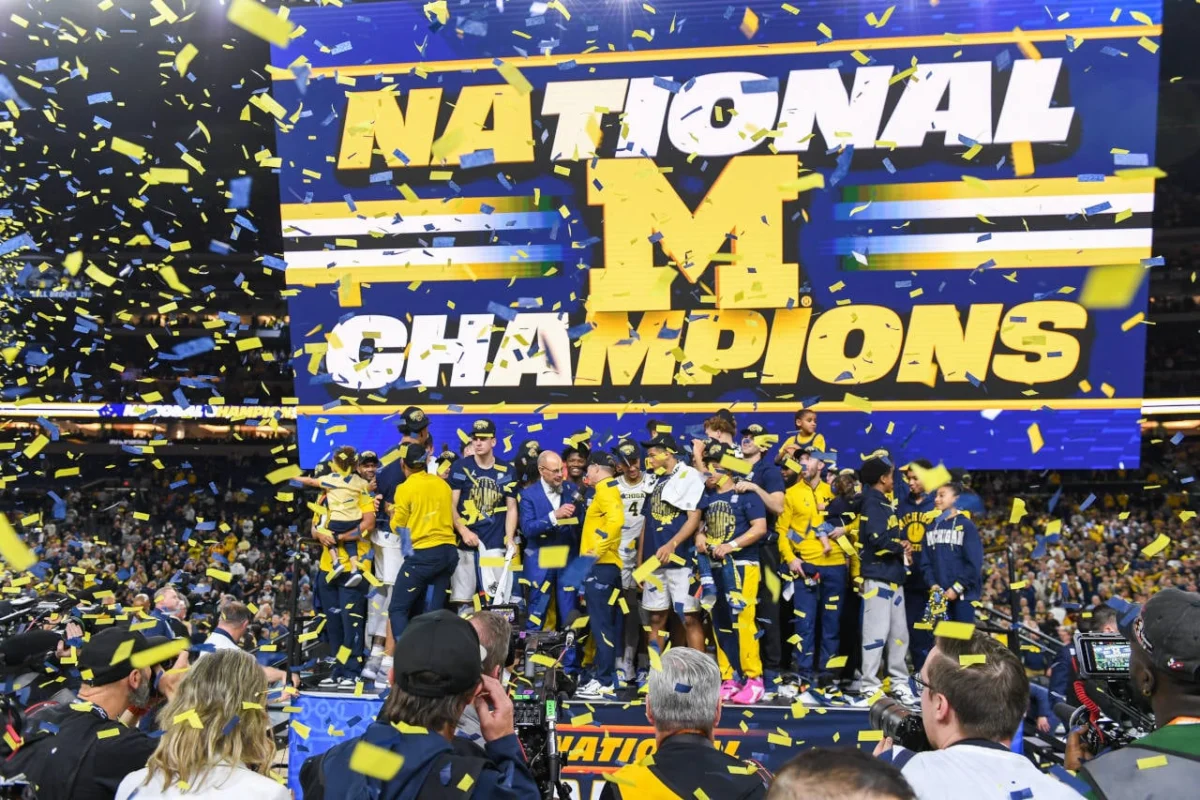
The 2026 NCAA Men’s Basketball Tournament concluded earlier this month, culminating in a hard-fought championship game where the Michigan Wolverines triumphed over the UConn Huskies with a final score of 69-63. This defensive masterclass marked Michigan’s first national title since 1989, adding another memorable chapter to the tournament’s rich history. The spectacle began in mid-March with the eagerly anticipated release of both the men’s and women’s NCAA Tournament brackets, each featuring 68 teams battling through 67 games in a single-elimination format designed for drama and unpredictability.
March Madness traditionally stands as one of the most significant events on the American sports betting calendar, consistently generating billions of dollars in wagering volume across legal sportsbooks nationwide. The American Gaming Association (AGA) has consistently highlighted the tournament’s unique appeal, attributing its massive engagement to the inherent volatility, frequent upsets, and the heartwarming "Cinderella stories" that captivate both casual and seasoned bettors alike. These elements create an unparalleled dynamic that drives intense, sustained betting interest throughout the multi-week competition.
The Optimove Insights Analysis: A Deep Dive into Player Behavior
The Optimove Insights Analysis, March Madness 2026 Report offers an unprecedented look into the behavioral economics of collegiate basketball betting. The central thesis emerging from the report is stark: while March Madness undoubtedly generates immense betting volume, its primary function for sports betting operators is not to onboard a vast influx of new users. Instead, it serves as a critical period for re-engaging, retaining, and maximizing the lifetime value of existing customer bases. This distinction is vital for operators planning their marketing and promotional strategies for future tentpole events.
Across every stage of the men’s tournament, from the initial "First Four" play-in games to the national championship on April 6, the data consistently showed that 97% of all depositing players were pre-existing customers. This overwhelming ratio held firm even during the tournament’s most explosive betting spike, which saw a remarkable 60% surge in activity during the First and Second Round weekend, held from March 19-22. During this period, often characterized by a high volume of games and potential for early upsets, first-time depositors constituted a mere 3% of the total betting base. This ratio remained remarkably consistent throughout the entire duration of the tournament, underscoring the strong retention theme.
The report meticulously tracked betting activity uplifts across the various stages of the tournament. The Final Four, held on April 4, experienced a substantial 51% lift in betting volume above baseline activity, reflecting the heightened stakes and national attention on the penultimate stage of the competition. Similarly, the Elite Eight, where teams vie for a spot in the Final Four, registered a robust 41% uplift. These figures demonstrate the escalating engagement as the tournament progresses and the field narrows.
Sweet Sixteen: Intensity Over Quantity
The Sweet Sixteen, contested on March 26-27 for the men’s teams, saw an 18% uplift in betting activity. While this percentage is lower than the initial rounds or the Final Four, it is notable given the reduced number of games played on any given day. This stage is characterized by higher intensity matchups between more evenly matched teams, leading to concentrated betting interest on fewer, more impactful contests. Bettors often shift their focus to more sophisticated analyses of team matchups and player performances as the competition tightens.
Optimove’s analysis suggests a clear strategic imperative for sports betting operators: those who prioritize and invest in sophisticated customer relationship management (CRM) strategies, personalized promotions, robust loyalty rewards programs, and targeted re-engagement campaigns are poised to see the most significant returns. Generic, broad-brush acquisition campaigns during March Madness are likely to yield diminishing returns compared to tailored efforts aimed at existing players.
The Broader Betting Landscape and Projections
While the definitive total betting volume data for the 2026 tournament has yet to be officially released by regulatory bodies or the American Gaming Association, pre-tournament projections offered a glimpse into the anticipated scale. The AGA had projected that Americans would collectively wager approximately $3.3 billion on March Madness 2026, encompassing both the men’s and women’s tournaments, through legal sportsbooks. This projection underscored the continued growth trajectory of legal sports betting across the United States.
Beyond traditional sportsbooks, prediction markets also saw substantial activity. Yahoo Sports reported that Kalshi, a regulated predictions exchange, processed an impressive $1.2 billion in trading volume over just the first two days of March Madness, covering both the men’s and women’s brackets. This figure highlights the diverse avenues through which individuals engage with and monetize their predictions during the tournament.
Background and Evolution of March Madness Betting
The landscape of sports betting in the United States underwent a seismic shift in May 2018 with the repeal of the Professional and Amateur Sports Protection Act (PASPA). This landmark Supreme Court decision cleared the way for individual states to legalize and regulate sports betting, leading to a rapid expansion of the industry. Prior to PASPA’s repeal, Nevada held a near-monopoly on legal sports wagering, with the vast majority of March Madness betting occurring illicitly through offshore sites or illegal bookmakers.
Since 2018, over 30 states and Washington D.C. have launched legal sports betting markets, with more jurisdictions continuously evaluating or implementing legislation. This proliferation has transformed March Madness from a largely underground betting event into a mainstream, legally sanctioned phenomenon, significantly increasing transparency and consumer protection. The AGA has been instrumental in advocating for legal, regulated markets, emphasizing the economic benefits and the ability to combat illegal operations.
Historically, March Madness has always been a major betting event, even in its illicit forms. The sheer volume of games, the bracket format that encourages widespread participation (even among casual fans), and the inherent excitement of single-elimination play make it uniquely appealing. The advent of legal online and mobile sports betting platforms has only amplified this, making it easier than ever for millions of Americans to place wagers from their homes or on the go. This accessibility, coupled with sophisticated marketing from operators, has fueled the exponential growth seen in recent years.
Chronology of the 2026 March Madness Betting Cycle
- Mid-March 2026: Selection Sunday & Bracket Release: The unveiling of the 68-team fields for both men’s and women’s tournaments kicks off a frenzy of bracketology and initial wagering. Futures bets on potential champions and region winners begin to solidify.
- March 19-22, 2026: First and Second Rounds: This four-day period represents the initial surge in betting activity. With 32 games on Thursday and Friday, and 16 on Saturday and Sunday, the volume is immense. Optimove noted a 60% surge in betting activity during this period, overwhelmingly driven by existing customers leveraging early-round opportunities, parlays, and live betting. The prevalence of upsets (e.g., a 15-seed beating a 2-seed) often generates significant interest and drives betting on subsequent games.
- March 26-27, 2026: Sweet Sixteen: As the field narrows to 16 teams, the quality of play intensifies. The Optimove study recorded an 18% uplift in betting activity. Bettors begin to focus more on specific matchups, player performances, and potential dark horse candidates. The fewer games per day allow for more concentrated attention and wagering.
- March 28-29, 2026: Elite Eight: Eight teams battle for a coveted spot in the Final Four. This stage registered a 41% uplift in betting. The stakes are incredibly high, leading to significant interest in moneyline bets, point spreads, and proposition bets related to key players.
- April 4, 2026: Final Four: The national semifinals. With only two games featuring the nation’s top four teams, national attention peaks. Optimove’s data showed a 51% lift above baseline betting activity. The narrative of Cinderella stories reaching this stage often creates unique betting opportunities.
- April 6, 2026: National Championship Game: The culminating event of the men’s tournament. Michigan’s victory over UConn in a 69-63 defensive struggle drew massive betting interest, albeit as a single game. While not specifically quantified for this final game in the Optimove data snippet, championship games invariably attract the highest individual game handle.
Strategic Implications for Sportsbook Operators
The Optimove study delivers a clear and actionable message to sports betting operators: the traditional model of leveraging major events like March Madness primarily for new customer acquisition needs recalibration. Instead, the focus must shift decisively towards sophisticated retention strategies.
- Enhanced CRM and Personalization: Operators must invest heavily in advanced CRM platforms to segment their existing customer base effectively. This allows for hyper-personalized promotions, bonus offers, and communication tailored to individual betting histories, preferences, and engagement levels. For instance, a bettor who frequently wagers on college basketball could receive exclusive offers related to future NCAA events.
- Robust Loyalty Programs: The study underscores the value of rewarding existing customers. Well-structured loyalty programs that offer tiered benefits, exclusive access, or accelerated rewards points can significantly increase customer lifetime value and deter churn.
- Targeted Re-engagement Campaigns: For customers who show signs of reduced activity, targeted re-engagement campaigns are crucial. This could involve personalized offers, free bets, or notifications about upcoming events that align with their past betting behavior.
- Beyond Generic Promotions: Moving away from generic "March Madness specials" towards personalized communications that acknowledge a player’s history and preferences will likely yield better results. For example, reminding a past March Madness bettor about the tournament’s start with a small, personalized bonus rather than a mass-market advertisement.
- Focus on "Second Tier" Events for Acquisition: Operators might consider allocating more aggressive acquisition budgets to "second-tier" sporting events or non-marquee periods when competition for new users is less intense and the cost per acquisition (CPA) might be lower. March Madness, while still attracting some new users, is not the most efficient acquisition channel.
Inferred Industry Reactions and Expert Commentary
"The findings from our March Madness 2026 report are a game-changer for how operators should view major sporting events," stated Pini Anavi, Head of Sports Insights at Optimove (inferred). "For too long, the industry has approached events like March Madness with an acquisition-first mindset. Our data clearly shows that the true value lies in cultivating and retaining the existing customer base. The 60% surge is impressive, but the fact that 97% of that came from existing players tells us exactly where the strategic focus needs to be."
An analyst from the American Gaming Association (AGA), speaking on background, echoed these sentiments (inferred). "While March Madness continues to be a monumental betting event that brings significant handle to legal sportsbooks, Optimove’s data provides valuable nuance. It suggests a maturing market where established bettors are driving the lion’s share of activity. This isn’t necessarily a bad thing; it speaks to the success of operators in building loyal customer relationships post-PASPA. However, it necessitates a more sophisticated approach to marketing and player management."
A spokesperson for a major national sportsbook (inferred) commented, "We are constantly refining our strategies based on market intelligence. The Optimove report aligns with some internal observations we’ve been making. While we still see some new sign-ups during March Madness, our most effective campaigns during the tournament often revolve around rewarding our loyal customers and driving deeper engagement with those who already trust us. We’re looking at how we can further enhance our personalized offers and loyalty pathways to capitalize on this retention opportunity."
The Growing Prominence of Women’s March Madness Betting
While the Optimove study primarily focused on the men’s tournament betting surge, it is imperative to acknowledge the rapidly growing interest and betting volume surrounding the NCAA Women’s Basketball Tournament. The 2026 women’s tournament also concluded earlier this month, drawing record viewership and engagement. The increased visibility of star players, compelling storylines, and enhanced media coverage have translated into a significant uptick in wagering. Although specific Optimove data for the women’s tournament was not detailed, the inclusion of women’s tournament activity in the AGA’s $3.3 billion projection and Kalshi’s $1.2 billion trading volume underscores its increasing importance. Future analyses are likely to provide more granular data on female bettors and their engagement patterns.
Looking Ahead: Future Trends and Challenges
The insights from the Optimove study are crucial as the sports betting industry continues to evolve. Operators will face increasing pressure to demonstrate profitability and sustainable growth. This will inevitably lead to a greater emphasis on customer lifetime value (CLV) and efficient marketing spend. The March Madness 2026 data serves as a stark reminder that simply attracting eyeballs is not enough; converting those eyeballs into long-term, engaged customers requires a strategic and data-driven approach to retention.
Future March Madness tournaments will likely see operators implementing more sophisticated CRM tools, utilizing predictive analytics to anticipate player behavior, and offering highly customized betting experiences. The challenge will be to balance the excitement and broad appeal of the tournament with targeted strategies that resonate with the predominant existing customer base, ensuring that the annual collegiate basketball spectacle remains not just a betting bonanza, but a powerful engine for sustained customer loyalty and profitability within the legal sports betting ecosystem.
