

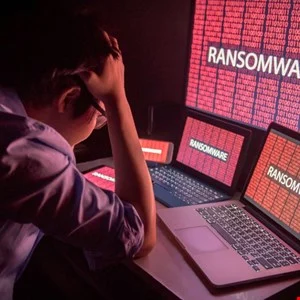
The global landscape of cybersecurity has reached a critical inflection point as new data reveals that government departments and agencies are now falling victim to ransomware attacks at an average rate of once per day. According to a comprehensive analysis conducted by researchers at Comparitech, the first half of 2026 saw a significant escalation in both the frequency and sophistication of cyber-attacks directed at public sector entities. Between January and June 2026, a total of 187 government organizations were confirmed to have been targeted by ransomware, marking a 13% increase from the 165 incidents recorded during the final six months of 2025. This surge highlights a persistent and growing threat to the administrative backbone of nations worldwide, where the encryption of essential systems is no longer an occasional crisis but a daily reality.
The research, released on July 16, 2026, underscores a troubling trend: as digital transformation accelerates within the public sector, the attack surface for malicious actors expands proportionally. With 187 incidents spread across 182 days, the statistical probability of a government entity facing a service-disrupting cyber-event has stabilized at a one-to-one daily ratio. Of these recorded events, approximately 48% (89 incidents) were publicly acknowledged by the victimized organizations, while the remainder were identified through dark web monitoring, leak site disclosures, and independent cybersecurity investigations. This discrepancy suggests that a significant portion of the public sector still struggles with transparency following a breach, often due to the sensitive nature of the data involved or the potential for political fallout.
The Strategic Motivation Behind Government Targeting
Cybercriminal syndicates have increasingly pivoted toward government targets due to the unique leverage these organizations provide. Unlike private corporations, which may prioritize shareholder value and brand reputation, government agencies are responsible for the delivery of essential services—ranging from social security disbursements and healthcare management to municipal utilities and law enforcement coordination. When these systems are encrypted, the resulting paralysis can affect millions of citizens, creating immense pressure on officials to resolve the crisis as quickly as possible.
Rebecca Moody, head of data research at Comparitech, noted that the duration of these disruptions is a primary factor in the attackers’ strategy. "From weeks-long disruptions due to system encryption to extensive data breaches, governments are the ideal target for hackers," Moody stated. The calculation for many agencies becomes a grim choice between the ethical and legal complexities of paying a ransom and the logistical nightmare of a prolonged recovery process. In many instances, the time required to restore systems from backups—if backups exist and remain uncompromised—can stretch into months, during which time the public is left without vital services.
Furthermore, government databases are repositories for vast amounts of Personally Identifiable Information (PII). This data is a secondary source of profit for ransomware groups. Even if an organization refuses to pay for a decryption key, the threat of leaking sensitive citizen data—including tax records, medical histories, and identification numbers—provides a secondary "double extortion" mechanism that ensures the attackers maintain the upper hand.
Geographic Distribution: The United States as the Primary Focus
The Comparitech study highlights a significant geographic disparity in ransomware activity. The United States remains the most targeted nation, accounting for 31% of all recorded government ransomware attacks in the first half of 2026. This concentration is largely attributed to the sheer number of local, state, and federal agencies operating within the U.S., as well as the high level of digitization across its public infrastructure.
In contrast, other nations reported significantly lower, though still concerning, percentages. Germany accounted for 7% of the global total, followed by Spain and Italy, each representing 4% of recorded incidents. Analysts suggest that while the U.S. remains the "prize" target due to its perceived wealth and extensive digital footprint, the rise in European attacks reflects a growing interest in targeting nations with strict data protection regulations, such as the General Data Protection Regulation (GDPR). In these regions, hackers leverage the threat of massive regulatory fines as additional pressure on government bodies to settle ransoms quietly.
Financial Dynamics and the Outlier of South Africa
The financial demands placed on government agencies during the first half of 2026 revealed a strategic shift in the pricing models used by cybercriminals. The mean ransom demand stood at $100,000. Cybersecurity experts believe this figure represents a "sweet spot" for attackers; it is a sum high enough to be profitable for the criminal group but low enough that a government entity might consider it a manageable "administrative expense" compared to the multi-million dollar costs of system reconstruction and legal liabilities.
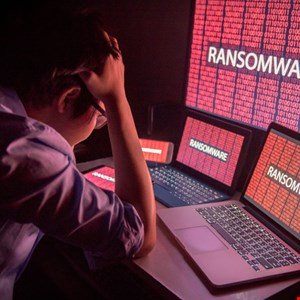
However, the period was not without high-stakes anomalies. The most prominent outlier occurred in January 2026, when the Land and Agricultural Development Bank of South Africa was hit by a massive cyber-attack. The unknown assailants demanded a staggering $3.1 million in exchange for restoring access to the bank’s financial systems. In a display of institutional resilience, the bank refused to negotiate with the attackers. While this stance was praised by international cybersecurity coalitions, the operational cost was severe: the organization’s systems were not fully restored until April, resulting in a three-month period of significant disruption to the agricultural sector’s financing and credit operations.
Profiling the Perpetrators: The Gentlemen, Qilin, and LockBit
The H1 2026 report identified a diverse array of threat actors, ranging from established syndicates to emerging groups. The most prolific group during this period was "The Gentlemen," a relatively new collective that accounted for 10% of all government attacks. Known for their polished communication style and sophisticated social engineering tactics, The Gentlemen have rapidly climbed the ranks of the ransomware ecosystem.
Following closely behind was Qilin (9%), a group noted for its use of the Rust programming language, which allows for more efficient encryption and better evasion of traditional antivirus software. LockBit, a perennial threat in the cybersecurity world, accounted for 7% of the attacks. Despite numerous law enforcement actions and infrastructure takedowns in previous years, the LockBit brand continues to persist through a decentralized "Ransomware-as-a-Service" (RaaS) model, where affiliates utilize the group’s tools to launch independent strikes.
These groups frequently exploit "n-day" vulnerabilities—security flaws that have been publicly disclosed but remain unpatched in many organizations. By targeting legacy systems that are common in government bureaucracies, these attackers find easy entry points into otherwise complex networks.
Impact on Public Trust and Infrastructure
The implications of a "one-attack-per-day" reality extend far beyond the immediate technical hurdles. Each successful breach erodes public confidence in the state’s ability to protect citizen data and maintain social order. When a municipal government is hit, local residents may find themselves unable to pay property taxes, register vehicles, or access court records. In more severe cases, emergency dispatch systems and hospital administrative networks have been caught in the crossfire, turning a digital crime into a public safety emergency.
The "H1 2026 Government Ransomware Roundup" serves as a reminder that the cost of ransomware is not merely the ransom itself, but the cumulative loss of productivity, the cost of forensic investigations, and the long-term investment required to harden infrastructure against future incursions. For many smaller municipalities, a single ransomware attack can deplete annual IT budgets, leaving them even more vulnerable to subsequent threats.
Defensive Strategies and the Path Forward
In response to the escalating threat, cybersecurity experts and government advisors are advocating for a shift from reactive recovery to proactive resilience. Rebecca Moody emphasized that the fundamentals of "cyber hygiene" remain the most effective deterrent. This includes:
- Vulnerability Management: Governments must prioritize the immediate patching of known vulnerabilities. The delay between a patch release and its implementation is often the window of opportunity cybercriminals exploit.
- Robust Backup Protocols: Maintaining air-gapped, immutable backups is essential. These backups must be stored off-site and disconnected from the primary network to ensure they cannot be encrypted during an attack.
- Employee Training: Since phishing remains a primary entry vector, regular and rigorous training for government employees is necessary to cultivate a culture of high alert.
- Zero Trust Architecture: Moving away from traditional perimeter-based security toward a "Zero Trust" model—where every user and device must be continuously verified—can limit the "lateral movement" of an attacker once they gain access to a network.
As the second half of 2026 begins, the international community faces a difficult road. The data from Comparitech suggests that the "ransomware epidemic" is not plateauing but evolving. Without a concerted effort to modernize government IT infrastructure and foster international cooperation in tracking and prosecuting cybercriminal groups, the frequency of these attacks is likely to remain at its current, exhausting pace. The daily battle for the integrity of public services has become the new normal in the digital age, requiring a level of vigilance and investment that matches the persistence of the adversaries.
