


The 2026 college football season enters a pivotal fourth week, characterized by a dense schedule of high-stakes, top-25 matchups that promise to reshape the national landscape. As programs navigate the intensity of mid-September, analysts and bettors are closely scrutinizing the early line movements, which indicate significant shifts in market sentiment regarding several key SEC and Big 12 encounters. Following a successful third week of betting recommendations, the focus shifts to three specific games where statistical trends and roster evaluations provide a framework for forecasting potential outcomes.
The current slate features marquee games including the top-ranked Texas Longhorns traveling to face the No. 14 Tennessee Volunteers, alongside critical defensive battles such as the Utah Utes facing off against the Iowa State Cyclones. Furthermore, the Georgia Bulldogs continue their campaign to maintain their standing in the national rankings as they prepare to host the Oklahoma Sooners. These games represent not just individual contests, but essential checkpoints for teams aiming to secure positions in the expanded playoff bracket as the season progresses toward October.
Strategic Market Analysis: Line Movements and Betting Trends
The betting market for college football is highly reactive to injury reports, roster updates, and early-week wagering volume. In the lead-up to Week 4, several notable adjustments have been observed across major sportsbooks. The most significant movement involves the contest between Texas and Tennessee, where the opening spread of -4.5 in favor of the Longhorns has compressed to -3.5. This shift suggests a degree of confidence among bettors regarding the home-field advantage at Neyland Stadium and the competitive viability of the Tennessee roster.
Similarly, the point totals for these marquee matchups are trending downward. In the Oklahoma versus Georgia contest, the total has moved from an opening mark of 47.5 down to 43.5. This four-point drop is a strong indicator that the market expects a defensive struggle, particularly given the perceived deficiencies in the Oklahoma offensive attack. Such data points are critical for institutional and casual bettors alike, as they reflect the aggregate analysis of the public and professional betting syndicates.
Tactical Breakdown: Texas at Tennessee
The clash between No. 1 Texas and No. 14 Tennessee serves as the headline event of the week. Texas, led by quarterback Arch Manning, enters the contest with the pressure of a top-ranked program playing its first road game of the season. The Longhorns’ performance against UTSA in Week 3, a 30-6 victory, demonstrated defensive discipline, though critics have questioned whether the offense has reached its full potential ahead of this SEC showdown.

Conversely, Tennessee’s signal-caller Brandon Faizon has emerged as one of the most dynamic threats in the conference. With 550 passing yards and nine total touchdowns to his name this season, Faizon has demonstrated an ability to generate points both through the air and on the ground, averaging 5.3 yards per carry. Tennessee’s home-field advantage in Knoxville is widely regarded as one of the most hostile environments in college football, and the betting market’s movement toward the Volunteers suggests that expectations are high for a close, one-score game. Given the current spread of 3.5, backing Tennessee provides a safety net that accounts for the potential of a high-variance, back-and-forth contest.
Defensive Dominance: Utah and Iowa State
In the Big 12, the matchup between the No. 15 Utah Utes and the Iowa State Cyclones offers a stark contrast to the offensive fireworks expected in other games. Both teams rely heavily on defensive efficiency and turnover management. Utah, guided by the offensive production of Devon Dampier, recently secured a 33-0 victory over Utah State. However, the step up in competition against the Iowa State defense will be significant.
Iowa State’s defensive unit has been one of the most stingy in the country, allowing only three total touchdowns through the first three weeks of play. By limiting the Iowa Hawkeyes to less than 200 passing yards and a 3.2-yard-per-carry average, the Cyclones have established a blueprint for neutralising high-powered offenses. With Utah holding a +4 turnover margin and Iowa State boasting a +3 margin, the likelihood of a low-scoring, possession-focused game is high. Consequently, the total of 49.5 remains a key figure for those favoring a defensive-heavy outcome, as both coaching staffs will likely prioritize ball security over aggressive, high-risk offensive play-calling.

The Georgia Bulldogs’ Trajectory
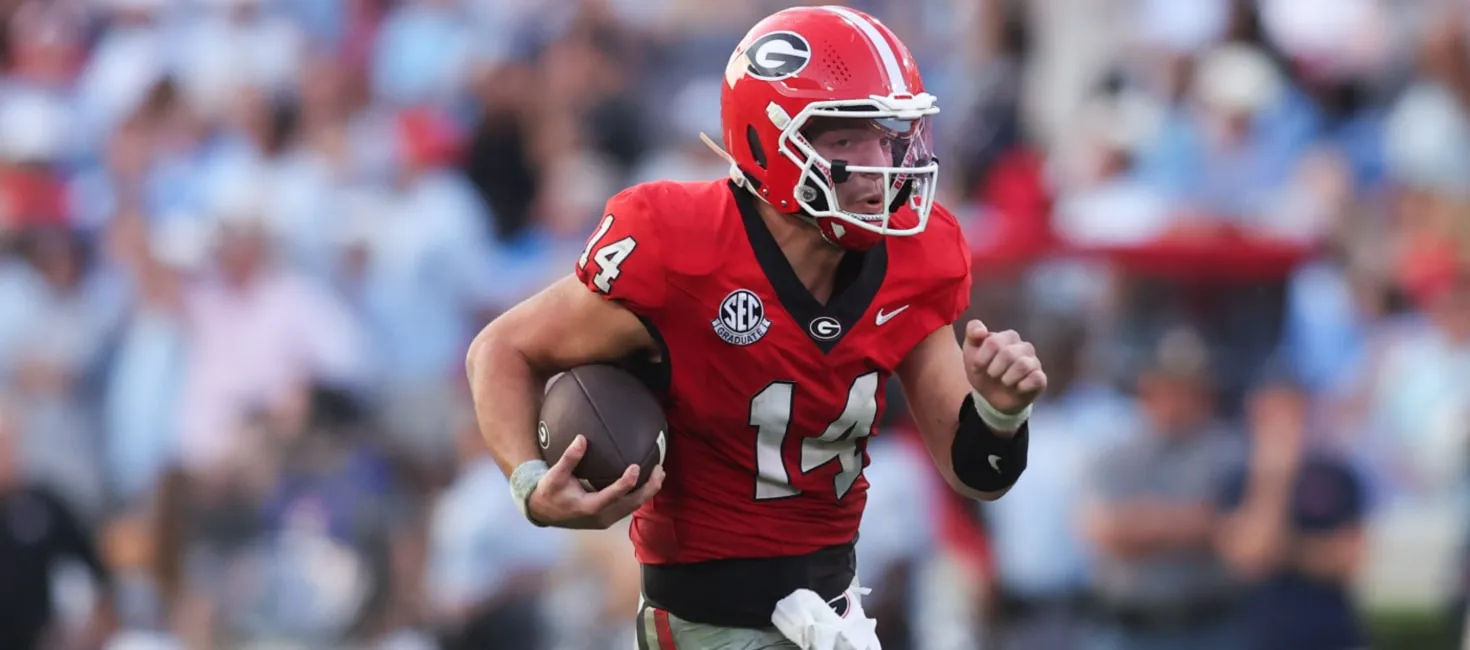
The Georgia Bulldogs remain the standard-bearer for consistency in 2026. Under the leadership of Kirby Smart, the program has maintained a high level of efficiency, scoring at least 45 points in every game this season. Their defensive unit, which has allowed a meager 1.5 yards per carry and a 59 percent completion rate to opposing quarterbacks, continues to perform at an elite level.
The upcoming game against Oklahoma presents a unique challenge for the Sooners. Quarterback John Mateer has struggled to find rhythm, as evidenced by a narrow 14-6 win against New Mexico in which he recorded only 17 rushing yards on 10 carries. The disparity between Georgia’s explosive offense, led by quarterback Gunner Stockton’s 84 percent completion rate and nine-touchdown tally, and Oklahoma’s struggling attack has forced a line shift in Georgia’s favor. While the spread has moved to -14.0, historical data on Georgia’s home dominance suggests that the Bulldogs are well-positioned to cover this margin. The tightening of the point total to 43.5 reflects a broader expectation that Georgia will stifle the Oklahoma offense, potentially holding them to a single-digit score.
Broader Implications and Institutional Outlook
The outcomes of these Week 4 games will carry significant weight for the remainder of the season. For programs like Texas and Georgia, these games represent opportunities to solidify their status in the upper echelon of the rankings. For teams like Tennessee, Utah, and Iowa State, these matchups are "prove-it" moments that can either propel them into the conversation for the College Football Playoff or demote them to the middle tier of their respective conferences.

From an analytical standpoint, the volatility in these early-season lines underscores the importance of monitoring player health and tactical adjustments. The movement of the lines is not merely a reflection of public sentiment but a reaction to the statistical output of the preceding weeks. Coaches are now forced to navigate the balance between aggressive play-calling and the need to protect their personnel for the grueling schedule that awaits in the latter half of the season.
As fans and observers prepare for Saturday’s slate, the intersection of talent and tactical preparation will be on full display. The reliance on defensive metrics and turnover ratios, as seen in the Utah-Iowa State game, highlights the evolving nature of the sport, where efficiency often supersedes pure volume. Furthermore, the success of established programs like Georgia illustrates the compounding benefits of deep rosters and experienced coaching staffs.
In summary, the Week 4 slate provides a comprehensive view of the 2026 college football hierarchy. By focusing on the movement of spreads and totals, analysts can gain deeper insight into the expectations of the market, which in turn reflects the collective assessment of the teams’ current form. Whether through the lens of offensive firepower in the SEC or defensive grit in the Big 12, the coming Saturday will undoubtedly provide the necessary data to evaluate the trajectory of the season’s primary contenders as they march toward the postseason. For those tracking the betting markets, the trend remains clear: defensive stability and quarterback efficiency are the primary drivers of success in a season that continues to defy conventional expectations.
