

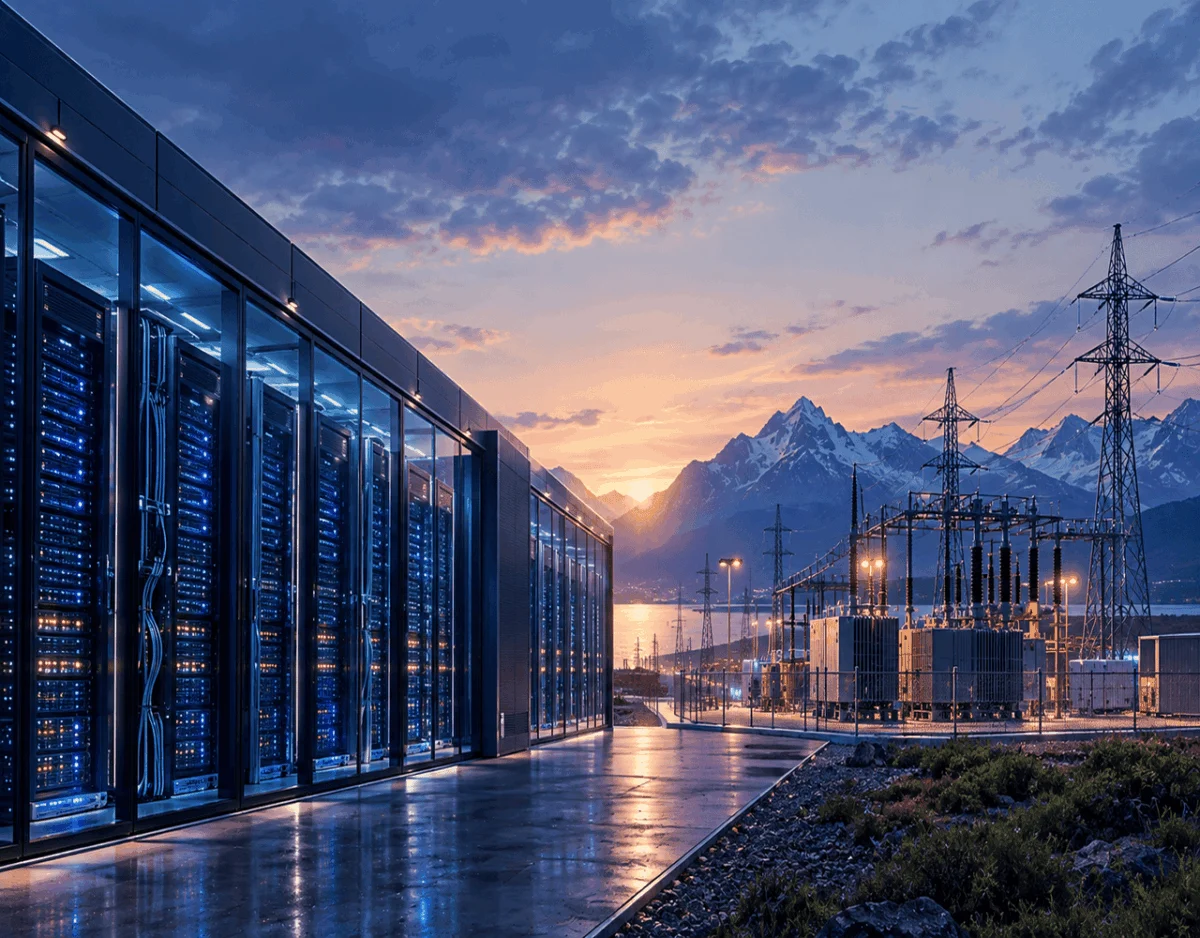
The global race for artificial intelligence supremacy is frequently framed as a relentless battle for advanced microchips. Tech giants, venture-backed startups, and sovereign states routinely spend billions of dollars trying to secure allocations of the latest-generation graphics processing units (GPUs) from manufacturers like NVIDIA and AMD. Yet, beneath the hyper-focused spotlight on silicon availability, a more fundamental, physical bottleneck is rapidly taking shape. The true limiter of artificial intelligence expansion is no longer merely the chip itself; it is the immense, power-hungry, and thermally demanding infrastructure required to keep those chips operational.
While much of the market operates on a capital-light rental model—leasing raw GPU power from hyperscale cloud providers—a new cohort of infrastructure developers is charting a radically different course. Among them is Clichmont, a specialized compute infrastructure firm led by Chief Executive Officer Alexis Cathalifaud. Rather than merely competing for rental allotments of volatile hardware, Clichmont is staking its long-term future on owning the underlying real estate, electrical grid connections, and cooling architectures that house successive generations of high-performance computing hardware.
This strategic shift highlights a growing realization across the technology sector: while GPUs depreciate rapidly and evolve every few years, power-ready, fiber-connected, and permitted data centers are long-duration assets that retain their strategic value across multiple technological cycles. As global data center electricity consumption surges to unprecedented heights—with industry analysts projecting that data centers could consume up to nine percent of total U.S. electricity generation by 2030—the ability to secure reliable, large-scale megawatts has emerged as the defining competitive advantage of the decade.
The Economics of Infrastructure Ownership versus Rental
To understand the core thesis driving Clichmont, one must examine the fundamental divergence between renting compute capacity and owning it outright. In a traditional rental framework, enterprises and smaller AI developers rely on hyperscalers or specialized GPU clouds. While this approach offers immediate flexibility and lowers upfront capital expenditures, it forces tenants to inherit the pricing structures, availability constraints, networking limitations, and deployment schedules dictated by third-party providers. When market demand spikes, rental costs escalate sharply, and capacity becomes notoriously scarce.
By contrast, physical infrastructure ownership grants absolute control over the economics of compute. According to Cathalifaud, controlling the data center layer allows an organization to dictate which accelerators are deployed, how densely they are installed, and how power and cooling systems are engineered. Furthermore, it shifts the operational focus from transient hardware to durable, income-generating real estate.
A standard GPU generation typically enjoys a competitive economic lifespan of just two to four years before newer, more energy-efficient architectures render it obsolete. However, a well-selected data center site equipped with robust substation access, high-capacity fiber lines, and advanced liquid-cooling infrastructure can house multiple successive generations of computing hardware. Consequently, the ultimate economic moat in the artificial intelligence economy is shifting from chip procurement to the engineering capability required to energize tens of thousands of processors simultaneously.
Navigating the Energy Bottleneck: Site Selection and Global Strategy
The reality of modern high-performance computing is inextricably bound to the availability of electrical power. A single state-of-the-art AI training cluster can demand tens to hundreds of megawatts of continuous, uninterrupted power—equivalent to the electricity consumption of a small city. This thermodynamic constraint dictates that data centers can no longer be placed near urban population centers simply for convenience; instead, they must be established wherever reliable energy and optimal cooling environments converge.
Clichmont’s recent development pipeline reflects this geographic imperative. The company’s portfolio ranges from a solar-powered facility in Alicante, Spain, to a state-of-the-art deployment in Bodo, Norway. These distinct locations underscore a deliberate strategy: tailoring infrastructure architecture to local resource advantages rather than forcing a standardized, one-size-fits-all blueprint onto every market.
In Northern Norway, the regional climate provides a natural cooling advantage, drastically reducing the energy overhead traditionally required to manage the intense thermal output of dense GPU clusters, all while tapping into a robust and green energy grid. Conversely, the Alicante facility demonstrates a different energy profile, integrating solar generation directly into the facility’s power strategy to diversify its energy sources and manage long-term operating costs.
This localized approach addresses a fundamental physical truth highlighted by industry executives: while microchips can be easily boxed and shipped anywhere in the world via air freight, hundred-megawatt electrical blocks cannot. The compute infrastructure must travel to the energy source, making grid interconnection queues and local regulatory environments the primary determinants of corporate growth.
The Operational Realities of Scaling Physical Assets
For entrepreneurs transitioning from software-centric enterprises to heavy physical infrastructure, the learning curve can be unforgiving. Software engineers accustomed to provisioning cloud servers instantaneously via application programming interfaces often underestimate the sluggish, friction-filled nature of physical engineering.
In the physical domain, infrastructure does not scale at software speed. Every additional megawatt of capacity introduces a cascade of physical dependencies: high-voltage transmission lines, subterranean fiber-optic cables, heavy-duty transformers, specialized switchgear, and municipal zoning permits. These components rarely move in parallel. A developer may successfully acquire land, only to face an 18-to-36-month waitlist for specialized electrical transformers or grid interconnection approvals.
Moreover, unlike software bugs that can be patched overnight with a routine code deployment, a poorly engineered fifty-megawatt electrical substation represents a multi-million-dollar capital miscalculation that cannot be easily reversed. This reality places a profound premium on execution discipline. The central challenge of modern data center management is precise capital sequencing—ensuring that power allocations, construction milestones, hardware deliveries, and customer demand converge at precisely the same moment. Building too early results in expensive, idle capital sitting on the balance sheet, while building too late causes customers to defect to competing operators.
The Role of Digital Tokens in Physical Infrastructure
Amidst the heavy industrial considerations of real estate, transformers, and cooling systems, Clichmont maintains an unconventional feature within its corporate ecosystem: a digital asset known as the $CLAI token. In a market where blockchain-based tokens tied to artificial intelligence projects have frequently attracted skepticism regarding their utility and valuation, company leadership faces the challenge of justifying the token’s existence alongside a tangible, capital-intensive infrastructure business.
Cathalifaud addresses this skepticism transparently, acknowledging that a token should never exist merely as a superficial financing wrapper or a speculative vehicle for an artificial intelligence brand. The core economic engine of the enterprise remains its physical data centers and compute capacity. The intended purpose of $CLAI is to function as a digital economic layer designed to support on-chain participation, treasury management, and community-driven governance mechanisms that traditional corporate equity structures are not inherently optimized to handle.
Industry analysts note that while tokenized incentives have gained traction within decentralized physical infrastructure networks (DePIN), establishing a credible link between a volatile digital asset and multi-million-dollar industrial real estate requires rigorous operational transparency. The ultimate standard for such a hybrid model rests on verifiable utility: the token must provide functions that could not be executed as effectively through conventional database architectures or standard corporate equity.
Competitive Landscape and Future Outlook
Clichmont enters a rapidly maturing market currently anchored by well-capitalized heavyweights such as CoreWeave, Crusoe, and Nebius. These entities have achieved massive scale, securing billions in debt and equity financing to construct expansive, hyperscale cloud environments tailored specifically for machine learning workloads.
Rather than attempting to out-scale or directly replicate the hyper-growth trajectory of these industry giants, Clichmont has chosen a more focused positioning strategy. Over the next three years, the company aims to establish itself as one of the most operationally efficient independent AI infrastructure operators in Europe. By maintaining strict discipline regarding site economics, high-density power allocation, and hardware-agnostic facility design, the firm intends to serve specialized enterprise artificial intelligence workloads, high-performance computing (HPC) clients, and private compute mandates.
Implications for the Broader Artificial Intelligence Ecosystem
The strategic path chosen by Clichmont and similar infrastructure-first enterprises carries significant implications for the wider technology sector. As artificial intelligence models continue to scale in parameter size and computational complexity, the traditional model of relying entirely on generalized public cloud rentals may become economically unviable for specialized enterprises.
By treating data center capacity, electrical power access, and thermal engineering as strategic assets rather than operational byproducts, infrastructure operators are redefining the foundation of the digital economy. The companies that successfully navigate the complex interplay of capital intensity, municipal permitting, and grid constraints will likely hold outsized influence over the pace and accessibility of future artificial intelligence development. Whether this build-it-yourself infrastructure thesis ultimately outperforms the flexible rental model will depend heavily on execution discipline, macro-energy trends, and the industry’s ability to balance massive capital expenditures against a rapidly evolving technological landscape.
