

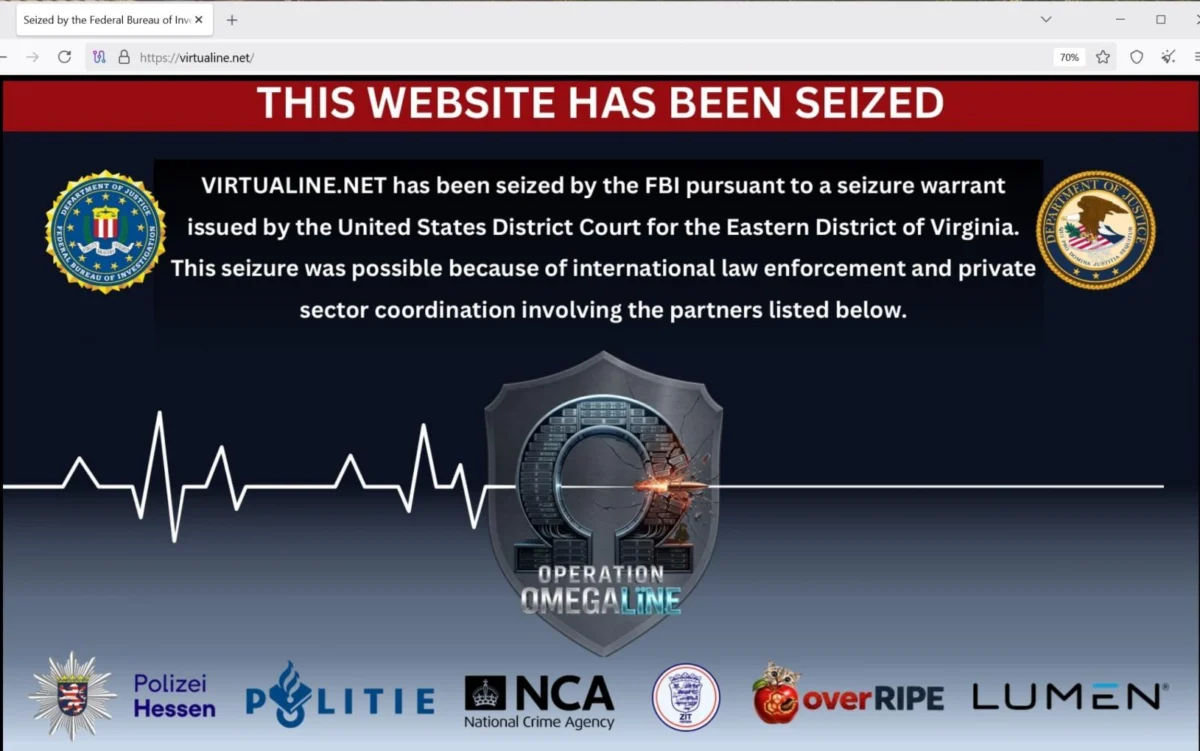
Law enforcement agencies spanning multiple continents have successfully dismantled the primary infrastructure of Virtualine, a prominent and elusive bulletproof hosting service long utilized by cybercrime syndicates, ransomware operators, and threat actors worldwide. Operating under a rotating array of aliases—including Secury, Massgod, Spamhouse, Lanedo, and Omegatech—Virtualine functioned as a digital safe haven for malicious actors, promising absolute immunity from legal complaints, subpoenas, and law enforcement takedown requests.
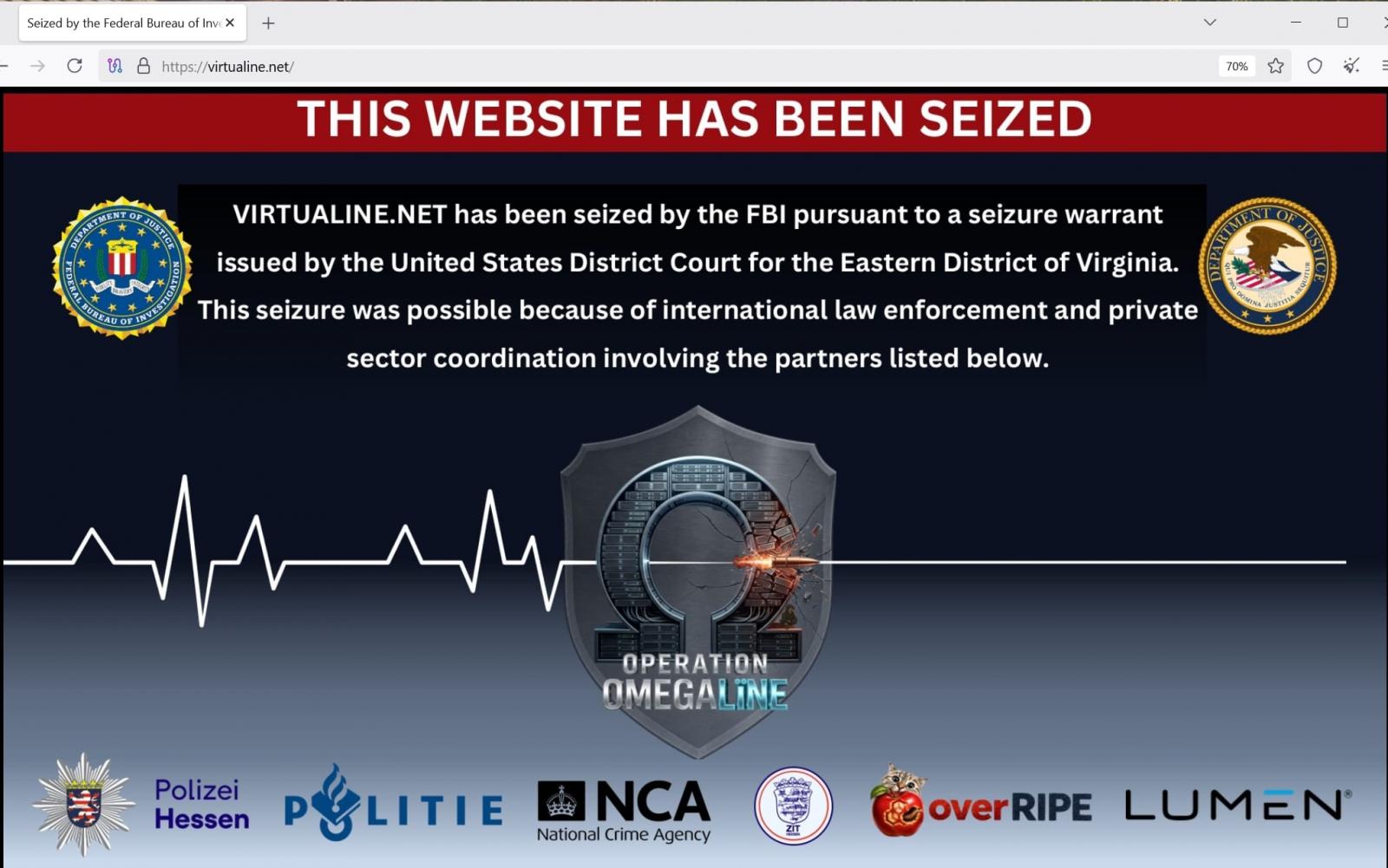
The coordinated operation, spearheaded by the United States Department of Justice (DOJ) alongside the Federal Bureau of Investigation (FBI), marked a significant blow to the global cybercrime economy. Investigators seized the service’s primary domain, virtualine.net, replacing it with a formal seizure banner alerting visitors to the law enforcement action. Simultaneously, international partners—including Germany’s Polizei Hessen, the Netherlands’ Politie Midden-Nederland, and the United Kingdom’s National Crime Agency (NCA), supported by private sector cybersecurity firms such as Silent Push, Lumen, and OverRIPE—executed synchronized raids and infrastructure takedowns.
According to statements released by the DOJ and European law enforcement authorities, Virtualine explicitly marketed its services to accommodate illegal and black-hat operations. These illicit activities ranged from large-scale phishing campaigns, spam deployment, and payment card fraud (carding) to aggressive network reconnaissance and port scanning. By offering anonymity and ignoring abuse notices, the hosting provider fostered an ecosystem where cybercriminals could operate with near-total impunity.

Chronology and Scale of the International Investigation
The dismantling of Virtualine is the culmination of a multi-year international investigation into the murky world of bulletproof hosting—a specialized sector of the web hosting industry where providers deliberately ignore or actively obstruct abuse complaints, law enforcement inquiries, and court orders. Dutch authorities confirmed that the platform had been actively facilitating sophisticated cybercrime operations since at least 2022. During this period, the service evolved from a minor fringe provider into a core infrastructure backbone for various transnational criminal enterprises, supporting botnets, infostealers, ransomware deployments, and illicit digital marketplaces.
The operation reached a critical turning point as intelligence-sharing between U.S. and European agencies intensified. Law enforcement tracked the digital footprint of Virtualine’s operations, mapping out its server clusters, financial transactions, and client networks. The operation culminated in late October 2026, when Dutch police executed physical raids in the province of Limburg, seizing dozens of physical servers and effectively forcing hundreds of virtual servers offline. Concurrently, blockchain analysts and cybersecurity researchers mapped the fallout, observing that Virtualine’s network prefixes experienced a sudden and drastic loss in routing visibility, rendering much of its infrastructure unreachable.
Politie Midden-Nederland confirmed that investigators successfully recovered vast troves of data from more than 3,000 Virtualine customers. As authorities comb through the seized digital evidence, follow-up actions, including potential arrests, asset seizures, and further legal proceedings against individual clients, are already underway across multiple jurisdictions.
Financial Trails and the Cybercrime Ecosystem
Beyond traditional web hosting, Virtualine operated an intricate financial laundering apparatus that allowed its criminal clientele to bypass standard banking compliance frameworks. Blockchain intelligence firm Chainalysis, which provided crucial analytical support to the investigation, revealed that Virtualine accepted direct Bitcoin payments via unhosted wallet addresses. This mechanism allowed threat actors to pay for hosting services without routing their funds through centralized, KYC-compliant (Know Your Customer) cryptocurrency exchanges. Once the funds were collected, Virtualine actively laundered the proceeds to obscure their illicit origins.
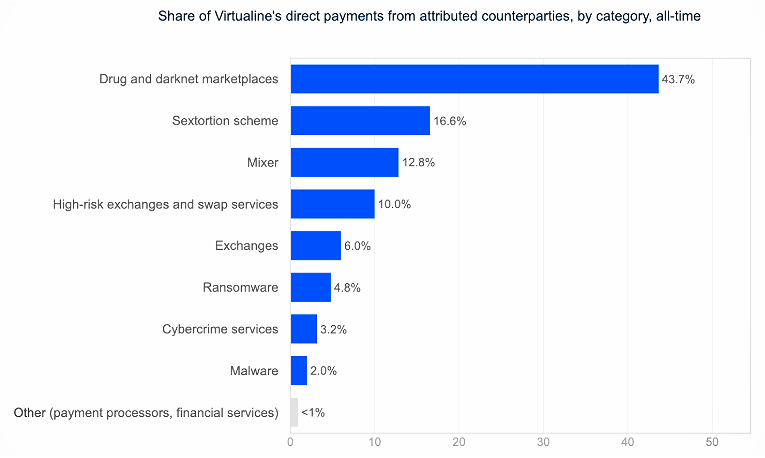
Detailed reports published by blockchain analytics leader TRM Labs shed further light on the composition of Virtualine’s revenue streams. According to TRM’s data, ransomware groups accounted for approximately 5% of Virtualine’s financial inflows. However, the provider’s largest revenue source was a major Russian-language drug marketplace, which generated roughly 44% of the platform’s incoming funds. Other significant financial contributors included a massive sextortion scheme and a prominent cryptocurrency mixing service designed to obfuscate transaction histories. Furthermore, blockchain analysis traced recurring transactions from the StealC infostealer infrastructure to Virtualine wallets throughout the year, demonstrating a continuous and stable financial relationship between the malware operators and the hosting provider.
The Content Controversy and Official Responses
While Virtualine’s marketing materials and operational policies generally accommodated a wide array of cybercriminal enterprises, the platform allegedly drew a nominal line regarding child exploitation material. However, this policy was severely undermined by investigators’ findings. Authorities charged that the operator knowingly hosted an online forum that promoted and distributed child abuse material, repeatedly ignoring warning notices issued by international law enforcement agencies, the National Center for Missing and Exploited Children (NCMEC), and a victim’s legal counsel.
Furthermore, investigators alleged that when legal pressure against the original forum escalated, Virtualine actively assisted the forum’s administrators in migrating and establishing a new website. The DOJ explicitly noted in its press release that Virtualine continued to host this successor website up until the time of the seizure, with the platform already having received abuse complaints regarding the presence of sexually explicit images of children.
In response to these grave allegations, the administrator of Virtualine published an open letter on a hastily established alternative domain, virtualine.org, which was subsequently captured and analyzed by cybersecurity firm Silent Push. In the open letter, the operator vehemently rejected the allegations regarding the hosting of child exploitation material. While conceding that claims concerning the service’s broader illegal activities and criminal customers "deserved a fair investigation," the operator maintained that they regarded the "sexual exploitation of children as a crime against humanity."
Broader Impact and Industry Implications
The takedown of Virtualine underscores a vital shift in cybersecurity enforcement strategies. Rather than merely targeting individual malware strains or phishing campaigns, law enforcement agencies are increasingly focusing on the foundational enablers of cybercrime—namely, bulletproof hosting providers and illicit financial networks. By cutting off the infrastructure that supports threat actor command-and-control servers, malware distribution nodes, and bulletproof websites, international coalitions aim to inflict systemic disruptions upon the cybercrime economy.
However, industry experts caution that while the seizure of Virtualine is a resounding tactical victory, the broader ecosystem of resilient, illicit infrastructure will likely adapt. Bulletproof hosting providers frequently rebrand, migrate to jurisdictions with less cooperative legal frameworks, or fragment their networks to evade detection.
Nevertheless, the recovery of data concerning over 3,000 customers provides law enforcement agencies with a massive intelligence windfall. The decrypted server logs, transactional histories, and communication records are expected to fuel subsequent waves of international investigations, unmasking anonymous threat actors who previously believed their operations were entirely shielded from accountability. As global cybersecurity frameworks continue to mature through public-private partnerships involving intelligence firms like Chainalysis, TRM Labs, and Silent Push, the operational margins for cybercriminals relying on safe-haven infrastructure continue to narrow significantly.
