

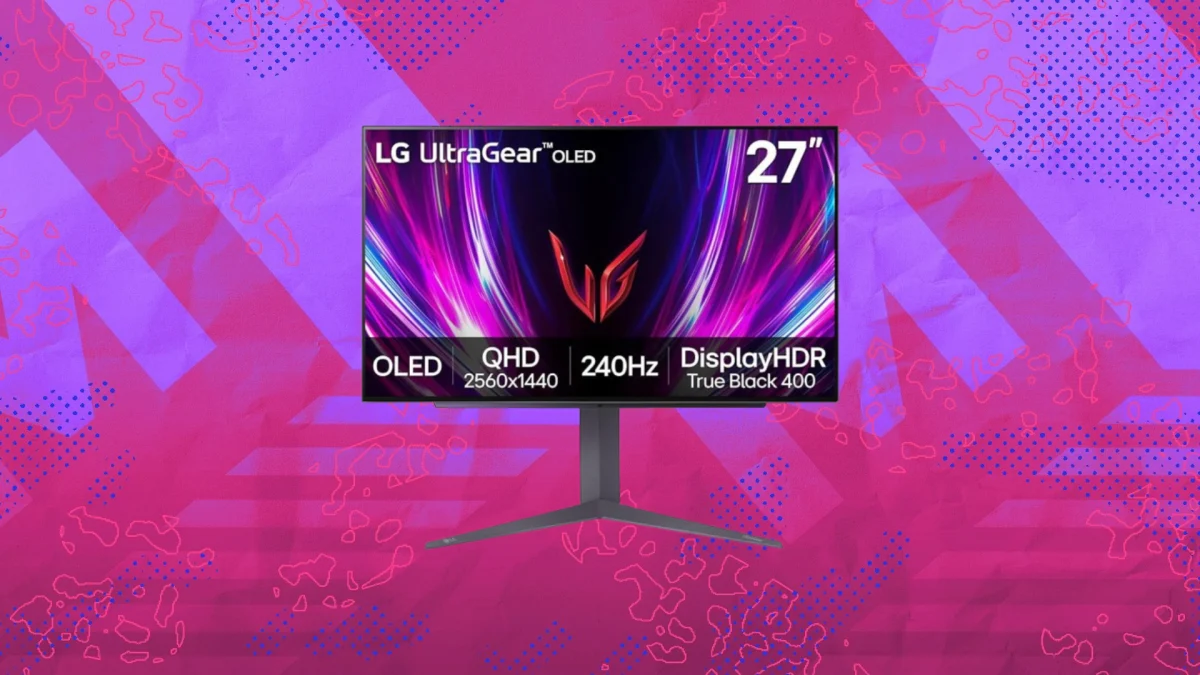
Amazon has introduced a major price reduction on one of the most sought-after high-end gaming displays on the market. The 27-inch LG UltraGear OLED QHD Gaming Monitor (Model 27GS93QE) is currently available for purchase at $499.99, marking a substantial $400 drop from its standard manufacturer’s suggested retail price (MSRP) of $899.99. This 44% discount matches the lowest recorded price ever tracked for this specific panel, presenting a notable opportunity for PC and console enthusiasts looking to upgrade their visual hardware without paying a premium.
As the holiday shopping season approaches and competitive hardware manufacturers roll out aggressive promotional campaigns, high-refresh-rate OLED monitors have gradually become more accessible to mainstream consumers. Historically, adopting organic light-emitting diode technology meant accepting a steep financial barrier to entry, often relegating top-tier contrast and response times to luxury television sets or professional-grade color-grading suites. However, recent manufacturing advancements and increased competition among display panel producers—such as LG Display, Samsung, and AUO—have driven down production costs, allowing retailers to pass significant savings on to end-users.
Core Technical Specifications and Performance Metrics
The primary appeal of the LG UltraGear 27GS93QE lies in its combination of speed and visual fidelity. Built around a QHD resolution panel (2560 x 1440), the monitor offers a sharp pixel density that balances high-definition clarity with manageable hardware performance demands. While 4K gaming monitors require extraordinarily powerful graphics processing units (GPUs) to maintain high frame rates, a 1440p resolution allows a broader range of mid-to-high-tier graphics cards to fully utilize the display’s capabilities.
Speed is arguably the monitor’s most defining characteristic. Engineered for competitive esports athletes and fast-paced action titles, the panel features a 240Hz refresh rate and a near-instantaneous 0.03-millisecond gray-to-gray (GtG) response time. These specifications effectively eliminate motion blur, ghosting, and trailing artifacts during intense gaming sessions, ensuring that moving objects remain crisp and legible.
To complement these raw performance numbers, the monitor incorporates both Nvidia G-Sync Compatibility and AMD FreeSync Premium Pro technologies. These adaptive synchronization protocols dynamically match the monitor’s refresh rate to the output frame rate of the connected PC or gaming console. By doing so, they prevent screen tearing—where the display shows fragments of multiple frames simultaneously—and reduce input lag, resulting in a smoother, more responsive gaming experience even during sudden frame rate drops.
OLED Advantages: Contrast, Color, and Clarity
Beyond raw speed, the inclusion of self-lit OLED pixels represents a significant generational leap over traditional IPS (In-Plane Switching) and VA (Vertical Alignment) LCD panels. Because each individual subpixel generates its own light, the monitor can turn pixels completely off to achieve absolute black levels. This capability yields an impressive 1.5 million-to-one contrast ratio, earning the display VESA DisplayHDR True Black 400 certification. In practice, this means dark environments in games and cinematic content display rich, deep shadows without the "blooming" or washed-out gray tones commonly associated with backlit LED screens.
Color accuracy is another critical metric for both gamers and digital content creators. The LG UltraGear 27GS93QE covers up to 98.5% of the DCI-P3 color gamut, delivering vibrant, lifelike hues that adhere closely to professional cinema standards. To ensure these colors remain visible in brightly lit rooms, LG has applied an anti-glare, low-reflection (AGLR) coating to the panel. This specialized surface treatment minimizes ambient light diffusion, preventing overhead lamps or window light from washing out the screen’s contrast.
Physical Design, Ergonomics, and Connectivity
Flexibility in physical design is often a deciding factor for consumers outfitting a dedicated desktop workspace. The monitor features an ultra-thin frame with minimal bezels, maximizing screen real estate while maintaining a sleek, modern aesthetic. The included ergonomic stand allows users to adjust the height, tilt the panel forward and backward, swivel it horizontally, and pivot the screen ninety degrees into a vertical orientation. This versatility accommodates various desk configurations, multi-monitor setups, and specialized tasks like coding or reading long documents.
Connectivity options are robust, catering to both high-end gaming personal computers and current-generation video game consoles. The monitor is equipped with HDMI 2.1 and DisplayPort 1.4 ports. The inclusion of HDMI 2.1 is particularly vital for owners of modern consoles such as the Sony PlayStation 5 and Microsoft Xbox Series X, as it provides the necessary bandwidth to support 1440p gaming at high refresh rates alongside variable refresh rate (VRR) support. Additionally, the monitor includes built-in software features and preset display modes optimized for specific genres, such as First-Person Shooter (FPS) and Real-Time Strategy (RTS) games, allowing users to quickly toggle settings tailored to their current activity.
Market Context and Historical Pricing Trends
The current $499.99 pricing structure at Amazon represents a watershed moment for the 27-inch OLED monitor category. When LG initially introduced this display and its structural peers to the global market, retail prices hovered strictly around the $900 mark. Price-tracking data from independent archives indicates that while intermittent holiday sales occasionally brought the monitor down to the mid-$600 range, a direct $400 markdown matching its absolute lowest recorded price point is unprecedented outside of major clearance events.
Industry analysts note that this aggressive pricing strategy reflects a broader trend within the display market. As consumer electronics demand normalizes following the post-pandemic boom, manufacturers are under increased pressure to move inventory quickly. Consequently, seasonal promotional windows—such as October pre-holiday sales, Black Friday, and Cyber Monday—are beginning earlier and offering deeper discounts than in previous years. For consumers who have monitored the evolution of display technology from afar, waiting for OLED prices to cross the psychological $500 threshold has finally paid off.
Implications for Consumers and the Competitive Landscape
The reduction of a premier 27-inch OLED gaming monitor to under $500 carries several implications for the broader display ecosystem. First, it places direct competitive pressure on traditional high-end IPS and Mini-LED monitors. For years, buyers looking for absolute peak performance had to choose between the color fidelity of IPS (compromised by poor contrast) or the brightness of Mini-LED (often accompanied by blooming artifacts). With OLED prices approaching parity with high-end LCD alternatives, the value proposition of older panel technologies diminishes significantly.
Second, the accessibility of 240Hz OLED panels at this price point accelerates the adoption of high-refresh-rate standards across mainstream consumer segments. Competitive gamers who previously relied on 1080p TN (Twisted Nematic) panels for maximum speed can now upgrade to high-resolution, high-contrast OLED displays without sacrificing response times or motion clarity.
Finally, the deal underscores the importance of utilizing price-tracking tools and monitoring major online retailers during transitional seasonal periods. While introductory MSRPs often deter casual buyers, patience and strategic timing allow consumers to acquire flagship-tier technology at mid-range prices.
As inventory levels fluctuate in response to high demand driven by the current discount, retail analysts suggest that interested buyers secure the display before stock depletion or price adjustments take effect. The 27-inch LG UltraGear OLED QHD Gaming Monitor remains available on Amazon at the discounted rate of $499.99, though availability is subject to change depending on regional supply chains and consumer uptake.
