

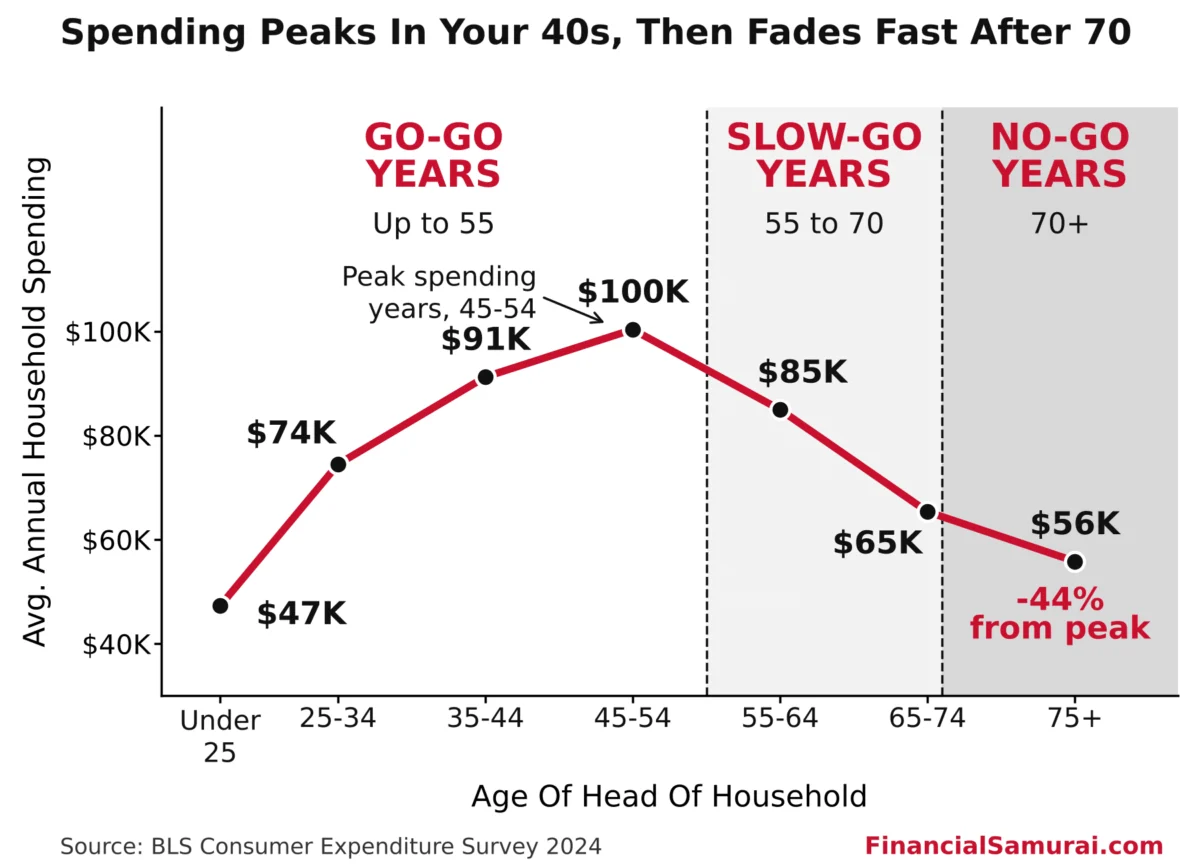
The pursuit of financial independence is frequently defined by the systematic accumulation of assets, yet a growing body of anecdotal and behavioral economic evidence suggests that the very discipline required to build wealth may become a psychological barrier to enjoying it. As populations in developed nations age, financial planners and behavioral psychologists are observing a distinct phenomenon: individuals who successfully navigate decades of frugal living often find themselves unable to pivot to a "decumulation" phase, even when their portfolios are robust enough to support significant lifestyle spending.
The Psychology of Compounded Frugality
Behavioral economists have long noted that financial habits are often deeply ingrained, functioning much like muscle memory. For many, the habit of saving—initially born out of necessity or long-term goal setting—evolves into a rigid psychological framework. By the time an individual reaches the traditional retirement age of 65, the instinct to preserve capital often outweighs the desire to utilize it for life experiences, travel, or leisure.
This trend is corroborated by data from organizations like the Employee Benefit Research Institute (EBRI), which has consistently found that many retirees maintain a significant portion of their assets well into their 80s and 90s. Rather than spending down their nest eggs, many seniors exhibit a "spend-thrift" bias, keeping their assets intact as a psychological buffer against the uncertainty of longevity risk and the rising costs of healthcare.
Chronology of the Decumulation Window
Financial planning experts often divide the post-career lifespan into three distinct phases, each requiring a different approach to capital management:
- The "Go-Go" Years (Ages 45–65): This is identified as the optimal window for intentional spending. During this period, individuals typically possess the highest combination of physical mobility, discretionary time, and financial resources. It is the period when investments in travel, hobbies, and family experiences yield the highest marginal utility.
- The "Slow-Go" Years (Ages 66–75): As physiological changes begin to limit physical activity, the nature of consumption shifts. While the desire for high-intensity travel or strenuous excursions may decline, the potential for spending on comfort, health services, and home modifications increases.
- The "No-Go" Years (Ages 76+): During this final stage, spending on discretionary items often drops precipitously. Research indicates that the utility of wealth at this stage is largely restricted to medical care, essential services, and estate preservation, as the interest in new experiences wanes.
The Impact of Behavioral Inertia
For many, the transition to retirement does not act as a "green light" for spending. A 2023 study on retirement spending patterns revealed that nearly 40% of retirees feel significant anxiety when making large discretionary purchases, regardless of their net worth. This "spending paralysis" is rooted in the fear of running out of money, a concern that persists even when actuarial projections and pension income suggest otherwise.
The inability to shift gears is frequently observed in intergenerational dynamics. Children of life-long savers often report that their parents decline offers of luxury travel, home improvements, or premium services, even when the children are willing to subsidize the costs. This phenomenon suggests that the barrier is not merely the cost, but the ingrained identity of being a "saver." When the identity of a frugal provider is stripped away by retirement, the psychological cost of spending—even on oneself—can feel like a failure of personal discipline.

Data and Market Implications
The broader implications of this trend extend to the financial services sector and the economy at large. As a massive demographic cohort enters the later stages of life, the expected "Great Wealth Transfer" is being delayed. Instead of liquidating assets to support a high-consumption lifestyle, many retirees are holding onto large real estate holdings and equity portfolios, which impacts market liquidity and changes the velocity of money.
Furthermore, the "safe withdrawal rate" (SWR) methodology, which traditionally dictated a 4% annual drawdown, is increasingly being challenged. With modern market performance, many retirees find that their portfolios are growing faster than their actual expenditures. This leads to an unintended accumulation of wealth that is eventually passed down as an inheritance rather than being converted into lifetime utility for the original owners.
Expert Perspectives on Mid-Life Adjustment
Financial advisors are increasingly incorporating behavioral coaching into their services to address this issue. The recommendation for clients reaching age 45 is to begin "intentional spending" models. This involves setting specific, pre-funded "fun budgets" that must be depleted annually, preventing the buildup of unspent capital that might otherwise sit idle.
"The objective is to match the timeline of the money with the timeline of the physical ability to enjoy it," notes a senior wealth strategist. "If you wait until 75 to start spending on experiences, you are effectively ignoring the reality of biological depreciation. The math may suggest you have enough money, but the biology suggests your time for deployment is shrinking."
Mitigating Risk through Structural Planning
To overcome the psychological hurdles of spending, experts suggest several structural approaches:
- Longevity Insurance: By utilizing annuities or long-term care insurance, individuals can offload the "risk of running out of money." This provides a guaranteed floor of income, which often gives retirees the peace of mind necessary to spend their investment portfolio more freely.
- The "Bucket" Strategy: Dividing assets into "necessity," "leisure," and "legacy" buckets can help. By pre-allocating a specific bucket for "joy-based spending," individuals can decouple that spending from their primary savings, reducing the guilt or anxiety associated with withdrawals.
- Estate Planning as Consumption: Reframing legacy planning—such as gifting assets to heirs while the donor is still alive—can act as a vehicle for enjoyment. Watching family members benefit from one’s wealth can provide a higher return on investment than keeping the funds in an inaccessible brokerage account.
Conclusion: The Cost of Waiting
The narrative surrounding retirement is often focused entirely on the accumulation phase, but the management of the "decumulation" phase is equally critical to life satisfaction. The evidence indicates that for many, the greatest risk is not that they will run out of money, but that they will fail to utilize it to enhance their quality of life while their health permits.
As the population continues to age, the dialogue around personal finance is likely to shift from "how to get rich" to "how to live well." Recognizing that frugality is a tool rather than a permanent identity is the first step in ensuring that the final decades of life are characterized by active enjoyment rather than passive hoarding. For the generation currently entering their late 40s and early 50s, the lesson is clear: the window of opportunity is finite, and the cost of waiting is a life of potential left on the table.
