

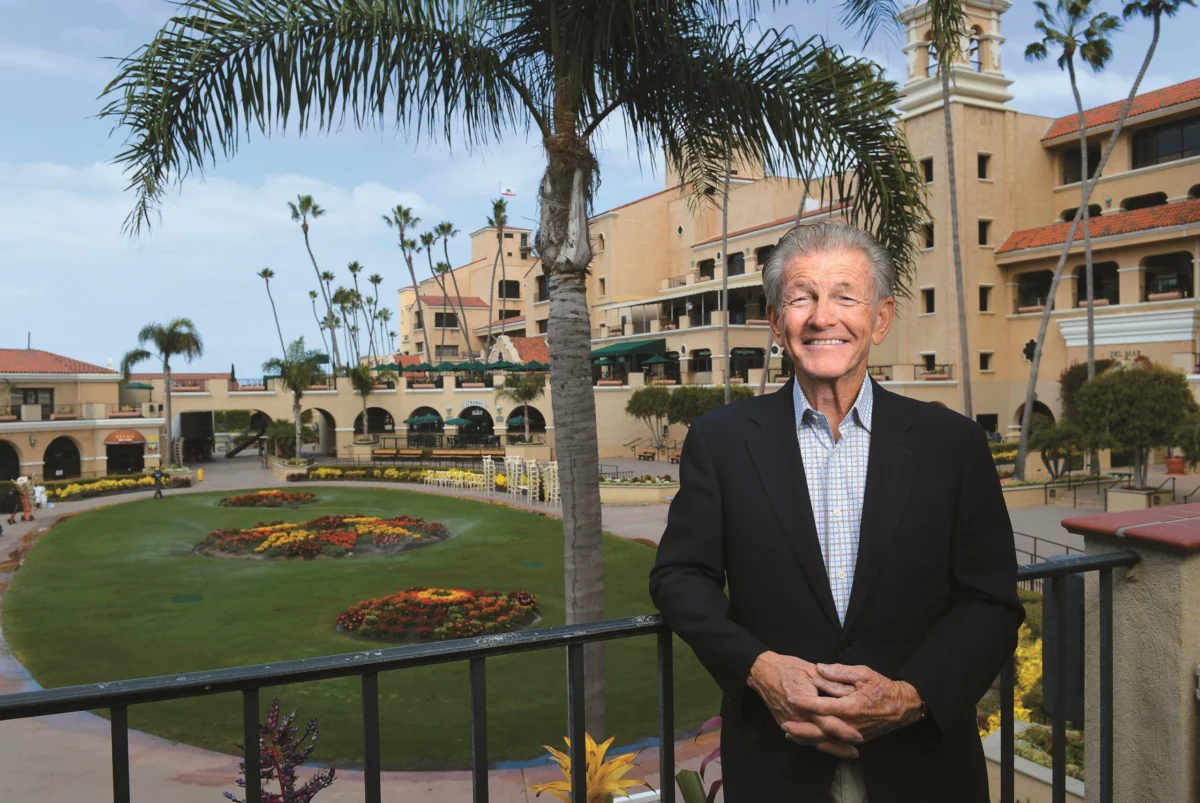
The Del Mar Thoroughbred Club (DMTC) announced on July 24 a significant leadership transition that marks the conclusion of one of the most influential tenures in American horse racing history. Joe Harper, the long-standing Chief Executive Officer who has been the face of the seaside oval for nearly half a century, will step down from his day-to-day responsibilities at the conclusion of the 2024 racing year. Harper, 83, will transition into the role of CEO Emeritus and continue to serve as a director on the DMTC board. To ensure a seamless succession, the board of directors has officially appointed Josh Rubinstein, the current president of Del Mar, to succeed Harper as CEO effective January 1, 2027.
The transition represents a carefully planned evolution for the historic venue, often referred to as the place "where the turf meets the surf." Under Harper’s guidance, Del Mar transformed from a regional summer destination into a global powerhouse of Thoroughbred racing. The decision to elevate Rubinstein, who has spent years working alongside Harper, signals the board’s commitment to institutional stability and the continuation of the track’s successful "lifestyle-plus-sport" marketing strategy.
The Architect of the Modern Del Mar Era
Joe Harper’s association with Del Mar began in 1977, but his roots in the industry and Southern California culture run deep. As the grandson of legendary filmmaker Cecil B. DeMille, Harper brought a sense of showmanship and cinematic flair to the racetrack that mirrored the glamour of its founding era in 1937 by Bing Crosby and Pat O’Brien. Before arriving at Del Mar, Harper served as the executive vice president of the Oak Tree Racing Association, which managed the prestigious autumn meets at Santa Anita Park.
When Harper took the helm as general manager in 1977, the racing industry was entering a period of significant change. He recognized early on that for Del Mar to survive and thrive, it needed to be more than just a gambling venue; it needed to be a premier social destination. Throughout the 1980s, Harper spearheaded initiatives that focused on the fan experience, hospitality, and high-stakes racing.
One of his most enduring legacies is the physical transformation of the facility. Between 1990 and 1992, Harper oversaw the massive $80 million demolition and reconstruction of the Del Mar grandstand. This project was a turning point for the association, replacing the aging structure with a modern, state-of-the-art facility that maintained the Spanish Colonial Revival architectural style that defined the track’s aesthetic.
In tandem with the physical upgrades, Harper introduced the Pacific Classic Stakes in 1991. The Grade 1 race, which offered a then-unheard-of $1 million purse, immediately elevated Del Mar’s status on the national racing calendar. The race famously became the site of one of the sport’s greatest upsets in 1996, when Dare and Go ended the 16-race winning streak of the legendary Cigar, an event that solidified Del Mar’s reputation for hosting world-class competition.
A Timeline of Leadership and Growth
The trajectory of Del Mar under Joe Harper and subsequently Josh Rubinstein is marked by several pivotal milestones that have shaped the current landscape of California racing:
- 1937: Del Mar Thoroughbred Club founded by Bing Crosby.
- 1977: Joe Harper joins DMTC as General Manager.
- 1986: Harper is elected to the DMTC Board of Directors.
- 1990–1992: Reconstruction of the grandstand and facility modernization.
- 1991: Inaugural running of the Pacific Classic (G1).
- 2017: Del Mar hosts the Breeders’ Cup World Championships for the first time, setting record-breaking wagering and attendance figures for the venue.
- 2018: Josh Rubinstein is named President of DMTC.
- 2021: Del Mar hosts its second Breeders’ Cup during a period of significant industry reform.
- 2024: Announcement of Harper’s transition to CEO Emeritus and Rubinstein’s future appointment as CEO.
- 2024–2025: Del Mar scheduled to host back-to-back Breeders’ Cup World Championships.
Elevating the Global Profile: The Breeders’ Cup Success
Perhaps the crowning achievement of the Harper era was the successful bid to host the Breeders’ Cup World Championships. For decades, the event was primarily held at larger venues like Santa Anita Park, Churchill Downs, or Belmont Park. Critics initially questioned whether the "boutique" nature of Del Mar could handle the logistical demands of horse racing’s international year-end championships.
Harper and his team, including Rubinstein, proved the skeptics wrong in 2017. The event was a resounding success, praised for its atmosphere, organization, and the quality of the racing surface. The economic impact on the San Diego region was substantial, with the 2017 event generating an estimated $96 million in economic activity. This success led to the event’s return in 2021 and the unprecedented decision by the Breeders’ Cup board to return to Del Mar for consecutive years in 2024 and 2025.
The ability to secure and successfully execute these international events cemented Del Mar’s reputation as a premier global venue. It also reflected Harper’s ability to build consensus among state and local officials, the business community, and international racing bodies.
Josh Rubinstein and the Future of Del Mar
The appointment of Josh Rubinstein as the future CEO is a move designed to maintain the momentum established over the last four decades. Rubinstein, who has served in various executive capacities before being named president in 2018, represents a younger generation of racing leadership that is deeply attuned to the modern challenges of the sport.
Under Rubinstein’s presidency, Del Mar has been a leader in addressing the critical issues of equine safety and welfare. Following a period of intense scrutiny on California racing in 2019, Del Mar implemented some of the most stringent safety protocols in the nation. These initiatives included enhanced veterinary oversight, stricter medication rules, and the creation of a specialized safety committee. These efforts have resulted in Del Mar consistently being ranked among the safest major racetracks in the United States.
Rubinstein has also been instrumental in the "Ship and Win" program, a strategic initiative designed to attract out-of-state horses to California. This program has been vital in maintaining field sizes—a key driver of wagering handle—at a time when the California horse population has faced downward pressure due to the closure of other venues like Hollywood Park and, more recently, Golden Gate Fields.
In his response to the appointment, Rubinstein emphasized the importance of the mentorship he received. "Joe has been an inspiration and a guiding light to me throughout my career," Rubinstein stated. "I am especially appreciative that he is staying on as CEO Emeritus and as a director where we can continue to benefit from his wisdom and leadership. I am honored to build upon the foundation Joe has created."
Industry Impact and Broader Implications
The leadership transition at Del Mar occurs at a crossroads for the California Thoroughbred industry. With the recent closure of Golden Gate Fields in Northern California, the state’s racing circuit has become increasingly concentrated in the south. Del Mar, along with Santa Anita Park and Los Alamitos, now carries the primary responsibility for sustaining the state’s multi-billion dollar racing and breeding ecosystem.
David Batchelder, chairman of the DMTC board, noted that the transition is a reinforcement of Del Mar’s leadership position. "Joe’s amazing ability to tackle the challenges associated with this business while fostering the respect and goodwill of the horsemen and women from around the globe… has been invaluable," Batchelder said. He added that naming Rubinstein as the successor ensures that the track will continue to play a leading role in the national racing landscape.
Beyond the racetrack, Harper’s influence has extended into various charitable and research-based organizations. His roles have included memberships in The Jockey Club, the Federation of California Racing Associations, and the Thoroughbred Racing Association. His commitment to equine health is evidenced by his chairmanship of the Advisory Board for the Center for Equine Health at the University of California, Davis, and his directorship at the Grayson-Jockey Club Research Foundation.
Analysis: A Strategy of Continuity
The decision to wait until 2027 for Rubinstein to officially assume the CEO title—while Harper moves to the Emeritus role at the end of 2024—suggests a deliberate, multi-year "handover" period. This strategy is likely intended to provide stability during the upcoming 2024 and 2025 Breeders’ Cup years, which require intense coordination with international partners and sponsors.
For the racing industry, this announcement is seen as a sign of institutional health. While other tracks across the country have struggled with management turnover or uncertain futures, Del Mar has maintained a remarkably consistent leadership core. This consistency has allowed the track to cultivate long-term sponsorships and a loyal fan base that spans generations.
As Joe Harper prepares to transition his role, he leaves behind a facility that is widely considered the gold standard for summer racing. "I am really proud to have been a part of the long and incredibly rich history of Del Mar," Harper said in his closing remarks. "This is a special place that transcends horse racing; it’s a unique mix of sport, lifestyle, and culture."
As the 2024 summer meet continues, the racing community will look to Harper’s final months as CEO as a celebration of a career that helped save California racing during turbulent times and positioned Del Mar as a shining example of what a modern racetrack can be. With Rubinstein set to take the reins, the transition ensures that the "Del Mar way"—a blend of high-quality sport and premium entertainment—will remain the guiding principle for years to come.
