

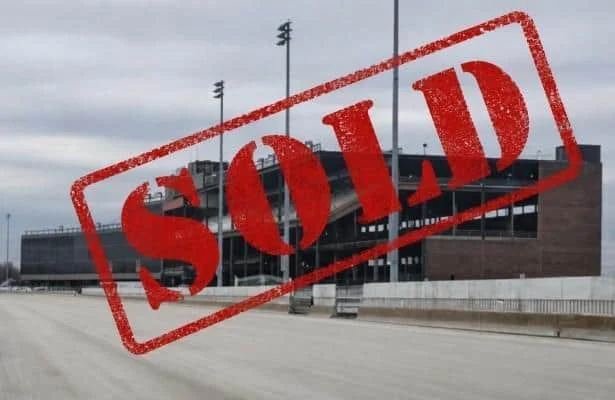
The landscape of Illinois sports and agriculture underwent a seismic shift on Friday morning as a Chicago federal bankruptcy court finalized the $90 million sale of Hawthorne Race Course. Judge Timothy Barnes approved the transaction, effectively ending over a century of racing at the historic Stickney, Illinois, site and signaling the end of an era for the Carey family’s stewardship of the facility. The buyer, Allimac 2023—a Delaware-based entity characterized as a "pop-up" company—was the sole bidder at a July auction, securing the 108-acre property as the track’s financial obligations became insurmountable.
The court’s decision carries immediate and profound consequences for the hundreds of people who live and work on the track’s backstretch. Judge Barnes set a strict deadline of August 31 for all occupants to vacate the premises. Eviction notices are expected to be served by next Saturday, leaving a community of approximately 500 residents—including stable workers and their families—and 450 horses with just over five weeks to find new accommodations and facilities.
The Terms of the Sale and Financial Distribution
The $90 million sale price, while substantial, represents only a fraction of the total debt accumulated by the historic racing venue. According to court filings and reports from BloodHorse, Hawthorne’s creditors are owed between $100 million and $500 million. The finalized sale order, which attorneys for Hawthorne, Allimac, and various creditors are currently refining for final judicial approval, outlines a complex hierarchy of payments.
A critical component of the proposed ruling involves a $1 million payout from the sale proceeds to the Illinois Thoroughbred Horsemen’s Association (ITHA). This sum, carved out from the Carey family’s portion of the sale, is intended to facilitate an orderly transition for the backstretch community. Additionally, $900,000 has been earmarked from settlements involving an architect and a construction firm, directed toward backside charities.
Chris Block, president of the ITHA and a veteran trainer, noted that these funds are vital for maintaining basic services during the final weeks of operation. The money will largely be used to cover the costs of electricity and water for the stable area through the end of August. "That’s going to help us not rush our horsemen out of here," Block stated. "They’re going to have a chance to train for another 30 days, and it’s also going to help our backstretch employees not get rushed out of here. They’ll have a better chance of trying to find accommodations outside of the racetrack."
A Community in Crisis: The Human and Equine Impact
Despite the financial bridge provided by the court, the atmosphere at Hawthorne remains somber. For many of the 500 people living on-site, the racetrack is not merely a place of employment but their primary residence. The looming August 31 deadline presents a logistical and humanitarian challenge, as affordable housing for large groups of agricultural workers is scarce in the Chicago metropolitan area.
David McCaffrey, executive director of the ITHA, highlighted the specialized nature of the workforce and the difficulty of their impending displacement. "Taking care of horses is sort of a labor of love, and for many of these people, it is the only thing they know how to do," McCaffrey said. "They’re faced with the reality of getting put out there in a world they’re not used to or moving out of state. I don’t think Illinois ever wanted that."
The 450 horses currently stabled at the track also require immediate relocation. Many trainers, including Block, have already begun making plans to move their operations to neighboring states. Block indicated he would be moving his stable to Turfway Park in Kentucky for the remainder of the summer, a move that underscores the ongoing "brain drain" of the Illinois racing industry to more stable markets in Kentucky, Indiana, and Ohio.
Unresolved Debts and the Role of the State
While the property sale addresses some liabilities, it leaves a significant financial gap regarding the horsemen’s earnings. Approximately $1.3 million in purse money remains owed to owners and trainers from races conducted during the summer meet. The ITHA and Hawthorne management had requested that the Illinois Department of Agriculture (IDOA) release funds from its purse reserve to cover these IOUs, but as of the court hearing, no such relief had been granted.
Lori Harlan, a spokesperson for the IDOA, issued a statement clarifying the department’s position. She noted that the IDOA has not yet executed a fiscal-year 2027 grant agreement with Hawthorne, meaning no funds are currently available for disbursement. "The Department is following its long-standing process for issuing horse-racing grant agreements and anticipates releasing fiscal-year ’27 agreements in the normal course," Harlan said. This bureaucratic delay adds another layer of financial stress to horsemen who are already grappling with relocation costs.
The Rise and Fall of Hawthorne: A Historical Timeline
Hawthorne Race Course was, until its final race card last Sunday, the oldest sporting venue in Illinois. Its history is a microcosm of the rise and eventual struggle of American horse racing.
- 1891: Hawthorne opens its doors, founded by Edward "Pop" Corrigan. It quickly becomes a staple of the Chicago sports scene.
- 1905–1922: The track survives various bans on bookmaking and gambling that swept through Illinois during the Progressive Era.
- 1970: A devastating fire destroys the grandstand, but the track is rebuilt, reflecting the resilience of the Carey family, who took ownership in the early 20th century.
- 2019: Illinois passes landmark gambling expansion legislation. Hawthorne is granted the right to become a "racino," allowing for slot machines and table games to subsidize racing purses.
- 2020–2023: Plans for a $400 million redevelopment begin. A portion of the eastern grandstand is demolished to make way for the casino. However, the project stalls due to financing difficulties and the economic impact of the COVID-19 pandemic.
- 2024: Faced with mounting debt and the failure to secure casino funding, the track enters bankruptcy proceedings, culminating in the July auction and Friday’s court-approved sale.
The failure of the "racino" project is widely cited as the death knell for the facility. Industry stakeholders had spent six years anticipating a revitalized industry bolstered by casino revenue. "We were promised a rebuild once a racino started at Hawthorne," Chris Block lamented. "A lot of us stayed right here with that hope and that promise and financially took a hit because of it. Ultimately we were… led down the road to believe that that was going to happen."
The Mystery of Allimac 2023 and the Future of the Land
The identity and intentions of the buyer, Allimac 2023, remain shrouded in mystery. Formed shortly before the auction, the company’s primary role appeared to be setting a floor for the sale price. During the bankruptcy proceedings, the buyer was not required to disclose its plans for the 108-acre site.
However, speculation within the industry and the local Stickney community suggests the land may be repurposed for a high-tech data center. The location’s proximity to Chicago and existing infrastructure make it an attractive site for such a development. Any change in use would require zoning approval from the Village of Stickney, at which point the developers would be forced to reveal their identity and project scope.
Tim Carey, the track’s president and general manager, expressed deep sadness over the sale but insisted that the Hawthorne brand would survive in some capacity. In a written statement, Carey said, "This does not yet mark the end of Hawthorne as a business. We will continue to host intertrack wagering at our network of betting bars, and we will absolutely explore every available option to once again host racing."
Broader Implications for Illinois Horse Racing
The closure of Hawthorne follows the 2021 sale of Arlington International Racecourse to the Chicago Bears, leaving Fairmount Park (now FanDuel Sportsbook & Horse Racing) in Collinsville as the only remaining major Thoroughbred track in the state. The loss of Hawthorne is particularly damaging because it served the massive Chicago market.
The collapse of the track highlights a growing crisis in Illinois’ agricultural and sporting sectors. Without a primary circuit in the northern part of the state, the ecosystem of breeders, trainers, veterinarians, and farm owners is at risk of total dissolution. The "betrayal" felt by horsemen, as described by Block, suggests a breakdown in the public-private partnership intended by the 2019 gambling act.
As the August 31 deadline approaches, the focus remains on the immediate welfare of the backstretch community. While the $90 million sale provides a legal resolution to a bankruptcy case, the human and cultural cost of losing Hawthorne Race Course will be felt for years to come. The "grim" and "frightened" mood reported at the track on Friday evening serves as a stark reminder that behind the multi-million dollar court orders are lives and legacies now adrift in an uncertain future.
