

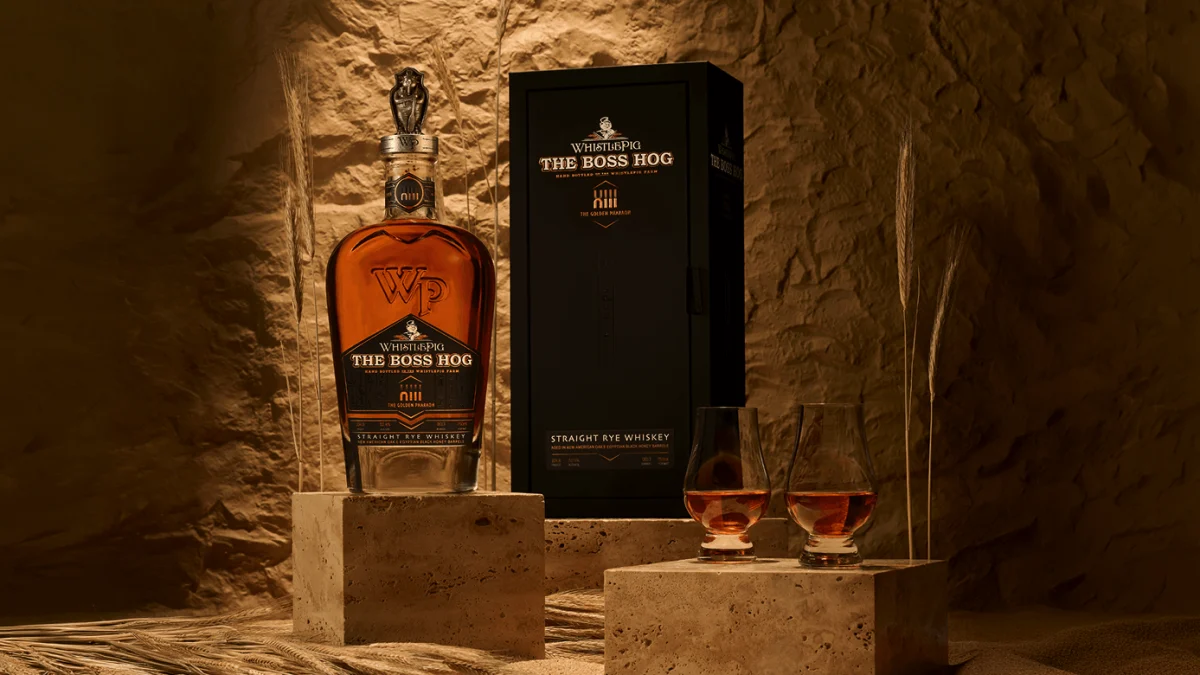
The spirits industry has long thrived on innovation, pushing the boundaries of traditional aging techniques through unconventional cask finishes. Yet, few distilleries pursue experimentation with the audacity of Vermont-based WhistlePig. Known for its farm-to-bottle ethos and boundary-pushing whiskey releases, the craft distiller has officially announced its latest annual offering: The Boss Hog XIII: The Golden Pharaoh. Marking the thirteenth iteration in the distillery’s acclaimed ultra-premium series, this year’s release draws direct inspiration from an unexpected historical source—a nearly 3,000-year-old culinary recipe discovered within an ancient Egyptian tomb.
While past editions of The Boss Hog have explored a wide array of secondary maturation techniques—ranging from ex-rum casks to experimental vessels seasoned with Mexican pulque-style beverages—The Golden Pharaoh ventures into uncharted archaeological territory. Head blender Meghan Ireland and her production team have engineered a cask-finishing process that translates ancient Egyptian ingredients into a modern, high-end rye whiskey. Priced at a suggested retail price of $600, the release blends historical intrigue with rigorous contemporary distillation practices, offering a complex sensory profile designed for discerning collectors and whiskey enthusiasts alike.
The Evolution of The Boss Hog Series
Since its inception, WhistlePig’s Boss Hog lineup has occupied a unique tier within the American craft whiskey landscape. Situated just outside Burlington, Vermont, the distillery established its reputation on sourcing, finishing, and aging high-percentage rye whiskeys. However, as the brand matured, it increasingly relied on bespoke finishing programs to differentiate its ultra-aged expressions from competitors in the luxury spirits market.
The series is characterized by annual single-barrel, barrel-proof releases that challenge conventional flavor expectations. Previous notable iterations include The Boss Hog XII: Feather & Flame, which gained industry-wide attention for utilizing casks seasoned with a custom Mexican-inspired beverage created on-site at the Vermont farm. Other releases have similarly pushed boundaries, occasionally testing the limits of what traditionalists expect from American rye.
Despite the avant-garde nature of these experiments, the distillery maintains a foundational commitment to the underlying integrity of the spirit. The objective of the blending team is not merely to mask the base rye with overpowering adjunct flavors, but rather to complement its inherent spice, structure, and aging characteristics. With The Golden Pharaoh, this balancing act is put to the test through a meticulously researched historical formulation.
From Tomb Inscription to Barrel: The Genesis of The Golden Pharaoh
The conceptual foundation of The Golden Pharaoh began with archival research conducted by Meghan Ireland. While examining historical texts and archaeological records, Ireland uncovered a 3,000-year-old tiger nut cake recipe inscribed directly onto the walls of an Egyptian tomb.
Tiger nuts, despite their botanical designation as edible tubers, possess a distinct flavor profile often compared to a hybrid of almonds and coconut. Alongside the tubers, the ancient recipe featured Egyptian black honey—a traditional term for a concentrated sugarcane molasses product deeply rooted in Middle Eastern agriculture. Recognizing an opportunity to translate these ancient flavors into a liquid medium capable of seasoning oak, the WhistlePig production team established an internal R&D protocol.
Translating a solid-food artifact into a barrel-seasoning agent required culinary ingenuity. The team ground raw tiger nuts and allowed them to steep within a base of mature rye whiskey, subsequently sweetening the mixture with authentic black honey to mimic the ancient sweetener. This bespoke liqueur was then used to prep ex-rye casks, filling the barrels and allowing the wood to absorb the complex sugars and nutty aromatics over a four-week period.

Once emptied, the casks were immediately refilled with aged straight rye whiskey for a secondary maturation period lasting eight weeks. This calculated timeframe ensured that the wood imparted the intended historical characteristics without overwhelming the foundational structural components of the aged spirit.
Sensory Profile and Technical Specifications
Because The Golden Pharaoh is released as a collection of single barrels, specific metrics vary slightly from bottle to bottle. Proof levels for this iteration range between 102.6 and 105.6, depending entirely on the individual cask dynamics. This moderate barrel-proof range positions the whiskey as approachable yet robust, intentionally crafted for neat consumption rather than dilution or cocktail formulation.
Tasting notes reveal a surprisingly refined integration of the secondary cask influences. Rather than presenting a cloying sweetness, the palate opens with prominent layers of brown sugar, dark molasses, raw honey, and toasted almond. These notes are immediately supported by a complex framework of traditional baking spices, including Ceylon cinnamon, freshly grated nutmeg, and clove.
Crucially, the secondary maturation does not obscure the core identity of the underlying rye whiskey. Mid-palate and finish characteristics retain the classic hallmarks of aged WhistlePig stock, allowing notes of Madagascar vanilla, rich maple syrup, sharp black pepper, and toasted American oak to shine through with clarity and persistence.
Industry critics have responded favorably to this measured approach. Early tastings have yielded high praise, culminating in a score of 95 points. Reviewers have highlighted the whiskey’s ability to maintain balance amidst such an unconventional production background, noting that the historic adjuncts elevate rather than detract from the base spirit.
Packaging, Collectibility, and Market Implications
In alignment with previous releases in the series, The Boss Hog XIII is positioned firmly within the luxury collector tier. The suggested retail price of $600 places it among the most expensive annual offerings in the American whiskey sector. To further distinguish the release, a limited allocation of bottles features a custom, highly ornate gold topper cast in the likeness of King Tutankhamun, amplifying its appeal to secondary-market investors and high-end spirit collectors.
Industry analysts note that ultra-premium, limited-edition releases like The Boss Hog serve a dual purpose for modern distilleries. Beyond generating direct revenue, these high-visibility products function as marketing engines that elevate the brand’s broader portfolio, driving visibility and consumer interest toward core age-statement offerings.
However, the steep price point and limited availability also spark ongoing discussions regarding the accessibility of luxury spirits. With secondary markets frequently driving prices well beyond the initial retail threshold, bottles featuring special packaging variants—such as the King Tut gold topper—are anticipated to command significant premiums among private collectors.
Despite the temptation to archive the bottle as a static display piece, industry experts and blenders alike advocate for consumption. Given the meticulous formulation and the unprecedented nature of the tiger-nut-and-black-honey cask finish, the liquid inside is engineered to be experienced, offering a tangible connection to both modern distilling innovation and ancient culinary history.
