

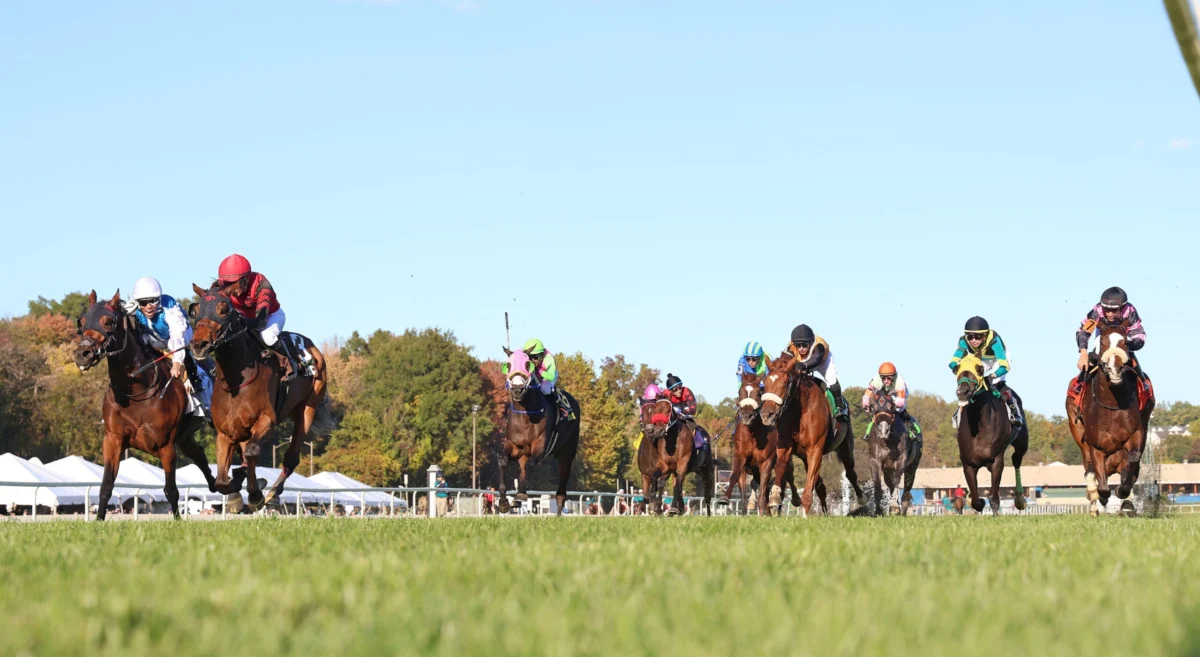
The landscape of Maryland Thoroughbred racing underwent a significant strategic shift on October 28 as the Maryland Jockey Club (MJC) and the Maryland Stadium Authority (MSA) formalized an operating agreement that fundamentally alters the trajectory of Laurel Park. While recent public discourse had largely characterized Laurel’s future as a secondary, auxiliary training facility to support the state’s primary hub at Pimlico Race Course, the newly signed compact reveals a more nuanced vision. Under the terms of this agreement, Laurel Park is slated to retain its status as an active venue for live competition, specifically designed to host high-quality, boutique turf racing meets that will complement the broader Maryland racing calendar.
A Strategic Pivot: From Consolidation to Flexibility
The governing vision for Maryland racing, often referred to as the "Pimlico Plus" plan, was initially formulated by the Maryland Thoroughbred Racetrack Operating Authority (MTROA). The primary objective of this plan was to modernize Pimlico, the historic home of the Preakness Stakes, into a state-of-the-art facility capable of sustaining the industry. However, the inherent geographic limitations of the Pimlico site—which lacks the expansive acreage required to stable the total population of horses necessary for a year-round racing circuit—necessitated the development of a dedicated training center.
Laurel Park’s emergence as the selected site for this training center was a decision born of necessity rather than original design. Following the collapse of the proposal to utilize Shamrock Farm in Woodbine—a project deemed financially prohibitive and logistically complex—the MSA pivoted toward the existing infrastructure at Laurel. The October 28 agreement solidifies this transition but adds a layer of operational flexibility: the authority to conduct up to 12 days of live racing annually, or 10% of the state’s total live calendar, whichever is greater.
Chronology of the Maryland Racing Transition
The road to the current agreement has been marked by significant volatility and high-stakes planning:
- Late 2023: The MTROA identifies the need for a long-term strategy for Maryland racing, focusing on the revitalization of Pimlico.
- Early 2024: The Shamrock Farm initiative, intended to serve as the primary training center, faces mounting opposition regarding cost and development feasibility.
- Mid-2024: The focus shifts to the acquisition and repurposing of Laurel Park as the primary training hub.
- October 28, 2024: The Maryland Jockey Club and the Maryland Stadium Authority sign the formal operating agreement, officially establishing Laurel’s dual role.
- Future Outlook: The timeline for the transition involves phased construction at both Pimlico and the backstretch facilities at Laurel.
The Technical Case for Laurel’s Turf Course
The decision to retain Laurel as a racing venue is driven largely by the superior specifications of its turf infrastructure. As MJC president Bill Knauf highlighted, the physical geometry of the Laurel turf course provides a strategic advantage that the more confined Pimlico track cannot replicate. Laurel boasts a turf width of 142 feet, compared to the 70-foot width at Pimlico.
This disparity is critical for track management. The added width at Laurel allows for the use of temporary railings to create multiple turf course configurations, effectively preserving the integrity of the grass and allowing for a higher volume of races without degrading the surface. At Pimlico, by contrast, the lack of width forces all daily grass races onto the same track, limiting the ability to rotate lanes. By shifting specific segments of the racing calendar to Laurel, the MJC aims to provide the Pimlico turf course with the "breather" necessary to maintain optimal condition for the championship-level events that define the Maryland season.
Economic Realities and Infrastructure Challenges
While the news of continued racing at Laurel has been met with optimism by industry stakeholders, the agreement acknowledges stark physical realities regarding the facility’s condition. The contract includes an explicit "as-is" clause, acknowledging that the structures, backstretch housing, and general building systems are currently substandard.
A previous comprehensive government study recommended that almost all existing structures on the Laurel grounds—with the exception of the paddock—should be demolished. However, the MSA budget is strictly constrained, with the majority of available capital earmarked for the essential conversion of the property into a training facility. This leaves little room for the cosmetic or structural upgrades required for a top-tier customer experience.
"There’s only going to be a certain amount of money that can be spent at Laurel, and the backstretch is certainly the focus," Knauf noted. The prioritization of workforce housing and stable area improvements means that spectators should expect a minimalist environment when the facility reopens for its boutique racing meets. The focus remains squarely on the horse and the turf, rather than a return to the full-scale grandstand operations of the past.
Implications for the Maryland Racing Ecosystem
The inclusion of a "force majeure" provision in the agreement provides a critical safety net for the industry. Should Pimlico be rendered unavailable for scheduled racing due to unforeseen circumstances—such as extreme weather events, emergencies, or other causes—the MJC has the authority to shift operations to Laurel upon notification to the MSA. This clause ensures that the state’s racing calendar remains resilient against the volatility of aging infrastructure and environmental factors.
From an economic perspective, the strategy represents a pragmatic compromise. By leveraging Laurel’s existing turf capacity, the industry maintains a connection to the D.C.-area racing audience while focusing the bulk of its capital expenditures on the modernization of Pimlico. The "cool race meet" envisioned by the MJC is expected to manifest as a fall event, serving as a tactical extension of the primary Pimlico season.
Stakeholder Perspectives and Future Direction
For horsemen and fans, the agreement provides much-needed clarity. The collaborative tone between the MJC and the MSA suggests a unified front in navigating the complexities of the transition. By moving away from the failed Shamrock Farm model and embracing the potential of Laurel, the industry has demonstrated a capacity for internal course correction.
As the reconstruction of Pimlico gains visible momentum, the role of Laurel as both a training center and a boutique racing venue appears to be a stable component of the state’s long-term plan. The success of this dual-track strategy will ultimately depend on the effective management of limited resources and the ability to maintain the Laurel backstretch to a standard that supports the equine population.
For now, the signing of the agreement marks the end of a period of uncertainty and the beginning of a construction and planning phase that will redefine the sport in Maryland. With a clear path forward, the Maryland Jockey Club is positioned to balance the historical prestige of Pimlico with the practical utility of the Laurel Park facility, ensuring that the Mid-Atlantic region remains a competitive hub for Thoroughbred racing in the years to come.
