

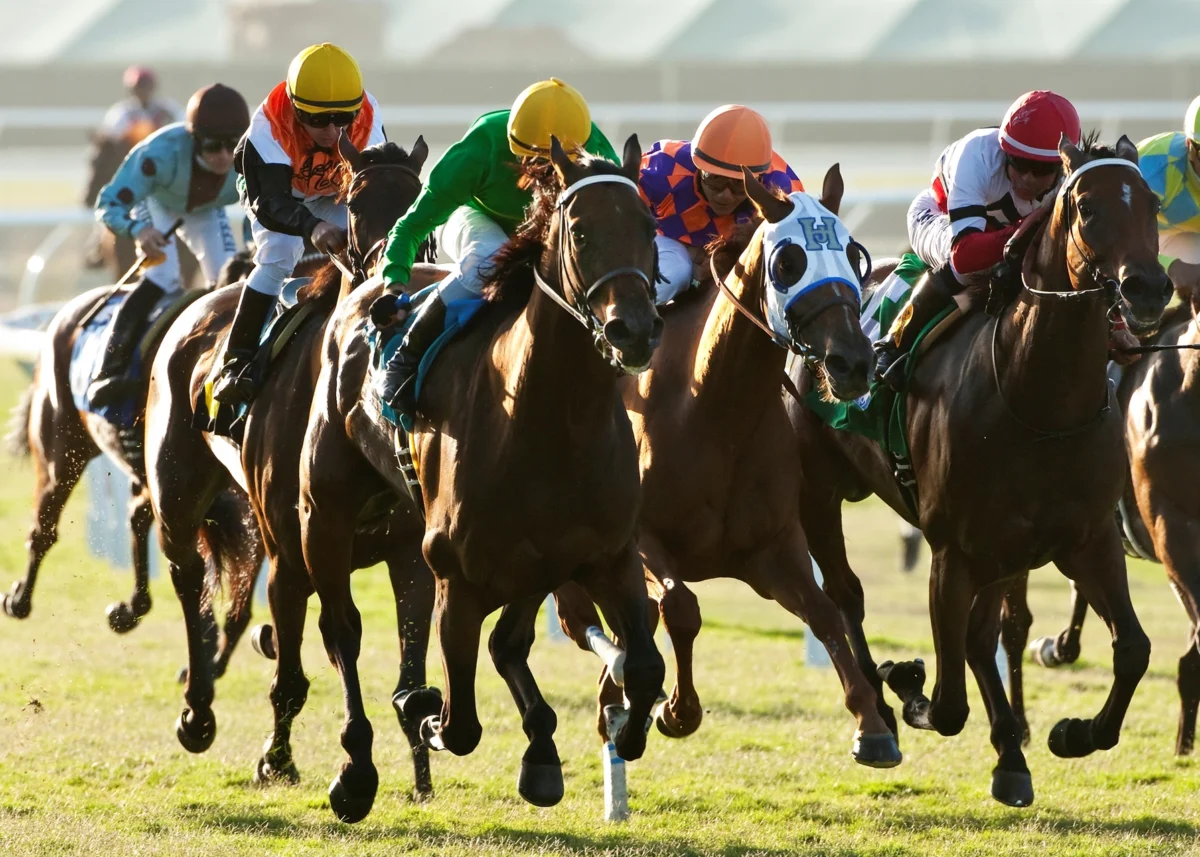
As the coastal fog lifts over the Pacific, the Del Mar Thoroughbred Club prepares to launch its highly anticipated Bing Crosby Season, with the $100,000 Let It Ride Stakes serving as the centerpiece for the opening day card. Borrowing its name from the iconic 1989 cult classic film starring Richard Dreyfuss, the stakes race captures the gambling spirit synonymous with the track’s storied history. For racing enthusiasts, the event is more than a mere sprint on the turf; it is a calculated homage to the track’s founder, Bing Crosby, whose enduring connection to Hollywood continues to define the seaside oval’s atmosphere.
The Let It Ride Stakes, a one-mile turf event restricted to 3-year-olds, features a competitive field of ten entrants. The assembly of talent reflects the diversity of the current sophomore crop, ranging from international imports to battle-tested veterans of the grueling Kentucky Derby trail.
A Diverse Field and Strategic Maneuvers
The narrative of this year’s Let It Ride centers on the tactical decisions made by trainers attempting to navigate a competitive fall circuit. Among the most intriguing entries is Green Carrera, a filly representing the barn of Leonard Powell. Having made her U.S. debut in the Del Mar Oaks, Green Carrera is moving away from filly-only competition to challenge the colts.
"It was a very good run in the Oaks," Powell noted, reflecting on the filly’s fourth-place finish. "She was a bit slow out of the gate, which is not unusual for her. The pace was not as strong as she would have liked, but she finished really well. The last quarter was faster than my other horse."
Powell’s decision to transition Green Carrera to the Let It Ride is a calculated risk. By choosing to face the boys in this age-restricted stakes rather than limiting the filly to female-only allowance races, the connections are clearly aiming to test her ceiling. Previously under the tutelage of Joseph O’Brien, son of the legendary Aidan O’Brien, the filly has shown a rapid maturation that suggests she is ready for a more demanding test of endurance and speed.
Conversely, the morning line favorite, Jordi Bear, brings a pedigree of European quality to the race. Trained by Philip D’Amato, the Irish-bred colt has been knocking on the door of a breakthrough victory throughout his U.S. campaign. With two second-place finishes in allowance company and a third-place showing in the Grade 2 Del Mar Derby in August, Jordi Bear represents the consistency that bettors often favor in turf mile events.
The Pavlovian Paradox
Perhaps the most compelling story in the starting gate is that of Pavlovian. Owned and trained by the team of Doug O’Neill, the son of Pavel has endured a rollercoaster season that included a victory in the Sunland Derby and a near-miss in the Grade 2 Louisiana Derby. His performance in the latter was particularly noteworthy, as he finished ahead of the eventual Kentucky Derby winner, Golden Tempo.
However, the road to the Kentucky Derby proved difficult for the colt. After a disappointing 18th-place finish in the Run for the Roses, Pavlovian struggled to regain his form, suffering through a series of lackluster finishes in the Matt Winn Stakes, the Real Good Deal Stakes, and the Del Mar Derby. His misfortune culminated in the Oklahoma Derby, where he famously threw his rider at the start.
"He’s a fighter," said Leandro Mora, assistant trainer to O’Neill. "He’s just his worst enemy sometimes. He trips or he looks the other way when the gates open. But he should be tough."
The experiment of moving Pavlovian to the turf for the second time is a gamble on his latent potential. While his sire, Pavel, never competed on grass, Mora is optimistic that the bloodline’s versatility will manifest on the Del Mar turf. Much like American Pharoah, who produced a surprising number of turf-capable progeny despite his own dirt-centric career, the O’Neill barn believes Pavlovian possesses the underlying talent to overcome his erratic behavior.
Jonathan Thomas and the Del Mar Connection
Beyond the individual entrants, the opening of the Bing Crosby Season marks the return of trainer Jonathan Thomas to the Del Mar stables. Thomas has established a unique legacy at the track over the past two years, marked by a series of high-profile victories that have cemented his status as a master of the fall meet.
Thomas’s return is particularly significant given his absence during the summer season. The trainer clarifies that his lack of presence in the summer was purely a matter of logistics rather than a change in strategy. "It was just numeric," Thomas explained. "The number of horses we had. This 25 that we have now is our entire string. It’s just hard splitting up a smaller size barn."
By bringing his entire operation to the seaside oval, Thomas is signaling a commitment to the track that has been the site of his greatest triumphs, including back-to-back victories in the Grade 3 Red Carpet and the Grade 2 Hollywood Turf Cup. His success is built on an "organic" training philosophy—waiting for horses to reach their peak form cycle before running them, rather than forcing them into a rigid schedule.
Statistical Context and Future Implications
The Let It Ride Stakes is not merely an isolated event but a critical component of a larger, evolving racing calendar. With 88 horses entered across the nine-race program for Saturday, the robust entry numbers suggest that the Del Mar Fall Meet is maintaining strong momentum despite the retirement of high-profile runners like Stronghold.
Stronghold, a son of Ghostzapper, leaves behind a legacy that includes a memorable win in the 2024 Grade 1 Santa Anita Derby and a pivotal role in Philip D’Amato’s career as a trainer of Kentucky Derby participants. His retirement marks the end of a chapter for many of the owners involved in the fall circuit, forcing them to look toward emerging talent like the entrants in the Let It Ride to fill the void.
For the racing industry, the performance of horses like Ocean Bear and Deucari on Friday will provide valuable data for handicappers and bloodstock analysts alike. Ocean Bear, the winner of last year’s Golden State Juvenile Stakes, is looking to regain his 2-year-old form, while Deucari represents the upward trajectory of the Richard Baltas barn. The move to two turns for Deucari will be a litmus test for his ability to handle the distance demands of the Del Mar turf, which is notoriously challenging for younger, inexperienced horses.
The Competitive Landscape
As post time approaches for Race 6, the atmosphere at Del Mar reflects the intersection of tradition and transition. The field is deep, and the parity among the entrants suggests that the outcome will hinge on trip, pace, and the ability of the younger horses to adapt to the specific nuances of the turf course.
The following table summarizes the field for the Let It Ride Stakes:
| Post | Horse | Jockey | Trainer | M/L |
|---|---|---|---|---|
| 1 | Tailgunner Joe | Jamie P. Spencer | Jonathan Thomas | 12/1 |
| 2 | Jordi Bear (IRE) | Joel Rosario | Philip D’Amato | 3/1 |
| 3 | Tap the Gin | Kazushi Kimura | Mark Glatt | 8/1 |
| 4 | Acknowledgemeplz | Emisael Jaramillo | Doug F. O’Neill | 6/1 |
| 5 | Ocean Bear | Mike E. Smith | George Papaprodromou | 12/1 |
| 6 | Pavlovian | Juan J. Hernandez | Doug F. O’Neill | 12/1 |
| 7 | Matt At Five | Hector Isaac Berrios | Peter Miller | 6/1 |
| 8 | Green Carrera (GB) | Umberto Rispoli | Leonard Powell | 7/2 |
| 9 | Deucari | Drayden Van Dyke | Richard Baltas | 6/1 |
| 10 | Wild West Coast | Armando Ayuso | Neil D. Drysdale | 20/1 |
Looking Toward the Closing Day
The implications of Friday’s results will ripple through the remaining weeks of the meet, particularly as trainers evaluate their horses for major races like the Cecil B. DeMille and the Matriarch. For trainers like Jonathan Thomas, the goal is to close the year on a high note, leveraging the momentum of a successful summer to capture elusive victories in the season’s closing weeks.
"We always want to bring the best of what we have and put our best foot forward," Thomas remarked. "Hopefully we can get lucky a little bit again."
As the starting gates open at 3:00 p.m. for the Let It Ride, the spectators at Del Mar will witness the culmination of months of preparation. In a sport where outcomes are rarely guaranteed, the event serves as a reminder of the enduring allure of the track—where, much like in the film that inspired the race, every runner and every bettor is, in their own way, letting it ride. The race remains a fundamental test for the 3-year-olds of the 2026 season, bridging the gap between their developmental years and the expectations of their future careers in the handicapping spotlight.
