

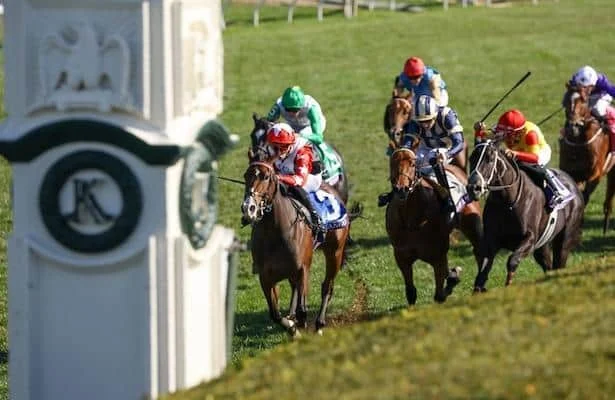
Jockey Paco Lopez has been handed a three-day suspension by Kentucky horse racing stewards following an exhaustive review of a controversial riding incident during the Breeders’ Cup World Championships. The penalty, which stems from a racing infraction in the prestigious Juvenile Turf Sprint, underscores the heightened regulatory scrutiny that defines North America’s premier two-day racing event. According to industry reports first detailed by the Paulick Report, Lopez will be forced to sit out three consecutive racing cards—specifically Wednesday, Thursday, and Friday—effectively sidelining him during a crucial stretch of the autumn racing calendar.
The disciplinary action is the direct result of stewards determining that Lopez exhibited careless riding while navigating the fast-paced, 5 1/2-furlong turf dash. The stakes at the Breeders’ Cup are exceptionally high, with millions of dollars in purses and lasting stallion and broodmare value on the line, creating a competitive environment where fractions of a second and narrow margins dictate the difference between glory and disappointment. In this high-pressure context, the stewards’ decision to penalize a prominent rider highlights the unwavering enforcement of racing protocols designed to protect both human and equine athletes.
The Incident: Unraveling the Juvenile Turf Sprint Controversy
The focal point of the suspension occurred during the Breeders’ Cup Juvenile Turf Sprint, an explosive sprint race restricted to two-year-olds held over the meticulously manicured turf course. Lopez was enlisted to ride Harper’s Corner, a talented two-year-old filly conditioned by trainer Cathal Lynch. Breaking from the starting gates with sharp early foot, Harper’s Corner quickly established a prominent position, tracking the early leaders as the field rushed down the backstretch.
However, the dynamics of the race shifted dramatically near the three-eighths pole. According to the official Equibase race chart, Harper’s Corner drifted or shifted paths while racing in second place, creating a chain reaction that significantly impeded trailing and adjacent runners. Specifically, the rider of the rival contender Force Noir lodged a formal objection, claiming widespread interference that altered the outward flow of the race and compromised multiple horses’ momentum as the field prepared to round the far turn for home.
As the race concluded, racing fans and handicappers witnessed a thrilling finish on the track. Libertango, sent off as the post-time betting favorite, swept past the competition to secure victory by 1 1/4 lengths, while the longshot contender Hell of A Spin rallied gamely to secure second place at odds of 50-1. Initially, Harper’s Corner crossed the finish line in third place, beaten by a mere head for the runner-up spot, seemingly capping off a commendable performance on racing’s grandest global stage.
Yet, the celebrations in the Harper’s Corner camp were short-lived. The stewards immediately illuminated the inquiry sign, launching a review of the stretch run and the earlier incident near the three-eighths pole. Following a thorough video replay review and consultations with the affected riders, the stewards determined that the interference caused by Lopez and Harper’s Corner was severe enough to warrant a drastic change in the race’s official order of finish. In accordance with racing regulations, Harper’s Corner was disqualified from her hard-fought third-place finish and demoted to eighth, a harsh penalty that reshaped the race’s superfecta and minor award payouts.
Chronology of Events and Stewards’ Ruling
The timeline surrounding the incident illustrates the swift and rigorous adjudication process typical of modern championship racing.
- Pre-Race Preparations: Paco Lopez receives the mount on the Cathal Lynch-trained Harper’s Corner for the Breeders’ Cup Juvenile Turf Sprint, an international showcase highlighting the world’s best juvenile turf sprinters.
- The Start and Early Running: The field breaks cleanly, and Lopez guides Harper’s Corner into an advantageous stalking position near the front of the compact, speed-laden field.
- The Infraction (Approx. Three-Eighths Pole): While racing in second position, Harper’s Corner causes significant interference to rivals, prompting immediate concern from racing officials and subsequent complaints from opposing jockeys.
- The Finish: Libertango claims victory, Hell of A Spin finishes second, and Harper’s Corner crosses the wire in third place, triggering a photo finish review and an official stewards’ inquiry.
- The Disqualification: After reviewing multiple camera angles and listening to jockey testimonies, the Kentucky racing stewards officially disqualify Harper’s Corner, placing her eighth.
- The Disciplinary Hearing: Following the conclusion of the Breeders’ Cup weekend, the stewards review the totality of Lopez’s riding actions and hand down a three-day suspension for careless riding, spanning Wednesday, Thursday, and Friday.
This chronological sequence demonstrates how a momentary lapse in navigation during a sub-minute race can trigger long-lasting professional consequences for a jockey. The stewards’ mandate is clear: maintain a safe racing environment and penalize actions that endanger the field, regardless of the magnitude of the racing card.
Supporting Data and Racing Statistics
To fully understand the weight of Lopez’s suspension, one must examine the statistical landscape of championship-level American horse racing. The Breeders’ Cup Juvenile Turf Sprint carries immense prestige, and jockeys who secure mounts in these races are typically among the elite earners in the sport.
Paco Lopez is no stranger to the winner’s circle or the pressures of high-stakes competition. A perennial leading rider on the competitive Mid-Atlantic and Florida circuits—including regular dominant stints at Monmouth Park and Gulfstream Park—Lopez has built a reputation as an aggressive, tactically brilliant, and fearless pilot. Known across the industry by his nickname, "Hot Rod Paco," he commands a loyal following among trainers and owners who value his ability to squeeze every ounce of effort out of a horse.
However, aggressive riding styles occasionally invite scrutiny from racing officials. The fine line between aggressive competition and careless riding is heavily policed by state racing commissions, particularly in Kentucky, where regulatory oversight is among the strictest in the nation. Statistics show that stewards across North American tracks have incrementally increased the enforcement of interference rules over the past decade, aiming to reduce multi-horse incidents and prioritize equine and jockey safety.
A three-day suspension, while modest compared to suspensions handed down for severe animal welfare infractions or dangerous intentional fouls, still carries a significant financial and professional impact for a top-tier jockey. Missing three consecutive racing days means forfeiting potential mount fees, missing lucrative graded stakes opportunities, and temporarily halting momentum during a competitive autumn meet where standings are fiercely contested.
Industry Implications and Broader Analysis
The ruling against Lopez serves as a microcosm of broader trends within the modern horse racing industry. In recent years, racing authorities, track operators, and stakeholder organizations have united under various integrity and safety umbrellas—most notably the Horseracing Integrity and Safety Authority (HISA)—to standardize rules, protect participants, and enhance public trust in the sport.
When high-profile infractions occur on international television broadcasts during events as heavily watched as the Breeders’ Cup, the response from stewards is heavily scrutinized by both hardcore handicappers and casual sports fans. Swiftly disqualifying a horse that commits interference and penalizing the offending rider demonstrates that no participant is above the rules, even on the sport’s biggest weekend.
Furthermore, the incident sheds light on the intricacies of turf sprint racing. With fields frequently exceeding ten or twelve horses sprinting at maximum velocity over a tight configuration, the margin for error is virtually nonexistent. Horses shift paths in a fraction of a second, and jockeys must make split-second decisions that balance the competitive drive to win with the absolute necessity of maintaining a straight, safe course. When those calculations fail, the regulatory machinery swings into action.
For Cathal Lynch and the connections of Harper’s Corner, the weekend ended with a mixture of pride in the filly’s raw athletic ability and frustration over the lost placing. Despite the demotion, the two-year-old filly proved that she possesses the talent to compete against elite international company, setting the stage for a promising three-year-old campaign once she returns to the track next season.
Ultimately, Paco Lopez will serve his three-day mandated sit-out, resume his regular riding schedule, and undoubtedly look to put the incident behind him. Yet, the ruling remains a stark reminder of the delicate balance governing professional horse racing—where glory, regulation, safety, and competition intersect on the razor’s edge of a racetrack.
