

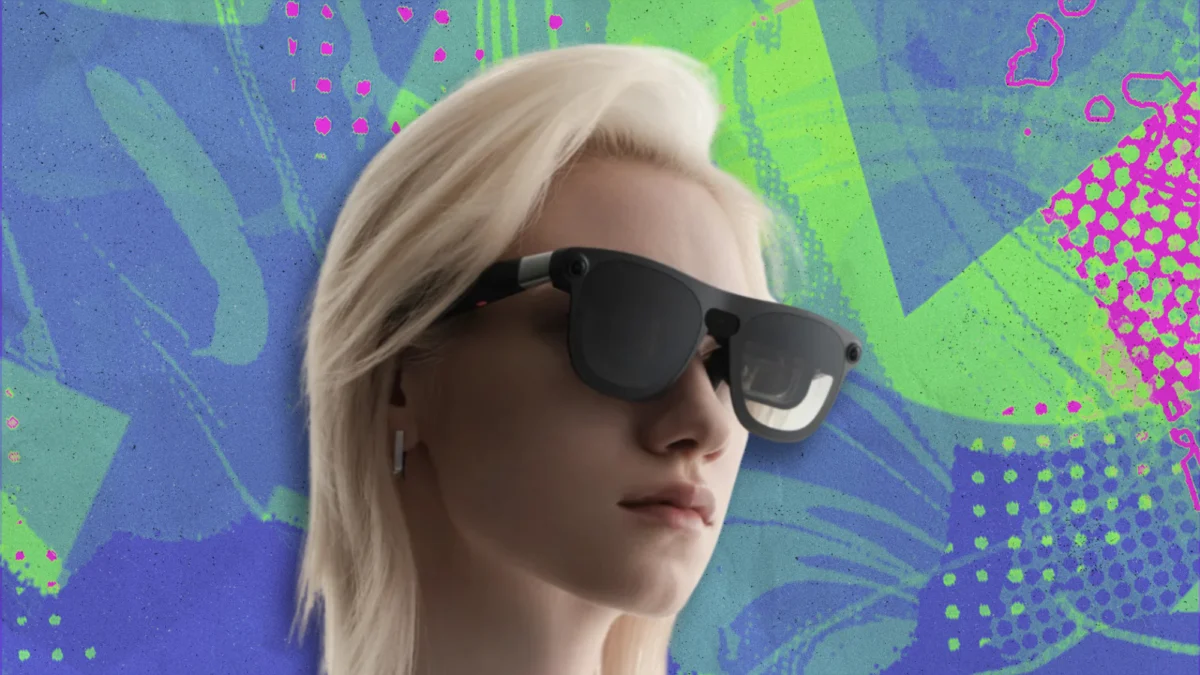
The intersection of augmented reality and everyday wearables has officially entered a new commercial phase as hardware manufacturer Xreal launches preorders for its highly anticipated spatial computing device. Initially teased earlier in the year at Google I/O, the Xreal Aura represents a significant milestone for the industry as the first wired smart glasses powered directly by Google’s dedicated Android XR operating system. Designed to bridge the gap between heavy, fully enclosed virtual reality headsets and traditional transparent eyewear, the Aura aims to deliver advanced spatial computing capabilities without isolating the user from their physical environment. With preorders now live on Xreal’s official platform and shipments slated to begin in mid-November, early technology adopters have their first clear look at the future of lightweight mixed-reality hardware.
The Genesis of Android XR and the Xreal Partnership

The development of the Xreal Aura is the culmination of a collaborative hardware and software strategy involving industry heavyweights Google and Qualcomm. When Google first outlined its vision for Android XR, the tech giant signaled its intention to create a unified software ecosystem for spatial computing, mirroring how standard Android dominates the smartphone market. By partnering with Xreal—a company already recognized for its market share in tethered augmented reality viewer displays—Google secured a hardware partner capable of executing a lightweight consumer form factor.
Qualcomm also plays a foundational role in the device’s architecture, supplying the Snapdragon Reality Elite Platform to handle the heavy computational lifting required for real-time spatial mapping, hand tracking, and voice processing. This triad of tech giants—Google, Qualcomm, and Xreal—designed the Aura to challenge the prevailing industry paradigm established by heavier, autonomous headsets like the Apple Vision Pro. While those devices rely on fully enclosed ski-goggle designs that completely replace the user’s field of view with digital passthrough video, the Xreal Aura retains transparent lenses, allowing users to interact with digital applications superimposed over the real world.
Design, Hardware Specifications, and Ergonomics

Achieving a lightweight form factor while packing robust spatial computing hardware presented a distinct engineering challenge. Rather than housing all the processing units and battery cells directly within the frame of the glasses—which would lead to an uncomfortably heavy device—Xreal opted for a hybrid configuration. The Aura utilizes a companion "puck" housing the primary battery and compute engine, connected via a wire to the glasses themselves. This design choice drastically reduces facial fatigue, ensuring the glasses remain comfortable during extended wear.
Optically, the Xreal Aura relies on dual Sony Micro-OLED displays. These panels deliver a 70-degree field of view, a maximum brightness output of 1,050 nits, and a smooth 120Hz refresh rate. High brightness and refresh rates are critical parameters for augmented reality hardware, ensuring that virtual text remains legible under varying ambient lighting conditions and that motion vectors track smoothly to prevent motion sickness. Furthermore, the inclusion of onboard sensors and tracking cameras enables natural input methods, supporting both precise hand-gesture controls and voice commands without requiring physical controllers.
Software Integration and Ecosystem Capabilities

Operating on Google’s Android XR platform grants the Xreal Aura immediate access to a robust software ecosystem from day one. According to the manufacturer, the device launches with support for over 150 dedicated XR experiences, with a pipeline for expansion in the months following release.
Integration with core Google services forms a central pillar of the user experience. Google Photos has been optimized for spatial computing, allowing users to convert standard 2D photographs into 3D representations, while panoramic images expand into full 360-degree interactive canvases. Similarly, Google Maps offers immersive 3D destination exploration, blending aerial overviews with street-level perspectives. For entertainment, the device supports comprehensive 360-degree and VR180 video playback through platforms like YouTube.
Artificial intelligence integration is handled via Gemini, Google’s multimodal AI assistant. Gemini operates natively on the device, allowing users to interact contextually with their physical environment. Whether asking questions about objects in their line of sight, translating foreign text in real time, or executing multi-app workflows through voice prompts, the AI acts as an invisible operating layer across the entire spatial interface.

Pricing, Preorder Incentives, and Market Positioning
Market positioning will ultimately dictate the success or failure of consumer spatial computing hardware, and Xreal has priced the Aura competitively within the premium tier. The standard retail price is set at $1,279. However, consumers who take advantage of the initial preorder window via the official Xreal website can secure the hardware at a promotional price of $1,099, reflecting a direct savings of $180.
The launch of the Xreal Aura occurs within a rapidly evolving competitive landscape. The spatial eyewear market is diversifying rapidly, with rival manufacturers pushing alternative form factors and pricing strategies. For instance, Snap recently introduced its new Specs AR glasses, which boast a fully wireless design but come with a significantly higher price tag of $2,195 alongside a bulkier aesthetic profile. Meanwhile, Meta has announced its own line of upcoming virtual reality glasses priced at $1,299, though those devices carry a projected release date in the spring of 2027.

By launching in late 2026 at a sub-$1,300 price point—and offering an immediate discount for early adopters—Xreal has positioned the Aura to capture market share ahead of Meta’s delayed rollout while undercutting Snap’s expensive wireless alternative.
Implications for the Consumer Technology Sector
The commercial availability of the Xreal Aura marks a critical inflection point for the consumer electronics industry. For years, the narrative surrounding spatial computing has been dominated by heavy, tetherless headsets that, while technologically impressive, have struggled to achieve mainstream consumer adoption due to social stigma, ergonomic discomfort, and prohibitive costs.

By demonstrating that core spatial computing capabilities can be delivered in a form factor much closer to traditional eyewear, Xreal and Google are testing consumer appetite for hybrid AR/VR utility. If the Aura succeeds in proving that productivity, immersive entertainment, and AI integration can coexist comfortably on the face for hours at a time, it could accelerate the pivot of major smartphone and PC manufacturers toward spatial eyewear.
As preorders transition into consumer shipments this November, real-world user reviews will ultimately determine whether the Android XR platform delivers on its ambitious promises. For now, the Xreal Aura stands as one of the most compelling hardware launches of the year, signaling that the future of computing may soon rest lightly on the bridge of our noses.
