

As the calendar turns toward the pinnacle of the Thoroughbred racing season, the grounds at Keeneland have transformed into a bustling hub of international activity. With the Breeders’ Cup World Championships looming, trainers, owners, and equine athletes are finalizing their preparations, navigating the delicate balance between peak physical conditioning and the psychological readiness required for the sport’s most demanding stage. The air in Lexington, Kentucky, is crisp, providing a welcome environment for the horses, many of whom have arrived from across the globe to compete for a share of the substantial purses and the indelible prestige associated with a Breeders’ Cup victory.
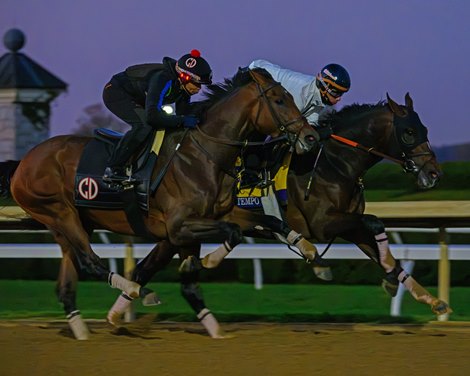
Golden Tempo, a colt representing the formidable partnership of Phipps Stable and St. Elias Stable, epitomizes the meticulous care currently being applied to the top-tier contenders. Under the watchful eye of assistant trainer Enrique Miranda, the son of the legendary dual classic winner Curlin completed a light jog on the Keeneland main track on the morning of October 25. For the connections, this exercise is the culmination of a long-term plan that began following the colt’s third-place finish in the Travers Stakes (G1) at Saratoga on August 29.
The transformation of Golden Tempo has been a point of pride for his camp. Daisy Phipps Pulito reflected on the horse’s development, noting that his transition from a somewhat immature, "pot-bellied" 2-year-old to the hardened, professional athlete seen today has been a gradual but steady process. "He’s a big man now," Miranda added, underscoring the physical maturity that is often the difference between success and failure at the Grade 1 level. This physical growth has been matched by a calm temperament, a trait that sets him apart from many high-energy colts who often struggle with the distractions of a major championship environment.
The Rising Sleeper in the Distaff
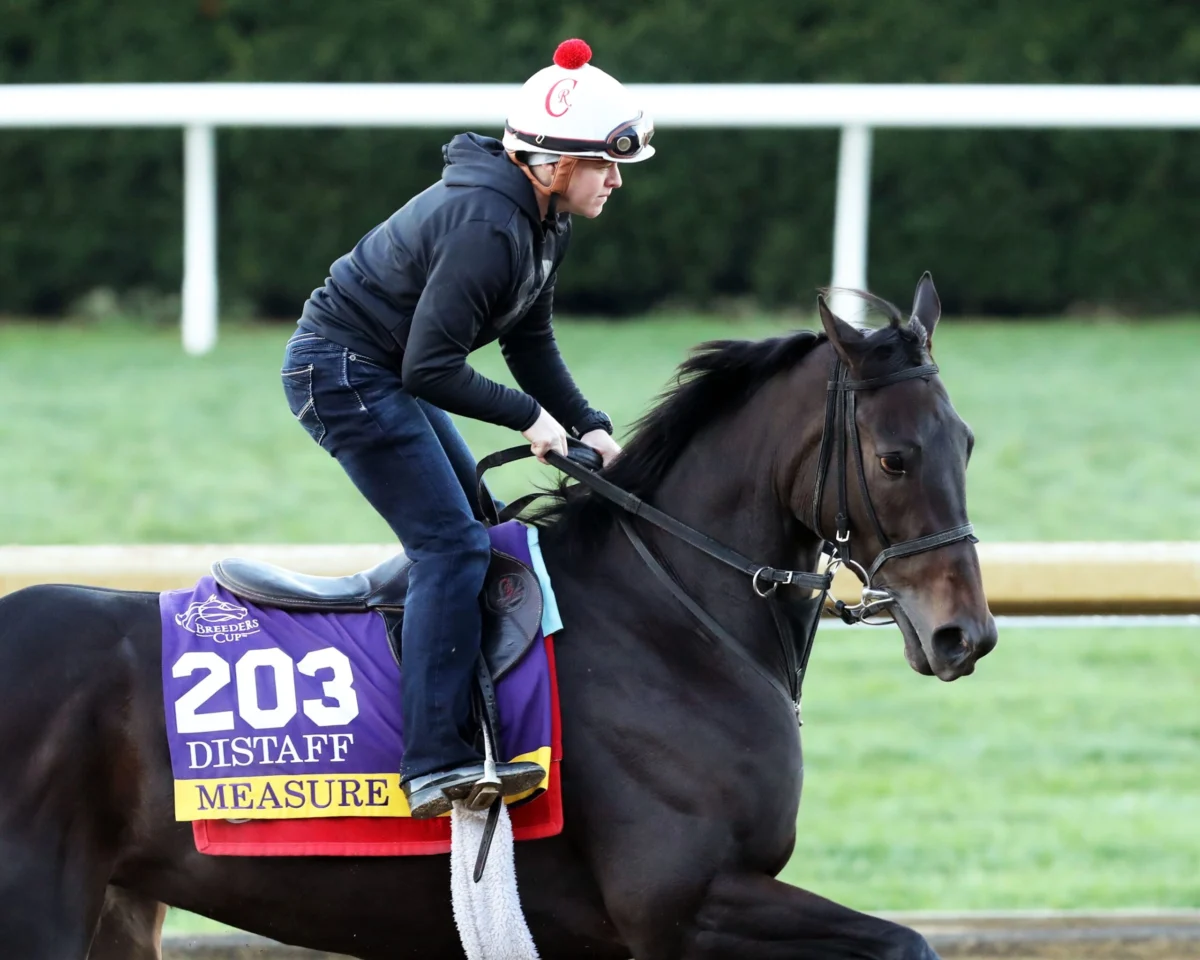
While established favorites dominate the headlines, the Breeders’ Cup often serves as a launching pad for rising stars. Trainer Mark Casse has been vocal about the potential of Measure, a filly campaigned by Gary Barber, Bridlewood Farm, and Eclipse Thoroughbred Partners. Although Nitrogen is expected to command the majority of the wagering interest in the Breeders’ Cup Distaff (G1), Casse views Measure as a dangerous "sleeper" entry.
Casse, who employs Thoro-Graph performance analysis to evaluate his horses, suggests that Measure is currently sitting on a career-best performance. The filly’s resume over the summer was defined by consistent, high-level efforts in the most competitive races in North America. Her third-place finish in the Coaching Club American Oaks (G1) behind notable talents like Counting Stars and Always a Runner, followed by a narrow neck defeat in the Alabama Stakes (G1) and a hard-luck third in the Cotillion Stakes (G1), paints the picture of a horse that has been perpetually knocking on the door of a Grade 1 breakthrough. Her ability to close from the rear of the field, even when faced with tepid early paces, suggests a tactical versatility that could be vital in a Distaff field expected to feature significant early speed.
Global Logistics and the International Contingent
The logistical undertaking of hosting the Breeders’ Cup is highlighted this year by the arrival of 60 international competitors. The shipment of these horses, which involves complex quarantine procedures and specialized air transport, is a testament to the global nature of the event. On the morning of October 25, the arrival of 47 European contenders via chartered flight marked a significant milestone in the week’s preparations. These horses, hailing from the United Kingdom, Ireland, France, and the United Arab Emirates, are currently undergoing mandatory quarantine protocols, with their first appearances on the Keeneland training tracks scheduled for October 27.
Among the high-profile international arrivals are the Charlie Appleby-trained Notable Speech and El Cordobes, representing the powerhouse Godolphin operation. Their successful flight and initial adjustment to the Kentucky environment are positive indicators for their respective campaigns. Additionally, horses that have remained in Lexington since earlier in the month, such as Adonius and Lake Forest, have been utilizing the local facilities to maintain their fitness levels. The presence of these international athletes ensures that the Breeders’ Cup remains a truly global benchmark for equine excellence, forcing local horses to contend with tactics and training methodologies from around the world.

Strategic Decision-Making: The Case of Classic Q
The tactical nature of the Breeders’ Cup is perhaps best illustrated by the final decision regarding Classic Q. Trainer Mark Casse faced a difficult choice between the Breeders’ Cup Mile (G1T) and the Filly & Mare Turf (G1T), both of which the filly was qualified for. After extensive analysis, the team opted for the Filly & Mare Turf.
This decision was driven by more than just the pursuit of a win; it is a calculated move regarding the end-of-season Eclipse Award honors. As the only older filly or mare to secure multiple Grade 1 turf victories in North America this year—including the First Lady Stakes (G1T) at Keeneland—Classic Q has a compelling case for championship status. Moving up in distance to the 1 3/16-mile contest of the Filly & Mare Turf presents a challenge, as she has historically excelled at the mile distance, but the potential for an Eclipse Award provides the necessary incentive for the ambitious campaign. She will face stiff competition, including Expensive Queen, Kathynmarissa, and Thought Process, all of whom enter the race with proven Grade 1 credentials.
Emerging Talent and Experimental Shifts
The diversity of the Breeders’ Cup field is further reflected in the career path of Iron Man Cal. Trainer Phil D’Amato is currently weighing the options of the Dirt Mile (G1) versus the Sprint (G1) for the 4-year-old gelding. His trajectory is a compelling study in equine development; originally a turf-focused runner, his recent shift to the dirt and the decision to geld him have unlocked a new level of performance. His victory in the Pat O’Brien Stakes (G2) proved his capacity for speed and efficiency on the main track, providing his owners—Little Red Feather Racing and Madaket Stables—with a difficult but enviable choice as they prepare for the post-position draw.
Sentimental Journeys: The Story of Serenas Ghost
Amidst the high-stakes pressure, the story of the juvenile filly Serenas Ghost provides a poignant narrative. Trained by Joe Sharp, the filly is a homebred for Barry and Joni Butzow, and her pedigree represents a full-circle moment for her conditioner. Sharp trained both her sire, the late Grade 1 Haskell winner Girvin, and her dam, the stakes-winning Tiznow mare Sirenusa.

Serenas Ghost enters the Breeders’ Cup Juvenile Fillies Turf (G1T) with an unblemished record, including a gritty upset victory in the Jessamine Stakes (G2) on October 2. Her ability to "stalk and pounce" has drawn praise from Sharp, who noted that she seems to have inherited the best physical and mental traits of both parents. Her progression from a promising maiden to a Grade 2 winner in just two starts has been remarkable, and her performance on Friday will serve as a definitive test of her potential to be a star in the juvenile ranks for the coming season.
Broader Implications and The Road Ahead
As the final days of preparation tick away, the implications for the broader racing industry are clear. The Breeders’ Cup serves as the ultimate arbiter of quality, where the year’s divisional leaders, international champions, and emerging prospects converge. The data-driven approach of trainers like Casse, the logistical triumphs of the international shipping teams, and the tactical flexibility required of horses like Iron Man Cal collectively illustrate a sport that is as much about science and strategy as it is about the raw athleticism of the horse.
With the post-position draw approaching, the focus will soon shift from the early morning gallops to the tactical realities of the races themselves. The track conditions at Keeneland, the speed biases of the course, and the pressure of the championship atmosphere will ultimately determine which contenders rise to the occasion. For the horses, the work is nearly done; for the connections, the final hours of anticipation are a test of patience and planning in the pursuit of the sport’s most coveted trophies. The stage is set for a week that will define the legacy of these Thoroughbreds and shape the narrative of the 2026 racing season.
